Hughes Hall Governing Body Fellow Aga Iwasiewicz-Wabnig will play a leading role in a major new UK-wide initiative to turn world-leading quantum research into successful businesses and real-world applications.
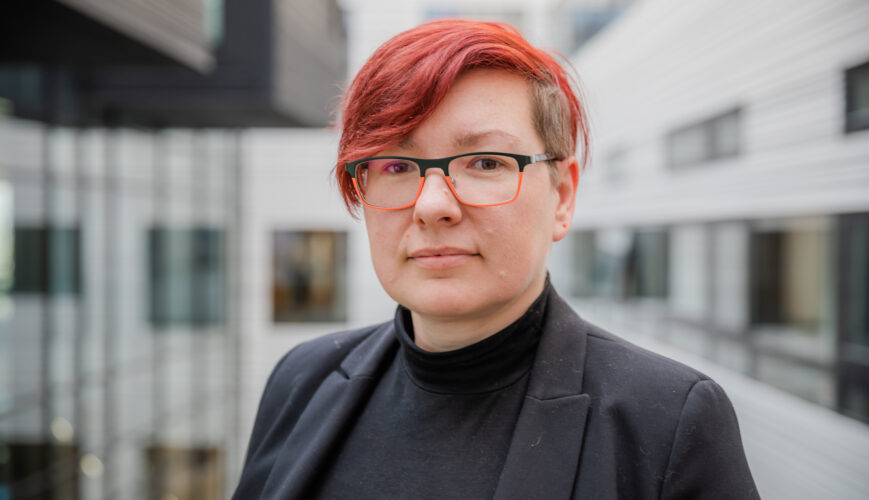
Dr Iwasiewicz-Wabnig, Director of the University of Cambridge’s Maxwell Centre, will serve as Co-Director of the new UK Quantum SuperConnector. She will lead the Cambridge spoke of the programme, with responsibility for UK ecosystem activation and commercial sector engagement.
“The Maxwell Centre has been a convener of multi-stakeholder conversations and translating research into impact for over a decade, and we will focus that experience onto the quantum space now, supporting a key sector for the UK, with significant talent retention and economic growth potential.”
The initiative brings together the universities of Cambridge, Imperial College London, Bristol, Glasgow and Oxford. It aims to bridge the gap between quantum research and commercial success by creating a UK-wide community of researchers, entrepreneurs, investors, industry adopters and policymakers. The programme will help researchers accelerate the adoption of quantum technologies, attract investment and enable growth.
A particular focus will be addressing skills gaps and differing levels of commercialisation training across the UK’s quantum ecosystem, giving researchers and innovators the skills, networks and support needed to take promising technologies towards commercial application.
Dr Iwasiewicz-Wabnig said:
“The new entity will build on the track record of the Maxwell Centre and its Impulse programme for tech innovators, among others, and ensure commercialisation skills training is accessible and delivered UK-wide. Our aim is to deliver a step-change in the commercial capacity and ambition of the UK’s quantum workforce. The goal is to position the UK as the best place in the world to build, grow and invest in a quantum company.”
The SuperConnector will support the UK quantum ecosystem in delivering commercial development across a range of routes, including the creation of new quantum and quantum-enabled ventures, licensing opportunities, partnerships and collaborative research and development.
Cambridge’s contribution will draw particularly on the Maxwell Centre’s experience of translating research into impact and connecting academia with industry. This will include a dedicated quantum track within the Centre’s Impulse for tech innovators accelerator, alongside the launch of a UK-wide digital ecosystem platform.
Dr Iwasiewicz-Wabnig highlighted the opportunity to make connections not only within Cambridge but across the wider national quantum community:
“There are many synergies to capitalise on, in Cambridge and across our partner institutions, Imperial, Bristol, Glasgow and Oxford, within the National Quantum Technologies Programme and the wider ecosystem.
“The Maxwell Centre has been a convener of multi-stakeholder conversations and translating research into impact for over a decade, and we will focus that experience onto the quantum space now, supporting a key sector for the UK, with significant talent retention and economic growth potential.”
The SuperConnector will support the UK quantum ecosystem in delivering commercial development across a range of routes, including the creation of new quantum and quantum-enabled ventures, licensing opportunities, partnerships and collaborative research and development. It will also help develop the skilled workforce needed for the commercial deployment of quantum applications in sectors including healthcare, finance, aerospace and defence.
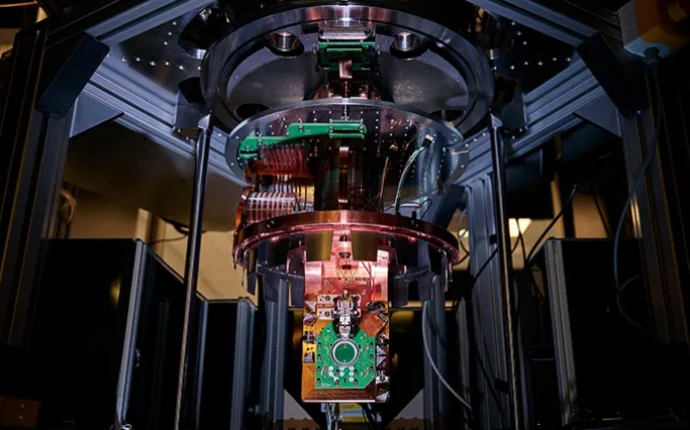
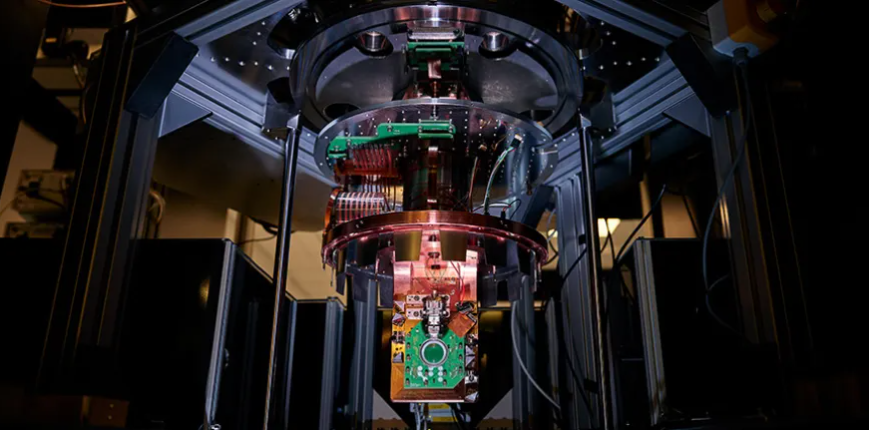
The programme builds on substantial UK investment in quantum research through the National Quantum Technologies Programme, and comes as Cambridge continues to expand its capabilities in this sector, including through the recently launched IonQ Quantum Innovation Centre.
Dr Iwasiewicz-Wabnig said the next challenge is to ensure that the UK’s scientific strength is matched by its ability to bring emerging technologies into use:
“The UK’s long-standing strategic investment in quantum research, including through its National Quantum Technologies Programme, already generates world-class science. We must now build up a matched capability to commercialise and deploy emerging quantum-enabled technologies, wherever in the UK the right ideas originate.”
About Aga Iwasiewicz-Wabnig
Dr Iwasiewicz-Wabnig has been a Senior Member of Hughes Hall since 2009, a Governing Body Fellow since 2014 and is the Director of the University of Cambridge’s Maxwell Centre. Throughout her Cambridge career, she has focused on building connections across disciplines and between academic research and industry, with a particular interest in helping emerging science and technology progress towards real-world applications.
She joined Cambridge from Oxford in 2009, initially working to establish the Cambridge Nanoscience Doctoral Training Centre (NanoDTC) before becoming the Knowledge Transfer Facilitator at the Cavendish Laboratory. There, her work focused on the interface between academic research and its potential commercial outcomes, supporting emerging ventures (e.g. Nu Quantum), developing industrial partnerships and collaborations.
As Director of the Maxwell Centre, Dr Iwasiewicz-Wabnig has led the development of a strategy bringing together physics, chemistry, materials science, engineering, chemical engineering and biotechnology, as well as computer science, around the long-term goal of contributing to a healthy, sustainable and resilient society in 2051 and beyond.
Her new role with the UK Quantum SuperConnector builds naturally on that experience of connecting people, disciplines and sectors to help translate research into wider impact.
Further information
Read the University of Cambridge announcement and Hughes Hall’s Super-connector profile of Dr Aga Iwasiewicz-Wabnig.
17.11.26