


We are proud to have been awarded Gold by the NUS Green Impact Programme six years in a row.
Our environmental initiatives range from solar panels on Fenner’s and Gresham Court student accommodation, regular bicycle repair days at College, creation of a wildflower meadow and butterfly garden, plant based dining options in hall, composting on site, energy efficient appliances, and much more.
The processes we have put in place are working well and we continue to seek new ways to develop good environmental practice and to improve our sustainability across our grounds and across our operations.
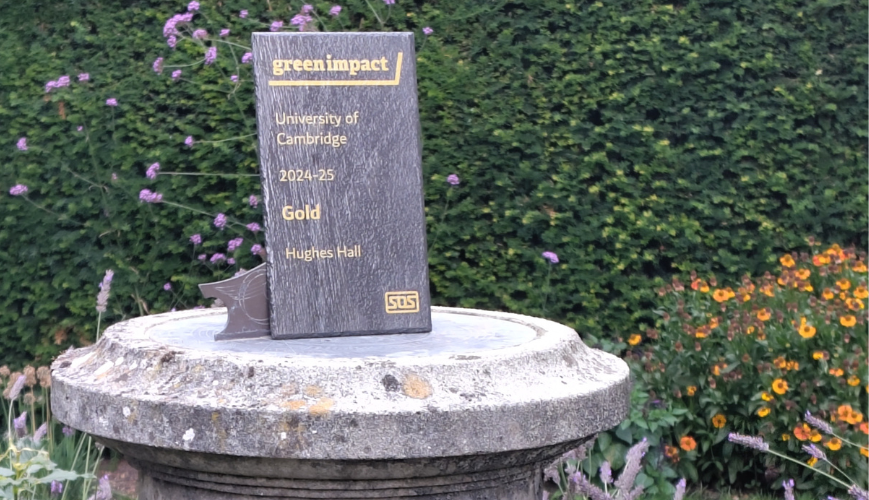
Hughes Hall has been awarded Gold for Green Impact for six years running. The University Green Impact Scheme supported and encouraged departments and colleges in reducing their environmental impacts.
The 2025 green impact auditors said: “The team has shown a very strong commitment to the Green Impact programme, and it was truly impressive to see how each member contributed meaningfully to the success of their initiatives. Their integrated and inclusive approach to Green Impact is both innovative and impactful, and they have demonstrated outstanding initiative by engaging a wide range of stakeholders – from students to local community members – in their sustainability efforts.”
Jonathan Newby, Hughes Hall Bursar, said: “To win this award for the sixth year running is a great achievement and a real testament to the collaborative efforts of our whole community in maintaining a sustainable environment here at Hughes. We have a beautiful place of work, and study, so it’s rewarding that so many amongst us are dedicated to keeping it that way.”
Gardens and wildlife
Hughes Hall has wonderful lawns and gardens which we take good care of because we want them to be a haven for our community – and for local wildlife. We have spotted foxes, squirrels, hedgehogs and many different species of birds and insects in our grounds, and we continue to make efforts to welcome and support them. For example, we provide water for birds and hedgehogs, and have installed a ‘wildlife corridor’ in the boundary fences. We have installed swift boxes on our accommodation building, Wollaston Lodge, and these are now in use.
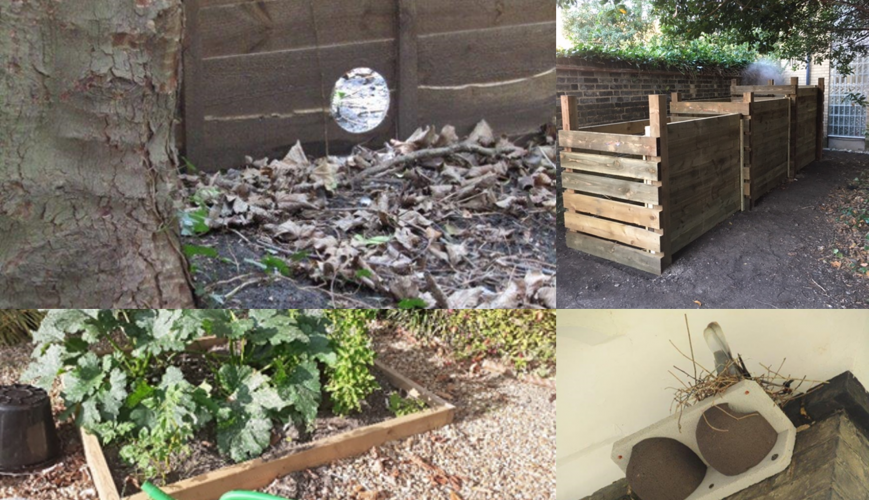
Our ongoing environmental initiatives include a new planting area to attract butterflies, composting, nesting boxes and student veggie patches.
We have constructed a new composting area for the College’s green and garden waste. We can now start to generate our own compost to use on site, and save on waste collection costs. Our students have even been growing vegetables in dedicated vegetable beds.
Operational sustainability
Energy
The College’s electricity provision is 100% renewable. We have installed solar panels on the roofs of Gresham Court and Fenner’s buildings. These are on a feed-in tariff, so that the power goes into the national grid if we are not using it ourselves. The main site uses a mix of Cambridgeshire solar energy, wind, and hydro power, and will be zero carbon. Our College houses use a bespoke power mix including Cambridgeshire solar energy rather than biomass, which is also zero carbon.
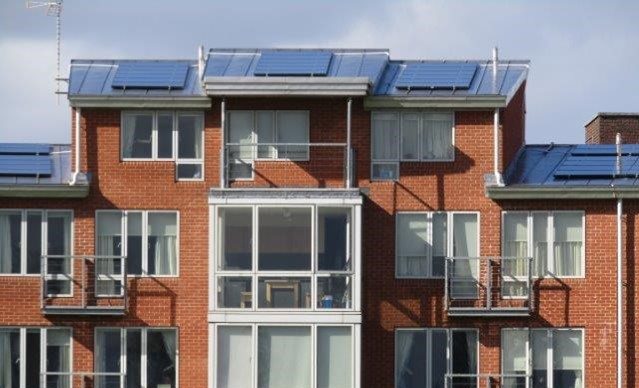
We have installed solar panels on the roofs of Gresham Court and Fenner’s which run on a feed-in tariff, so that the power goes into the national grid if unused
We are committed to making our older buildings more energy efficient. In the latest renovation of Margaret Wileman Building (built in 1895), measures such as draft proofing windows have been taken. Many of our light switches in public areas are controlled by motion sensors, so that they cannot be left on accidentally. In the Margaret Wileman Building, which is listed, the historic light switches in the corridors are retained as a decorative feature but the lights are automatic.
Our gas is used for space and water heating, and in the kitchens. In order to achieve our zero carbon target, we will need to migrate the whole estate off gas. This will be a significant and costly change for the College and we are researching options.
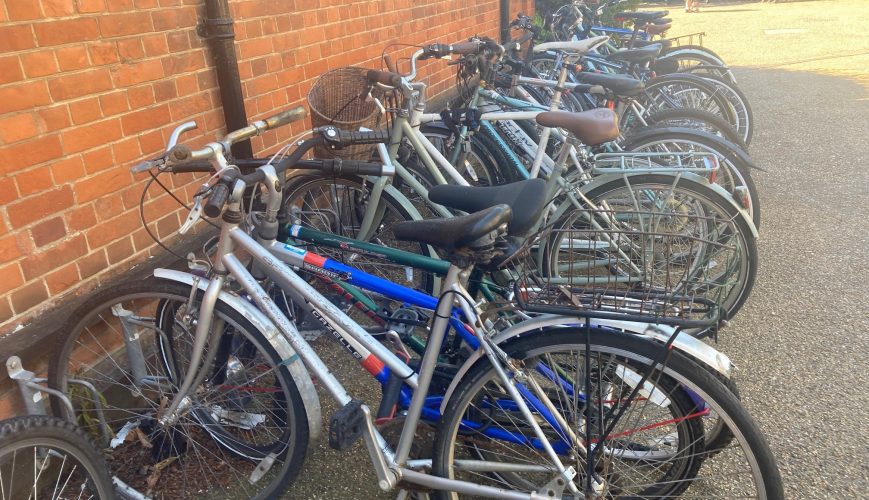
We run bicycle repair days with our students to encourage ‘greener travel’.
Waste
We separate the waste into different bins: food waste, glass, mixed dry recycling, and general waste. Our waste collection contractor weighs it on collection and charges vary by type of waste. The waste is all collected, mixed, in the same lorry and taken to the processing plant, where it is mechanically separated into streams. Their recycling facility sorts and segregates mixed recycling with up to 100% recycling rates available.
Catering
The catering team is committed to sourcing food sustainably. At least 80% of fish is MCS certified sustainable. We are reducing the use of beef and lamb. We always provide vegetarian and vegan options.
We are dedicated to reducing plastic waste. Plastic containers have been phased out and replaced with 100% compostable alternatives. We sell reusable mugs, and have installed water fountains around College where containers can be refilled.
Transport
We encourage walking and cycling whenever possible. We are fortunate to be located off Mill Road, with easy access to the City Centre and local shops, and we are within walking distance of the station and the bus hub at Drummer Street. We have replaced our College van with an electric one so we no longer have diesel vehicles. There is a staff bike for those who may want to use it for traveling to meetings in other colleges.
The Maintenance and Porters teams assist where they can in encouraging green forms of transport, for example, with any bike repair issues and providing pumps. The maintenance team also assists students when they have lost their bike lock key or forgotten combinations by cutting old locks. At the end of the year we recycle abandoned bikes by offering them to new incoming students rather than them buying new ones or us having to skip them.
Investments
College’s investments are mostly managed by Cazenove, part of Schroders Group, which was recognised by NGO ShareAction as the number one European fund manager for responsible investment performance and transparency.
Further information
For details on sustainable living tips for students, check out our Student Centre sustainability induction page.