In spring 2024, Dr Aga Iwasiewicz-Wabnig celebrated ten years as a Governing Body Fellow at Hughes, and was appointed as Director of the University’s Maxwell Centre.
There she has developed a new strategy for science and technology to help deliver a healthy, sustainable and resilient society in 2051 and beyond.
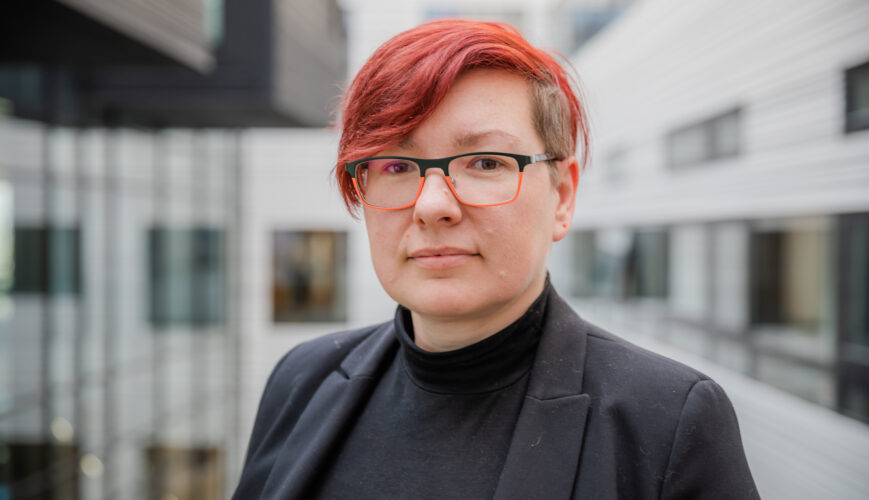
‘The sky is the limit: the only obstacles are the limitations we put on ourselves.’ – Aga Iwasiewicz-Wabnig
All the roles Aga has had at Cambridge have been about making connections. When she came here from Oxford in 2009, she had just completed a postdoc, and realised that focusing on one project in depth over five or ten years wasn’t going to make her happy. Her first job was to set up the new Cambridge Nanoscience Doctoral Training Centre (NanoDTC). ‘I thought, I can get so far with my own two hands over the lab bench,’ says Aga, ‘but what if I helped, say, fifty PhD students to get through their research in interdisciplinary nanoscience – very exciting new science, for example in battery technology or DNA – then so much more can happen. I don’t necessarily have to be the scientist that holds the beaker, but I enjoy being a part of it, and I want to make sure people talk to each other, as collaboration strengthens ideas.’
Five years later, she became the knowledge transfer facilitator at the Cavendish Laboratory, working on interactions between research and its potential outcomes with commercial realities further down the line, including industrial partnerships and collaborations. This interface between academia and industry brought her together with a way of thinking that was evolving in the physics department led by Professor Sir Richard Friend, Founding Director of the Maxwell Centre.
The Maxwell Centre
The Centre brings researchers in the physical sciences and engineering together with industry, so that conversations between them can happen much earlier than they would normally do. Rather than industry getting involved at the end of research, when a possible solution has been developed, the Centre facilitates those conversations at much earlier stages. Companies of any size from small startups to multinationals share space in the building, so that the real-life context of emerging ideas can be taken into account from the beginning. Then at the end of a project when a new technology emerges, it is much easier to form the right partnership to take it forward, whether that’s creating a new startup or licencing technology to a company. This approach means that the research can progress into a real-world application and deliver impact much sooner.
Professor Sir Richard Friend was succeeded in 2019 by Professor Sir Mark Welland (both are still strategic advisors to the Centre) and when he retired Aga took over as Director. At the start of her leadership, she held discussions with all of the stakeholding Heads of Departments and Schools – physics, chemistry, materials science, engineering, chemical engineering and biotechnology, and for the first time also involving computer science – to develop a new strategy aiming for a healthy and sustainable world in 2051.
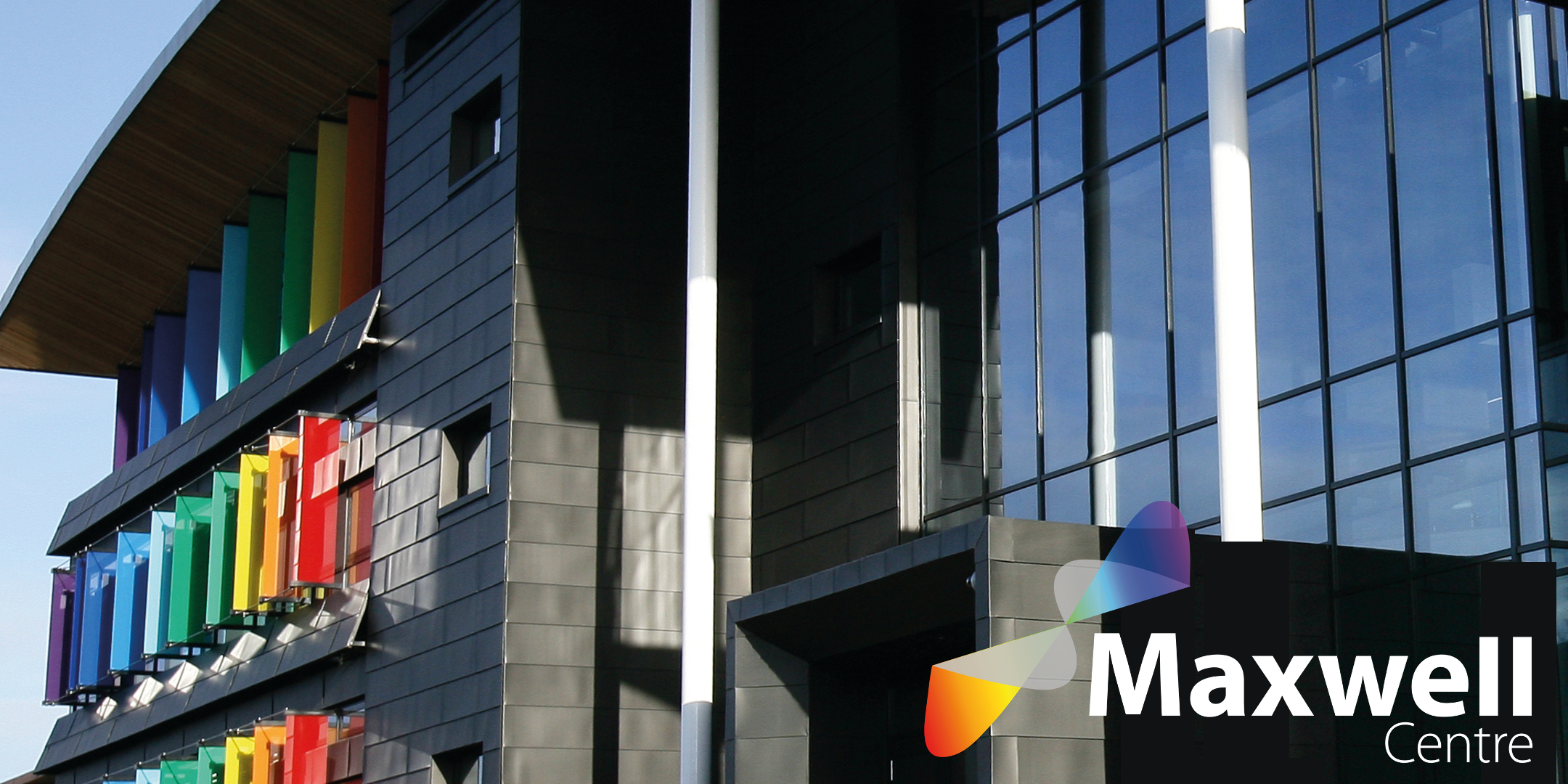
The Maxwell Centre objectives are to carry out world-leading research in the physical sciences, developed from both near-term but also long-term industry objectives.
Why 2051?
The target date for decarbonisation is 2050, but are we thinking enough about what comes afterwards? Aga likes to use the analogy of a wedding. ‘You’re totally focused on the date, maybe you go on a crash diet to wear the outfit you bought, at whatever cost. But that means you’re not thinking about the marriage long-term. And you won’t be able to maintain that weight if you got to it through this brute force approach. If you take that idea through to climate, it means we need to start thinking right now about what the world after the transition date would look like, because it will realistically take us about twenty-five years to get there in a sustainable way and to deliver it at full scale. So that’s why we now need big, bold ideas for where we want to be in 2051.’
The Centre has some hugely ambitious goals, but there is a driven team working alongside Aga and a big, interdisciplinary academic community committed to making this work together. Aga finds herself in the perfect place to make an impact: ‘if not at Cambridge, where else can you dream up what the wider world should be over the next few decades?’
Maxwell Centre’s three themes for 2051
Zero Waste
We’re not just aiming to repurpose our waste, but also to improve the energy efficiency in how we use and manufacture devices. New technologies often use quite exotic and very rare materials; sometimes you’re digging up a mountain to make your little device. If we got better at reusing the lithium in old phones and cars, we wouldn’t need to carry on shipping materials all over the world. We need think about circularity in supply chains, in the economy and in business, where one company’s waste bin might be a gold mine for another.
Health
In Health Tech, we are building out beyond drug development, where there is a lot of activity in Cambridge already. Emerging technologies will allow us to start looking after everyone’s physical and mental health and preventing as well as curing illness.
Data
Robust data and digital technology underpin these initiatives. By 2051, we will be able to mobilise these more effectively to help meet our goals as a society.
‘The sky is the limit’
Aga’s niche at Hughes has been something quite different. As a member of the music committee, she feels proud to work with the professional musicians who organise the very high-quality concerts we are lucky to have at Hughes. Still, a lot of people like Aga, who love playing or singing but are not professionals, didn’t have an outlet, so she set up the Music Cafés, akin to an open mic night, unplugged. ‘A few times a year we get together in the Pavilion Room and magic happens. I never know what’s going to emerge. There’s no programme. We just invite anyone to show up – students, Fellows, staff, alumni and friends – and people sing and play, spend time together and create something unique. And again, as in my job, I’m a connector of people.’
What Aga loves most about Hughes is the mix of people from countless different ways of life and so many different personal trajectories. ‘Everyone has something they’re chosen to strive for, and being in huge crowd of other people who are all very ambitious and have their individual goals is very motivating. And I know it’s a bit of a cliché, but there is a difference to this college and one key aspect of that is the kind of people we get. They’re not just academically gifted, but they’re also looking at what they are going to do with their skills to benefit others. And that doesn’t have to be limited to traditional careers. That’s how we have a global impact way beyond Cambridge. As Fellows we can share our stories with students and demonstrate to them that the sky is the limit: the only obstacles are the limitations we put on ourselves.’
- This article is one of many in the latest edition of The Owl, Hughes Hall’s College magazine. To read the publication, visit The Owl.
17.4.25