
+44 (0)1223 330484
enquiries@hughes.cam.ac.uk

Black History Month

Celebrating excellence at Hughes Hall.

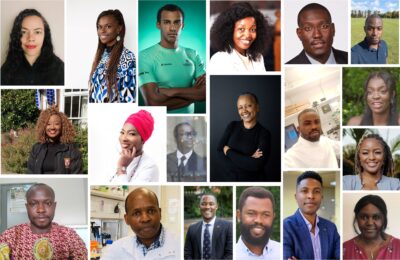
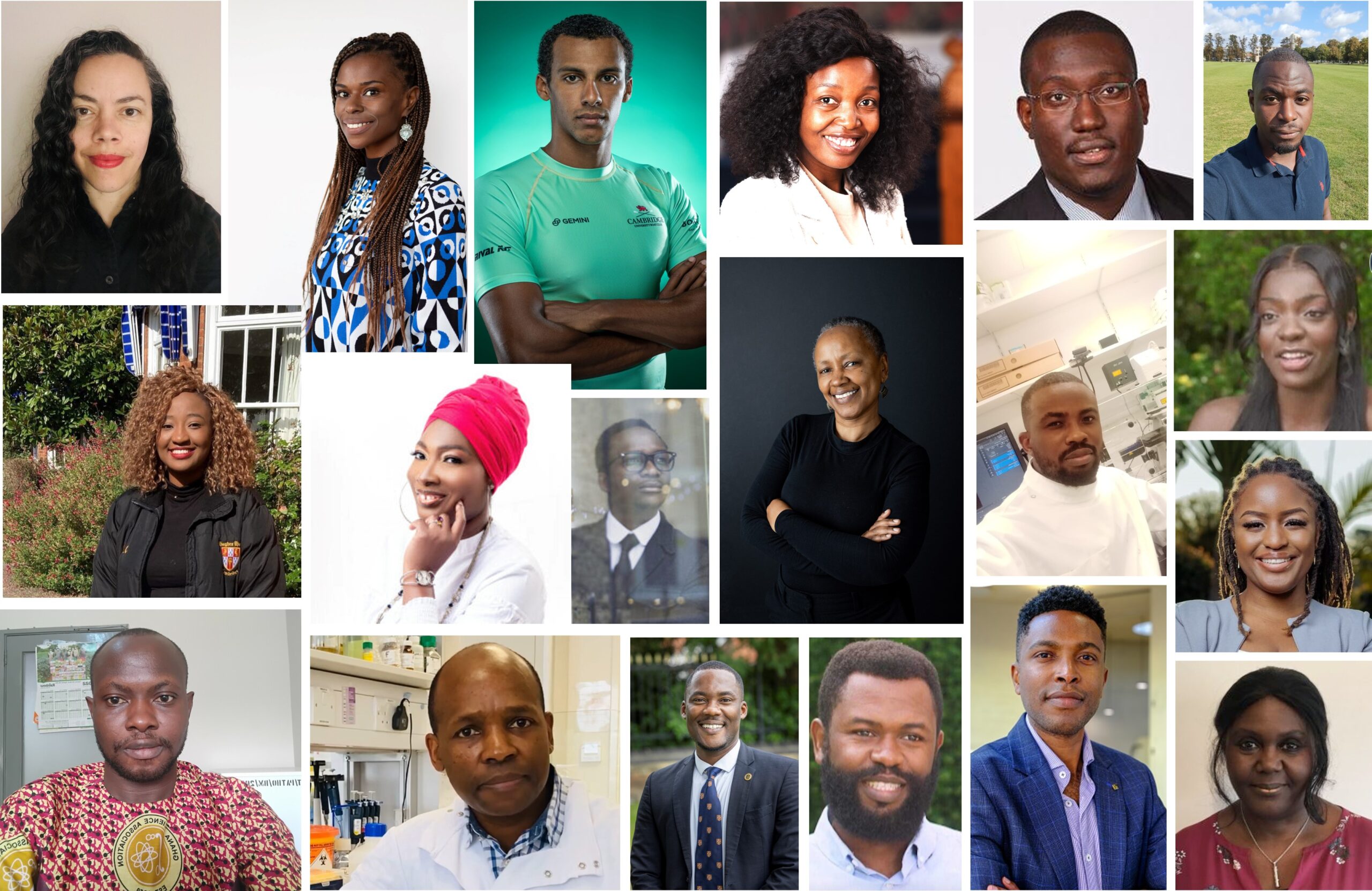
Click below to watch and read a collection of personal reflections, inspiring stories and research profiles from some of our remarkable people, collated to mark Black History Month.

Thomas Musie

Law student, Football 'Blue', BME student rep

Law student, Thomas Musie, is the college’s BME representative for our student body organising a range of activities and initiatives throghout teh academic year.

He also plays the position of winger for the Blues Football Team, including at the 151st Football Varsity match in March 2025 which Cambridge won 4-1 – the first men’s victory in six years.

Representing the University in sports is a big commitment, so we caught up with Thomas to learn more about how he balances the academic rigours of Cambridge with training and playing at such a high level. He previously played for the Swedish club Örgryte IS, and was born and raised in Gothenburg, Sweden.

Q: Is it difficult to manage sport and studies at Cambridge?
Balancing sport and university studies can be challenging, but it’s definitely possible with good time management and discipline. Football provides a great outlet from academia, and the structure of weekly training helps me stay efficient with my studies. The support system within the team and college also makes a big difference – everyone understands the commitment required, so there’s a strong sense of camaraderie.

Q: What made you decide to go for Cambridge/Hughes Hall for law?
Cambridge has always been a dream destination for me because of its excellent law programme and the incredible opportunities it offers. Since matriculating at Hughes Hall, I have truly enjoyed its welcoming community, diverse student body, and supportive culture. The college environment allows me to balance my academic and sporting commitments – whether it be by relaxing with friends in the MCR, grabbing brunch on the weekends, or attending Pub-Quiz Thursdays at ‘The Nobel Laureate’ (the nickname for our college bar)!

Q: Any tips for students considering applying and continuing with sport?
Studying at Cambridge has been an amazing experience so far. The intensity is balanced by a supportive environment, and being part of both the college and sporting communities has made my time here really special.

For prospective students wanting to continue with sports, my main advice would be to stay organised and embrace the opportunities available. If you’re looking to balance sport with studies, don’t be afraid to reach out to current student-athletes for advice – there’s a great network of people who’ve been in your shoes. Also, don’t let the workload intimidate you. Sports actually complement studies by providing structure and a mental break, so if you’re passionate about both, Cambridge is a fantastic place to thrive!

You can read more about Thomas’s recebnt varsity selection and triumph over Oxford at the Varsity match: https://www.hughes.cam.ac.uk/about/news/hughes-footballers-triumphant.
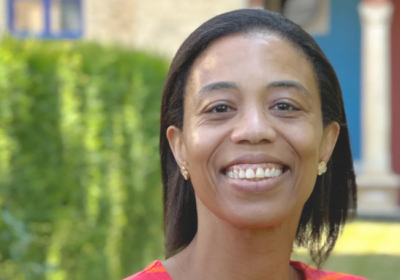
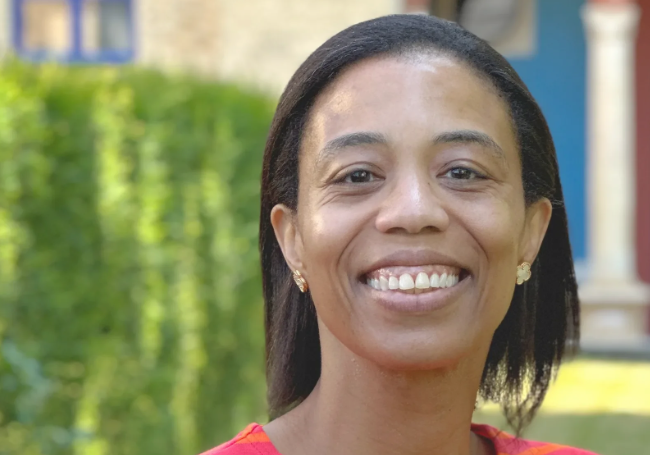
Nia Elizabeth van der Velden

On the endurance mindset and entrepreneurial thinking in times of war

Hughes student Nia is studying for an MSt in Social Innovation at Cambridge Judge Business School.

Nia recently submitted her dissertation on Ukraine’s digital transformation throughout the full-scale invasion.

Before she started her studies at Cambridge, Nia worked as a strategic communications professional at a variety of organisations, including MTN, the World Bank Group, and TechSoup Europe.

Written by Nia Elizabeth van der Velden

When you hear the word “entrepreneurship,” it is easy to think of Silicon Valley startups, venture capital funding rounds, and disruptive commercial applications. Entrepreneurship, however, is fundamentally a mindset that goes beyond geographic boundaries. It is a lens through which we perceive the world, a framework that transforms challenges into opportunities, and a commitment to problem-solving. This mindset is not confined to building the next big social network; it is the same philosophy that underpins genuine efforts to support people who are faced into wartime conditions.

Nowhere is this entrepreneurial mindset more evident today than in Ukraine’s civic technology landscape. Forced to face with a full-scale invasion, cyberattacks, and infrastructure strikes, Ukrainian technologists and city officials have had to completely re-imagine digital governance and crisis communication.

By examining platforms such as the cloud-based “city as a service” solution MISTO, alongside the municipal ecosystem of Kyiv Digital, we uncover lessons in adaptability, peoplce-centricity, and civic endurance.

For Anton Maksymenko, the Chief Operating Officer of MISTO, the full-scale invasion necessitated a complete operational shift… His team recognised a critical new reality: Ukrainian cities suddenly lacked the time, financial resources, and dedicated IT teams required to build custom digital infrastructures. The wartime conditions completely rearranged municipal budget priorities.

Instead of sticking to their old business model, Maksymenko’s team demonstrated entrepreneurial agility. They pivoted to create MISTO, a cloud-based “city as a service” platform. They realised that for a crisis-ready tech solution to succeed under wartime constraints, it had to be affordable, fast to deploy, and easy for municipal authorities to maintain without a large, dedicated IT department. By packaging essential civic tech as an all-in-one service that included necessary technical support, they ensured cities, such as Kyiv, could benefit from the platform within their very first month of use.

When asked to define this category of crisis technology, Maksymenko insists that it is not merely a software category, but a philosophy of civic responsibility. With this mindset, every city must become a “digital fortress” prepared to confront war, natural disasters, and cyberattacks, while simultaneously taking responsibility for the survival and happiness of its residents.

Read the full piece on the King’s Entrepreneurship Lab blog: https://www.kingselab.org/blog/nia-elizabeth-van-der-velden

Michael, Infrastructure Specialist

Black History Month is a chance to pause and reflect on the journeys that shape us.

Michael Ejimonu joined Hughes Hall in 2024 as Infrastructure Specialist, a central member of our IT team. 

As we come to the end of Black History Month, staff member Michael took a moment to reflect on his time here.

I must admit that when I first came to Cambridge, there was a real sense of awe. It is one of those places you hear about long before you ever imagine yourself working here. There is so much history around you, but what has impressed me even more is the sheer concentration of knowledge, ideas and opportunities. You meet people from all walks of life doing incredibly interesting things, and it is difficult not to be inspired by that.

One of the things I enjoy about working in IT at Hughes Hall is that technology brings me into contact with people from across the College. I get to solve problems, meet interesting people and often learn something new in the process.

Black History Month is a chance to pause and reflect on the journeys that shape us. I think every new environment adds something to you, and my experience in Cambridge is becoming another part of the story.

I am grateful that my journey has brought me to Hughes Hall. I look forward to what lies ahead and hope to continue growing, contributing and playing my own small part in the College’s story.

With thanks to Michael for sharing his story.

Dr Roni Ajao, By-Fellow and Race Equality Champion

Introducing Black History Month at Hughes

Faith Okedoyin

Educator and teacher development specialist

Faith Okedoyin is an educator and teacher development specialist from Nigeria, and a Global Schools Mentor, working with educators across Nigeria to integrate the UN Sustainable Development Goals into classroom practice.

She joined Hughes Hall in 2025 as a Mastercard Foundation Scholar pursuing an MPhil in Education, Globalisation and International Development. She is passionate about equitable access to quality education and aims to influence education policy to support teachers as key drivers of learning outcomes:

“Everyone is so friendly; it truly feels like a close-knit community. Hughes Hall’s supportive and inclusive environment has made settling in both easy and fulfilling for me. What excites me most about being here is the opportunity to contribute to conversations around education and social policy that can transform learning outcomes in my home country, Nigeria. I look forward to learning, collaborating, and growing through this incredible experience.”

About the Mastercard Foundation Scholars Program

The Mastercard Foundation Scholars Program is a global initiative designed to develop the next generation of transformative leaders by enabling highly talented, service-oriented young people to pursue higher education and cultivate their leadership potential.

Find out more about the Mastercard Foundation Scholars Program and the affiliated institutions: https://mastercardfdn.org/en/what-we-do/our-programs/mastercard-foundation-scholars-program/where-to-apply/.

Tendai Nzonzo

Climate Adaptation in African Cities

Tendai Nzonzo is a recent graduate with a Master’s in Geography and was a 2025-26 Mastercard Foundation Scholar at Hughes Hall.

He is a Monitoring, Evaluation, and Learning (MEL) practitioner from Zimbabwe. Passionate about the intersection of social protection, environmental sustainability, and inclusive development, Tendai is pursuing an MPhil in Geography in Cambridge. His research will focus on ‘Austerity, Debt, and Climate Adaptation in African Cities’, with a case study on water security in Harare. By exploring how fiscal constraints impact urban climate resilience, he hopes to generate insights that inform equitable policy-making and adaptive governance in the Global South. He told us:

“Since arriving at Cambridge and joining Hughes Hall, the experience has been deeply enriching – intellectually stimulating and grounded in a strong sense of community. I have enjoyed engaging with scholars from diverse disciplines who share a commitment to social justice and sustainability. I’m looking forward to engaging more deeply with research and collaborative projects, especially those that intersect with African development. After completing my degree, I hope to return home and contribute to policy reform and capacity-building initiatives that support marginalized communities.”

Whilst at Hughes, Tendai worked as a research assistant at our Digital Education Futures Initiative, and won first place in our 3-minute thesis public speaking and research competition with his compelling presentation: ‘When the Taps Run Dry: Debt, Austerity and Urban Water Governance in Harare, Zimbabwe’

Dr Tabitha Mwangi

“I wish to remind young Black people there is a lot to celebrate"

Dr Tabitha Mwangi is Programme Director of the Mastercard Foundation Scholars Program at Cambridge; and a Governing Body Fellow at Hughes Hall.

“When my children where in school, they dreaded Black History Month assembly when schools dredge out all the terrible things that have historically happened to Black people.

“I wish to remind young Black people that there is a lot to celebrate – keep that in your focus so that you remain inspired.”

A research scientist, educator, writer, journalist and blogger, Tabitha has a keen interest in promoting the life and work of African scientists. Her book, 12 Remarkable African Life Scientists, was published in 2023.

Tabitha spoke to us about her our life, her work, her inspiration…and having to deal with ‘annual Black Trauma Month’!

Tell us about yourself and your background?

I am a mother of three lovely people, who bring me much joy. I am also very lucky to have been born and brought up in Kenya. I studied in government-funded institutions, from nursery all the way to university – so I have experienced the highly competitive education system on the continent, where you must work hard to get from one step to the next. I was certain education would open opportunities – a belief held strongly by my parents.

I have always been a book worm. I enjoy music, writing stories and the company of family and friends.

Tell us about your role with the Mastercard Foundation; and about the scholars you work with?

I am Programme Director of the Mastercard Foundation Scholars Program at the University of Cambridge, working with a fantastic team dedicated to providing support to our scholars in residence as well as alumni. This year, we welcomed 69 scholars to the family of 120 alumni, with over 30 African countries represented so far. Our alumni have gone on to start PhDs, find placements and employment, as well as start social ventures on the African continent.

We are so proud of them!

What led to you write 12 Remarkable African Life Scientists: Passion, Patience and Progress (published 2023).

Growing up in Kenya, research was not a career option and when I was a scientist, there was little media coverage of local scientists and the impact of their work. I wanted to write a book for secondary school and undergraduate students in Sub-Sahara Africa, profiling scientists who look just like them, so that they can see those stories and think ‘If he/she can do it, so can I!’

During Black History Month, what do you reflect on?

When my children where in school, they dreaded Black History Month assembly, as it is a time when schools dredge out all the terrible things that have historically happened to Black people (with the occasional mention of one or two football stars). The pitiful looks from schoolmates left them embarrassed and ashamed. It was difficult to watch. Thankfully for them, the rest of the month was devoted to other minority groups, who were more fully celebrated. Even now, I feel sorry for the thousands of Black children across the country having to deal with the annual Black Trauma Month events at school.

Stories about strong characters from Sub-Sahara Africa abound, but there is a laziness in trying to change certain long-held beliefs.

I wish to remind young Black people that there is a lot to celebrate – keep that in your focus so that you remain inspired.

For the full article, see www.hughes.cam.ac.uk/about/news/bhm25-dr-tabitha-mwangi-reflects.

Noam Mouelle

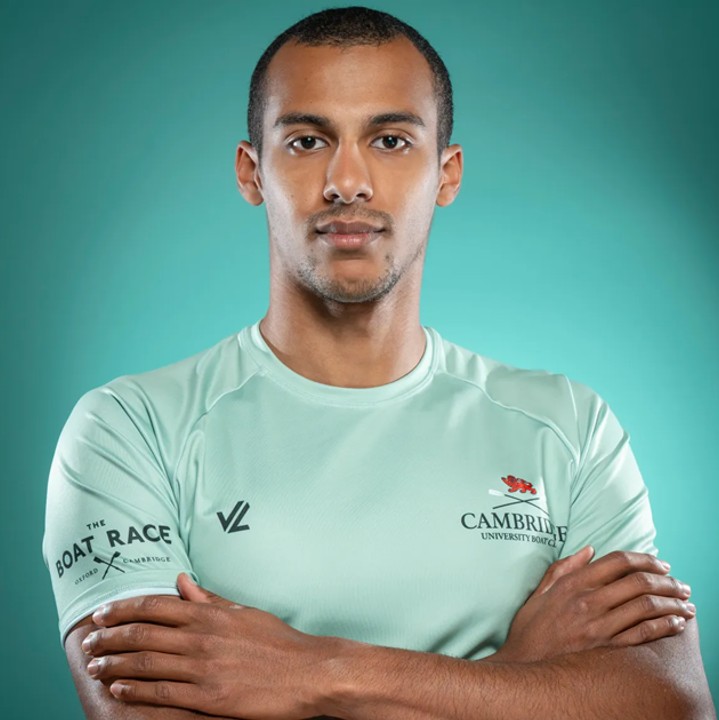
PhD Physics, undefeated four times Boat Race 'Blue', CUBC President

Noam Mouelle, PhD student, on winning the Boat Race 4 times and balancing academia with a rigorous training schedule

Hughes Hall’s Physics PhD student, Noam Mouelle, from France, was selected for the 2023, 2024, 2025 and 2026 Men’s Blue Boat crews for the Boat Race, in which he remains undefeated. This fantastic achievement is perhaps all the more poignant as Noam is the first Black man to have made the squad since the (men’s) race began in 1829.

Noam was also been named as CUBC President for the 25-26 Men’s campaign.

Noam began rowing at the age of nine in the Paris area. With his home club, Société Nautique du Perreux, he won multiple national titles and represented France at both the Junior and U23 World Championships. He also spent time rowing in Brussels before beginning his undergraduate degree in Physics at Imperial College London in 2018.

He spoke to us about the positive impact of rowing on his academic endeavours.

“It actually took a while for me to really start enjoying rowing and the competitive side of the sport. At first I just really enjoyed seeing my friends. But then I started rowing in the competitions and I got my first medal as a J14, two medals at J15 and I won the National Championships at J16 and again in J18. In total I won it four times in different categories and it was such a good feeling.”

However, he recalls feeling so ‘very far away’ in many ways from Cambridge, and the Boat Race, when he was younger.

“I was fortunate that when I arrived at the University, I’d had a lot of experience and been at the U23 world championships in the summer so the coaches accepted me straight into CUBC.”

“But it’s important to say that you don’t need experience to try rowing and nobody should be scared if they want to have a go because actually it’s quite a simple sport and it’s definitely something you can start in later life. There are many excellent rowers on the CUBC squad who only started rowing at Cambridge.”

Studying for a PhD in Particle Physics at Hughes, he loves the international community of mature students who he says often have fascinating stories to tell. Far from rowing getting in the way of his studies, Noam has found it has a positive impact on his work, helping him cope with the pressures and stresses of academia and forcing him to have structure in his day and his tasks.

“Rowing has been beneficial in many ways. The stress I have when I race is so much more intense than an exam so it makes it feel relatively easy. It’s also great to have balance and something other than your studies. When you study a PhD you can have a week where you make zero progress, so it’s nice to have something else that goes well – it’s great that the PhD isn’t my whole life.”

For more see our recent news feature.

Mosope Adeyinka

Our alumna on a journey into tech

In the five years since her MPhil in criminology, alumna Mosope Adeyinka (2020) has embarked on a career in the technology sector.

Mosope sees her work today not as a significant career change but as a way of bridging her joint interests in tech and criminal justice.

After a year working as an information technology engineer at Darktrace, a global leader in AI-powered cybersecurity, Mosope moved to her current role as a system technologist at Motorola Solutions, a critical infrastructure provider for public safety operations in the United States.

“I always had a flair for tech and wanted to see if I could amalgamate that with my interest in criminal justice, but focus on tech a little more,” says Mosope. “What I do now is a lot of troubleshooting of software and equipment in 911 dispatch centres. Motorola sells software to centres across the US, and if those phones or consoles or other devices stop working, we’re responsible for taking care of that.

“My work is still very much linked to criminal justice because I’m working alongside and supporting these dispatch centres. Quite often, it can mean the difference between life and death. If a dispatch is having audio issues or their console isn’t working, people calling 911 can’t get through to them because of those issues. It delays the process, and that can be a huge problem when the person calling needs immediate attention. So it’s a lot of pressure!”

With the ever-increasing prominence of AI across all aspects of society, Mosope hopes to develop her digital skills in this sphere as her career progresses. Through her previous work at Darktrace, she gained first-hand exposure to how machine learning can be used to detect developing threats to security and intervene to tackle them. Mosope’s ambition is to move into a managerial role within the AI sphere, using this technology to the benefit of the public.

For the full article, see: https://www.hughes.cam.ac.uk/about/news/meet-our-alumni-a-journey-into-tech.

Dr Othman Cole

Governing Body Fellow

Dr Othman Cole, Fellow and former Race Equality Champion, reflects on his Cambridge journey from student to Associate Professor.

“My journey at Cambridge University started in 2003 when I embarked on my MPhil in Finance degree at Judge Business School and became a member of Hughes Hall. Looking back over my 20+ years as a Black person navigating Cambridge, firstly as an MPhil and then a PhD student, a postdoc, becoming a faculty member, and now an Associate Professor, I have had a very positive experience.

“But I was the only Black person in my MPhil cohort, and it wasn’t until the third year of my PhD that a second Black person joined the programme. Over the years, I believe this has improved and I am seeing more Black students on the different programmes here. I sincerely hope the next 20 years will see even greater progress in the University, colleges and departments through diversity and inclusion initiatives.

“On the faculty front, I have been and still am the only Black member of faculty in my department. Whilst I understand the recruitment challenges for more diversity I long for the day when there are more Black faculty members, not just in my department but across the University.

“Cambridge is a special place and I encourage Black students considering applying to certainly do so, as well as Black applicants for professional and faculty positions they are considering. I believe Cambridge is more accessible than it’s perceived to be and you will hopefully realise there is nowhere else you would rather be, just like I’ve realised!”

Dr Cole became a member of Hughes Hall in 2015 and a Governing Body Fellow in 2017. He was previously a Tutor and Race Equality Champion at Hughes Hall.

He is Deputy Director of the Executive MBA Programme at Cambridge Judge Business School (CJBS), and Senior Faculty in Management Practice (Finance). He holds a PhD and an MPhil in Finance, both from CJBS; an MSc in International Securities, Investment and Banking; and an MEng in Computer Systems Engineering.

Prior to his current role, Dr Cole was a Research Associate and then Fellow at CJBS. He was also an Assistant Professor of Finance at ESCP Europe Business School, where he is now an Affiliate Professor. His areas of teaching are in the areas of corporate finance, project finance, mergers and acquisitions, and his areas of research are in the areas of capital structure of companies, behavioural biases, oil companies, carbon emissions and economic growth.

Dr Bridget Bannerman

By-Fellow, biochemist, cancer specialist

Dr Bridget Bannerman joined Hughes Hall as a By-Fellow early in 2025.

Bridget is a member of the Operations Board for the Alliance for Cancer Early Detection (ACED), a member of the Early Cancer Institute steering committee, and the Programme Manager for the ACED cohort.

Bridget has a PhD in Biochemistry from the University of Cambridge, and an MSc in Informatics from the University of Manchester and specialises in evolutionary and theoretical systems biology. She has previously led/supported multiple clinical trials, held research management positions at the Cambridge University Hospitals and the Medical Research Council, and postdoc positions in drug discovery at the Cambridge University Departments of Biochemistry and Medicine.

Over the years, she has led institutional projects sponsored by Pfizer, Takeda, Movetis (a spin-off from Johnson and Johnson), Royal Society, WHO, and various CROs at the MRC, Wellcome Trust Sanger Institute, University of Cambridge, and hospitals.

As a champion of diversity in clinical trials, she has spearheaded patient engagement and recruitment strategies across diverse populations in Africa, Europe, and the Americas.

In 2026 Bridget was named as as one of nine recipients of a Schlumberger Foundation 2026 Faculty for the Future prize. This merit-based award recognises academics who are translating their scientific and engineering expertise into initiatives demonstrating potential for wider impact. Bridget’s award is in recognition of her work “Empowering African Women to Eliminate Cervical Cancer”. Selected from 156 applications from 61 countries, the nine winning initiatives reveal the breadth of what Faculty for the Future Fellows are building through science and engineering.

For more on Our People.

Katrina Ffrench

Alumna, activist, councillor

Katrina Ffrench, By-Fellow, Founding Director of UNJUST UK, Labour Councillor, former CEO Stopwatch

During Black History Month, I draw great strength and inspiration by reflecting on my African-Caribbean roots. Although I am a second-generation British-born Londoner, I am acutely aware of my grandparents’ lived realities growing up in colonial Jamaica and then motherland England. To be the first in my family to go to university and for it to be Hughes Hall College, Cambridge, was a remarkable and memorable milestone in our lineage.

I am incredibly pleased that my now-late grandparents attended my graduation in 2009 alongside, their daughter, my mother. I can remember the elation, excitement and happiness that radiated from their faces as they sat in Senate House.

Time seems to have flown by since the summer of 2009; thankfully, the global economic crash that occurred, sod’s law, just as I was leaving Hughes, did not prevent me from putting my Social and Political Sciences degree to good use and beginning a professional career in local government. I have been blessed to have worked across two local authorities, which provided great insight into the mechanisms of government administration. Being a council officer, I worked closely with the voluntary sector and was amazed at the extraordinary work being undertaken by many charities and individuals. It was during this time that I began volunteering as chair of Islington Stop and Search Community Monitoring Group. This rewarding albeit challenging role was to be the catalyst that changed the trajectory of my career.

I was approached to apply for a chief executive position at a national charity focused on racial disparity in stop and search, and I was successful at the interview! It was my first ever senior leadership and staff management position. Enthusiastic and committed to making progressive changes in policing, I gave the role my absolute all. It was a fantastic opportunity, and I truly cared about the organisation’s mission; it felt more like a calling, a vocation, than a profession. Whilst under my stewardship, the profile of the charity was amplified through various media, a pivotal moment being when I provided oral evidence to the Home Affairs Committee –The Macpherson Report: twenty-one years. I grew the team and raised a record-breaking £550k during the unprecedented period of 2020/2021. After achieving all the above, I decided it was time to move. I was not entirely clear on my next steps, but I did know I wanted to stay in the voluntary sector and remain focused on issues of racial equity within the criminal legal system.

It was in January 2021 that I took the bold risk to establish UNJUST CIC. The experience I gained as a chief executive gave me the confidence needed to start something from scratch. UNJUST turns four next year and, in its short existence, has already made a considerable impact.  In 2021, we launched strategic litigation proceedings against the Metropolitan Police for its use of the Gangs Matrix, a clandestine database that was targeting black males; we were successful as the case was settled. The Metropolitan Police conceded that it breached human rights and admitted wholesale change was needed. After over 13 years of operating, the Gangs Matrix was dismantled earlier this year.

Aside from my day job, I was elected a local councillor in 2022. The election was a significant victory for the Labour Party, and personally, Wandsworth, the borough I represent, had been Conservative-led for over forty years.

My time at Hughes Hall forged a way for the above to happen. Reflecting on my undergraduate years, I fondly remember discussing societal issues with my peers and envisioning how the world could be improved and people’s lives bettered. I had the pleasure and privilege of meeting people from across the globe, each of those interactions shaping my path in ways unbeknown to me then. The time and space to solely focus on understanding subjects in depth stimulated my growth and world perspective.

Hughes is a second home; whenever I return, there is a flood of nostalgia. Yes, the college has grown, but it still has an imitate feel, a sense of serenity, and, importantly, normality, with good old Mill Road being a stone’s throw away.

Elizabeth Atuheire

Ugandan feminist sociologist and social justice enthusiast

With 7 Mastercard Foundation scholars at Hughes Hall in 25-26, and the Programme Director, Dr Tabitha Mwangi, a Governing Body Fellow, we are proud to be part of the work of the Program and to benefit from the scholars in our community.

Here, one of the 2025/26 scholars, Elizabeth Atuheire, reflects on her first few days and weeks in Cambridge and at the College.

Elizabeth is a Ugandan feminist sociologist and social justice enthusiast. Driven by a passion to challenge social and gender inequalities, she founded YOHEP (You Have the Potential), a youth-led grassroots organisation that empowers teen mothers in Uganda’s urban informal settlements. Drawing from considerable research experience and practice, she applies critical gender analysis to design transformative interventions that align with the global social development agenda.

Elizabeth is pursuing an MPhil in Multi-disciplinary Gender Studies and seeks to deepen her analytical and methodological expertise, learning from interdisciplinary, rigorous and world-class teaching.

“As a Mastercard Foundation Scholar at the University of Cambridge, I feel both excited and deeply motivated. I hope to become a pillar of support for other talented young Africans who aspire to make a difference in their communities.

“Hughes Hall truly feels like a home away from home. I have enjoyed participating in various social events, the wonderful matriculation dinner, and the diversity within the College. The many faces from different countries remind me that I am not alone on this journey. 

“I am very grateful for the wonderful friends I have made so far. Their kindness and support have made my transition to Cambridge both comforting and memorable.

“Beyond my current course, I plan to pursue a PhD for deeper knowledge and understanding.”

After her studies, Elizabeth will return to Uganda where she intends to contribute to academic and policy-oriented scholarship, mentor early-career researchers and collaborate with women’s rights movements to co-create gender transformative programs in Uganda and beyond.

Ijeoma Ogbuju

I fell in love with Cambridge on a day-trip in Year 11

As the eldest child of Nigerian parents, I was always expected to go to university.

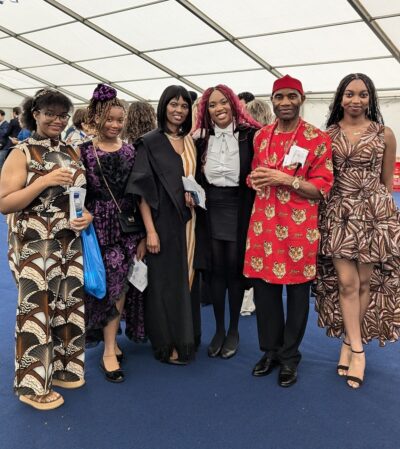
I fell in love with Cambridge on a day-trip in Year 11 with my state school, and later took part in Target Oxbridge, a programme that helped Black African and Caribbean students increase their chances of getting accepted into Oxbridge. These opportunities enabled me to envision myself as a student at Cambridge.

For me, Hughes Hall is the place where I was able to develop my academic curiosity and push myself, with endless opportunities to try new things. I have made lifelong friends that I will continue to remain in touch with beyond my time here.

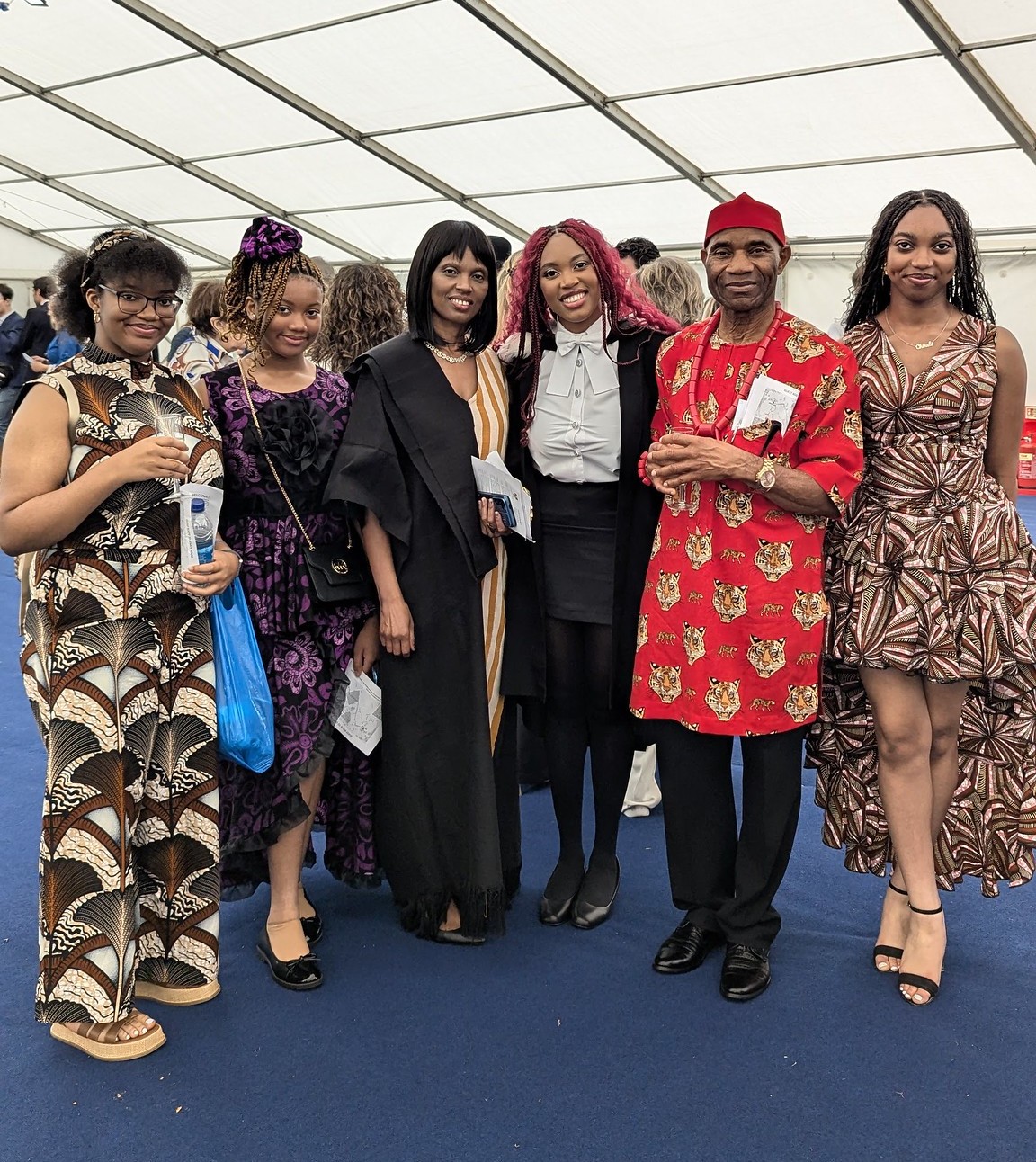
Ijeoma completed a BA in Law at Hughes Hall in 2024, and continued with Hughes to study for an MPhil in Criminology. Image: Ijeoma, 4th from left, pictured with family and loved ones at her Master’s graduation.

Francisca Arhinful

Shaping a sustainable future for Africa as an educator and education policy analyst

Francisca Arhinful is a Ghanaian scholar and founder of the Smooth Transition Help Center, which supports young people into higher education and meaningful careers through mentorship, digital skills training, and scholarship support.

Francisca pusued an MPhil in Education (Education Policy, Leadership, and Improvement) to build the tools, partnerships, and networks to scale her impact and help shape a thriving, sustainable future for Africa as an educator and education policy analyst.

Her mission is to transform educational ecosystems across Africa through policy advocacy, youth empowerment, and climate-resilient learning models. She told us:

“Every day at Cambridge reminds me that I was right, this is where I’m meant to be. Hughes Hall has given me a true sense of belonging. I’ve discovered that education truly thrives where people connect, and every new day here is a fresh opportunity to learn, grow, and become more. Thank you once again for this opportunity, it means a lot to be part of such a vibrant and supportive community.”

Meant to be here

A recent Stormzy scholar reflects

Kudzai Chivenga (2021, BA Land Economy) reflects on her time at Hughes as a Stormzy Scholar.

From matriculation dinners to buying a gown, living in Chancellor’s Court, and spending countless evenings in the MCR surrounded by brilliant and kind people, Hughes became a second home. Through it all, the College staff were my anchors…when it all felt overwhelming…whenever impostor syndrome crept in.

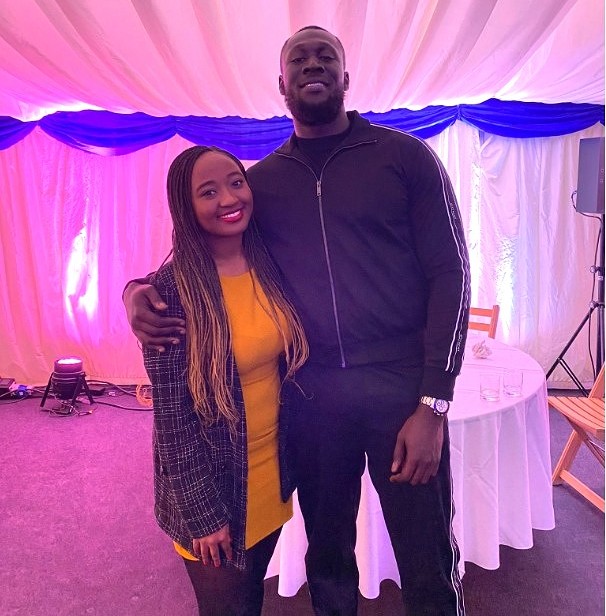
But behind it all, I was in a ‘secret family’ with my fellow Stormzy scholars. I am endlessly thankful to big Mike aka Stormzy for proving that Black kids not only go to Cambridge, but we flourish, excel, and make the world a better place. Sitting in the audience as he received his honorary doctorate from Cambridge was one of the defining moments of my journey. To watch the very person who helped me step through these gates be honoured by the same institution felt like a full-circle moment, a quiet reminder that our stories are powerful, that we belong, and that we are rewriting what excellence looks like.

I look back on these memories and think: we were never just passing through, we were always meant to be here.

  • UK rap artist Stormzy and HSBC UK sponsor scholarships for Black British undergraduates from low-income and/or disadvantaged backgrounds.
  • For further information, including eligibility criteria and how to apply, see Stomzy Scholarship.

Black History Month

What's on at Hughes

Black History Month 2026

At Hughes Hall we mark Black History Month across our community.

A celebratory Formal Hall, inspiring Library display, and an events programme led by our students provide a range of offerings.

Black History Month events are open to everyone in the spirit of cultural exchange, making new friends, and sharing stories in order to celebrate the diversity of our community and better understand the impact of Black heritage and culture. We hope you will join us over the next few weeks to celebrate. Activities confirmed so far:

  • 23 October: Black History Month Formal Hall – join students, Fellows and guests for an evening of inspiration, fine dining and conversation. Drinks from 7pm. Book via Upay.
  • 26 October: Black History Month Movie Night, Pfeiffer Room, 8pm.
  • plus a library display to inspire your reading.

Thank you to our students, led by the MCR Committee, our College Race Equality Champion and the wider staff body for their support.


Ademola Aiyenuro

PhD Pathology student

Ademola Aiyenuro, PhD student and volunteer, driving innovations for improved cancer diagnosis and treatment in Africa.

I was born in Kano state, the Northern part of Nigeria. In the mid-90s, my parents were poultry farmers and as such I spent significant years of my childhood living in the major Northern states of Nigeria.

My parents hail from Ilaje local government, a riverine community in Ondo state, South-Western Nigeria. I grew up in Lagos, the commercial hub of Nigeria with the aspiration of becoming a clinician and enrolled for a Bachelor’s degree in Microbiology at the Federal University of Technology, Akure. A placement at a health care centre providing therapeutic and diagnostic services for people living with HIV and/or Tuberculosis motivated me to apply knowledge from my classroom to the clinical laboratory.

I was employed as a medical laboratory scientist and a public health expert for a Tuberculosis eradication program which provides therapeutic and diagnostic services for people living with Tuberculosis, some of whom were living with HIV. I became more aware of the challenges in the early diagnosis and treatment of infectious diseases, especially among Nigerian teenagers. Whilst working for three years in the clinic, I coordinated outreach programmes for free HIV testing among teenagers in my local community, most notably the annual HIV testing on World AIDS Day. I have been keen to make a positive difference in my society.

My work experience in Lagos fuelled my passion for providing compassionate care and controlling sexually transmitted disease among Nigerian teenagers and young adults. This passion led to a prestigious Cambridge Trust Commonwealth Scholarship (2020) for an MPhil in Pathology at Cambridge, where I studied the cellular origin of cervical precancers and disease patterns in different populations of women. This foundational work helped uncover mechanisms of viral persistence and disease progression, particularly in women with HPV infections.

Now, as a PhD candidate at Cambridge, I focus on understanding how immune cells regulate HPV infection and cervical cancer progression, especially in immunocompromised women living with HIV. My research employs immunofluorescence and in situ hybridisation technologies to study immune cell dynamics and HPV-mediated immune evasion mechanisms. Collaborating with teams from the National Cancer Institute and other global institutions, my work aims to develop novel therapeutic strategies for cervical cancer prevention by illuminating how the immune system interacts with HPV across diverse populations.

In the near future, I plan to expand my mentorship platform, Research4Knowledge, to continue inspiring early-career African researchers. After completing my PhD, I aim to become a physician-scientist in cancer biology, driving innovations for improved cancer diagnosis and treatment in Africa.

In addition, as a volunteer for the Transforming Education in Niger State II (TENS II) Programme, I contributed to enhancing data collection and management across educational institutions. My role involved coordinating logistics for enumerators to ensure comprehensive and accurate data collection. This experience strongly aligned with my academic focus on data analysis and cross-disciplinary collaboration, reinforcing the importance of evidence-based decision-making. The challenges we faced, such as infrastructural limitations and the need for clear communication, highlighted the value of careful planning and adaptability—skills integral to both my research and the programme’s objectives. TENS II’s aim of improving educational outcomes through data-driven solutions mirrors my broader passion for impactful, evidence-based interventions in real-world challenges.

Dr Kennedy Mbeva

Governing Body Fellow

Tanatswa Chikaura

PhD Psychiatry student

Tanatswa Chikaura, PhD student and MCR representative for Black and minority ethic students.

Tanatswa, 25, from Zimbabwe, is a student at Hughes Hall and in the first year of a Psychiatry PhD, more specifically, she is working on trauma and suicide prevention among autistic people. Tanatswa successfully completed an MPhil in Neuroscience at Hughes in 2022.

In 2023 Tanatswa was awarded a prestigious Diana Award for her transformational mental health advocacy work in Africa, epitomised by her founding of the Ndinewe Foundation which is changing the lives of people across the region.

This year at Hughes, she has taken on the role of MCR Representative for Black and minority ethnic students, to support inclusion and diversity efforts across college on behalf of her student peers.

To mark and celebrate Black History Month 2024, Tanatswa is looking forward to running an academic seminar showcasing Black excellence at Hughes Hall and a cultural exchange social evening. She is also supporting and attending our annual Black History Month Formal Hall and will introduce a musician to accompany the pre-dinner drinks by performing on the beautiful African piano, known as the Mbira.

For more information on the Black History Month programme at Hughes, see: www.hughes.cam.ac.uk/about/news/black-history-month-2024-programme.

Beverley Vanterpool (2005, MBA)

Empowering women of colour to excel

After two decades working across a range of people-leading and change-making roles in large multinational companies, including VISA, Accenture and American Express, Beverly has recently started a new chapter.

Earlier this year, she established Career Sistas, a new platform which supports women, and in particular women of colour, in their careers.

We caught up with Beverly to find out more about her new venture and her reflections of her time studying for her MBA at Hughes Hall.

“Twenty years ago, I was a young woman in the British Virgin Islands (BVI) ­­­— a UK overseas territory in the Caribbean with a population of fewer than 30,000 people— wondering if I should dare apply to Cambridge Judge Business School (CJBS), where the university population was comparable to that of the BVI. And honestly, I never thought I would get in. I applied because a friend thought I should… not because I believed it myself.
“Recently, I returned to Cambridge for MBA Alumni Weekend hosted at CJBS and I was reminded how glad I am that I tried.”

At the beginning of this year, Beverly left Visa, where her last role was as Senior Director for Customer Experience Design, to embark on a new entrepreneurial venture.

While the business was reorganising, Beverly realised that now was the perfect moment to not go straight back into a corporate role but instead fulfil several of her passions to create a business, author a book and support other women in their careers. Hence, she founded Career Sistas with a vision of “empowering women in their careers and specifically those from diverse backgrounds who might have at times felt like outsiders in traditional spaces.”

Foundational to this new venture is Beverly’s newly launched podcast ‘Stories by Career Sistas.’   The podcast features interviews with women from diverse backgrounds who are making bold career moves and delves into the challenges and triumphs of their professional journeys. Always leaving listeners with real stories, advice and hopefully a bit of inspiration for their own paths.

Secondly, Career Sistas is the publisher to Beverly’s book ‘Build your Table’. Covering topics ranging from the importance of sponsors and role models through to navigating career transitions and building a professional network.  ‘Build Your Table’ is intended as a career guide, blended with memoir based on Beverly’s lived experience and relevant for anyone that has ever felt outside the system, as a women, immigrant, professional of colour or even an introvert.

“The book follows my journey over the last twenty years from the BVI to Cambridge and then London. I draw on my experience as a Black woman, an introvert, and an immigrant climbing the corporate ladder to share my learnings of what it takes to succeed when navigating systems that are not built in your favour.
“Within the book, I build on the metaphor of the table and structure much of the book around four pillars of the table which I define as knowledge and experience, community, opportunity, and visibility which I believe are crucial for career success. Ultimately, the key message behind the book is about being intentional, whether leaning into organisational dynamics or creating your own unique path”

Right now, Career Sistas exists through social media platforms, its website where individuals can subscribe to its mailing list and get invited to specific events.  However, coming up next, Beverly is planning on Career Sistas launching an online community platform where women can directly join, interact, network, collaborate and more.

For the full story, see: www.hughes.cam.ac.uk/about/news/bhm25-beverly-vanterpool-2005-mba-is-empowering-women-of-colour-to-excel.

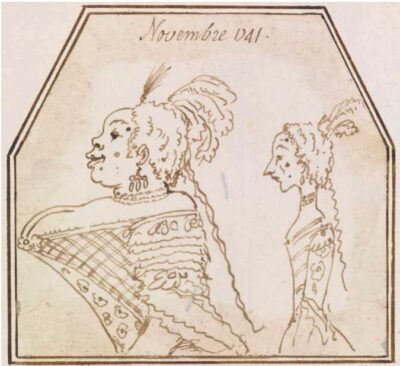
Diasporic divas

Exploring racialised and gendered celebrity in Europe, 1715-1925

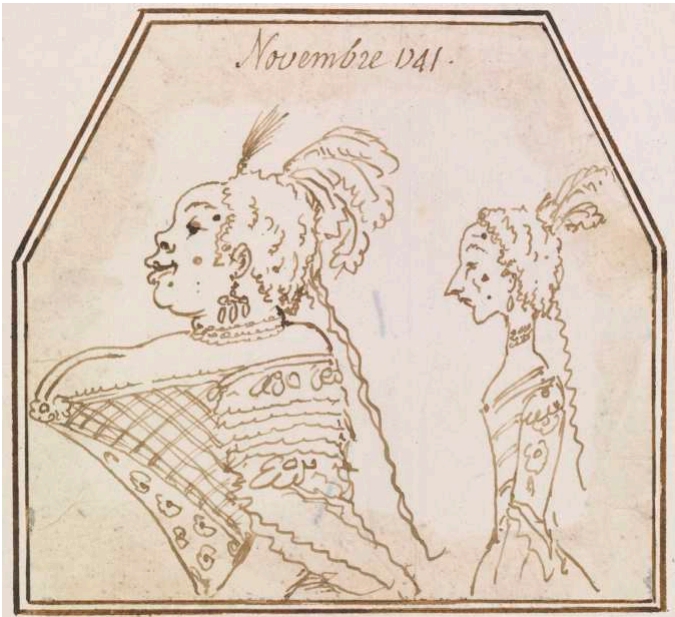
In her groundbreaking project on Afrodiasporic divadom, Dr Emmanuela Wroth, Hughes Hall and Leverhulme Trust Fellow, traces the conception of the cult of the diva back to eighteenth-century Europe.

A ‘diva’, from the Italian for ‘goddess’, is a feminine, otherworldly being. But what role does the racialised, Black, Other play in the conception of the diva as otherworldly? While in contemporary culture, ‘diva’ is often used to denigrate or elevate Black celebrity women, historical diva and celebrity studies continue overwhelmingly to be a history of white celebrity that oversimplifies a more complex narrative. My project begins to address this oversight by shining a light, for the first time, on Afrodiasporic divadom, from  he conception of the cult of  the diva in eighteenth-century Italian opera to its inclusion of theatre and dance stars in fin-de-siècle France.

Moving beyond scholarship that considers the African American Joséphine Baker (1906–1975) as the original Black diva, my research makes historical and geographical interventions. Rather than locating Black divadom as originating in nineteenth-century US, I trace Black divadom back to where the cult of the diva originated, in eighteenth-century Europe. I, therefore, position Black women as crucial pioneers in shaping divadom from the outset. Given the vast historical impact of Black women on the Western music and entertainment industry – arguably the oldest and most visible domain for Black women’s socioeconomic mobility – this is a particularly urgent area of enquiry. The fact that the figure of the ‘otherworldly’ diva originated and developed in Europe in the mid-to-late stages of the transatlantic slave trade, at a time of increasing pressure among white Europeans to depict Black subjecthood as Other, is deeply consequential yet entirely unexplored.

My project focuses on representative case studies largely absent from scholarship despite their huge impact and visibility at the time. Italian and French opera singers Vittoria Tesi (1701–1775) and Caroline Branchu (1780–1850) were two of the most celebrated divas of the eighteenth and nineteenth centuries, while the mid-to-late-nineteenth-century travelling novelty acts of the Cuban singer, instrumentalist and dancer María Martínez (1820–after 1881) and the Prussian circus performer Miss La La (1858–1945) inspired works by the likes of Théophile Gautier and Edgar Degas. Recovering these early waves of Black divas is, therefore, a productive way to better understand how the intersecting notions of race, gender, sexuality and class took shape in eighteenth- and nineteenth-century European colonial capitals and how they have impacted and shaped Western divadom, celebrity and performance culture that continue to other Black femininity as inherently eroticised and exoticised.

As originally published here: Diasporic divas: racialised and gendered celebrity in Western Europe, 1715–1925, Leverhulme Trust Newsletter, September 2024

Nobuhle Ndlovu

Alumna, intern, staff member

Life at Hughes: scholarship, learning, working and interning

2022 saw the launch of the Mastercard Foundation Scholars Program, providing fully-funded scholarships to talented scholars from Africa, and enabling Nobuhle Ndlovu to pursue a Master’s degree in Conservation Leadership at Hughes.

We spoke to Nobu about her experiences of Cambridge, her work here during and beyond her studies, and what draws her to the principles of conservation and sustainability.

Tell us about your academic passions?

I am drawn to sustainability and conservation because they are multi-dimensional concepts that touch on various aspects of our existence, from environmental concerns to economic practices and societal well-being.  With the nature-positive debate and movement building momentum, the companies or corporates that are adopting sustainable practices are much more resilient.

Coming from the Global South, I believe the conservation and sustainability sector is offering opportunities for economic growth, new markets and green jobs.  At a societal level, it brings an awareness of the ethical and corporate responsibility that we all have. This includes understanding how decisions and choices in our daily lives can affect other people.

And your path to Cambridge?

Ever since I was young, Cambridge has been my dream institution. Growing up in Zimbabwe, this was a possibility that became blurred because of responsibilities and the high costs of living. I did my undergraduate degree in Forest Resources and Wildlife Management with the University of Science and Technology in Bulawayo, Zimbabwe. Afterwards, I worked as a Forest Officer with Forestry Commission under the Ministry of Environment and Climate Change in Zimbabwe.

My work provided me with the tenacity and skills to work under pressure and make informed yet critical decisions when needed. I still wanted to be part of the Cambridge community, and the Master’s in Conservation Leadership aligned with my values as well as providing me with the skills and knowledge I needed to progress my career and become a better version of myself.

How has the College shaped your experience here?

I chose Hughes Hall because of its student diversity and mostly because of the Centre for Climate Engagement. It has been really a life changing experience. The diversity of international students have provided unique networking skills for me and allowed me to forge lifelong relationships.

Hughes Hall has provided me a home away from home!

What is it like being an international student at Cambridge?

During the first few weeks, the culture shock was something I dealt with. However, I am thankful for the support provided by the College, like a Tutor and Nurse, which helped the adjustment to the fast-paced academic environment in Cambridge.

I had a strong support system from my course-mates too, and Cambridge offers so many platforms and opportunities for postgrad students to network, learn and showcase their skills and knowledge. Most importantly the talks and seminars offered by the Colleges have really been eye-opening and have opened a realm of possibilities for the future.

Cambridge colleges are unique in the sense that they provide more than just a communal space for students. The academic support and Library Team were also pivotal to my studies.

You completed an internship with our Centre for Climate Engagement.

As an internship student at the Centre, I worked on several exciting projects. I produced summaries for several webinars and events on climate governance for board directors, providing a concise, high-level overview of complex information and enabling effective decision-making and strategic oversight. I also worked with the team to update the carbon pricing content piece, which is essential for board directors to make informed strategic decisions, ensure compliance, and raise climate awareness.

Transition to Climate Governance Initiative

Since my internship, I have transitioned to a role as a Networks Manager for the Climate Governance initiative. My role includes supporting coordination, communication, and engagement with the board director network of Chapters in over 70 countries.

Basirat Razaq-Shuaib

PhD student, advocate, poet

Basirat is a doctoral candidate in Disability and Inclusive Education at the Faculty of Education, Cambridge.

She is also an award-winning children’s author and the founder of The Winford Centre for Children and Women – a charity that provides education and welfare support services for children with developmental disabilities and their families in Nigeria. Her current research explores the perspectives and lived experiences of parents and their children with neurodevelopmental disorders in accessing education in a Nigerian context.

Her poem, below, highlights the non-prioritisation of children with disabilities in educational reform agendas, and how assumptions around scarcity of resources legitimise their exclusion from education. Written in a child’s voice, the poem challenges policymakers and practitioners to go beyond ‘symbolic inclusion’, to seek creative solutions for the education of children with disabilities and ensure that beyond words every child has the same rights.

I AIN’T NO AFTERTHOUGHT

Born of a woman but not like every other,

I am one of those often described as the lesser.

Sometimes I’m also called disadvantaged,

Though I have potentials they are encaged.

I face so many walls so hard to scale,

My education is all but a haze.

Left on the side lines, considered an afterthought,

My spirit sinks seeing how my battles are being fought.

If only they can embrace my unique light

And provide me with opportunities to take flight.

They say they hear my voice and understand my plight.

They say they made laws that entrench my rights.

But all I hear is words, words and more words

About how every child has the same rights.

But of what rights we speak I really don’t know

Because rights as a word is just a homophone.

One that my brain finds rather confusing,

With too many meanings I find it amusing.

But if you mean the one that says all children are equal,

Then I’ll say from where I stand I beg to differ.

Because though you say that all children are equal,

It appears what you mean is some are more equal.

And even when you claim to take some action,

For your convenience you help some children first before the…

Yes, just as I thought, before the others-

The very group that represents the lesser.

Lesser not by choice but by societal standards,

Yet we have no choice our patience you demand.

Even if I understand that resources are scarce,

Isn’t it disheartening to be left for the last?

I ain’t no afterthought, I’m a child just like every other,

With dreams in my heart, with hope to discover.

So before you ask me to wait

Ask yourself, what’s at stake?

Am I giving every child a fair chance

Or perpetuating this circumstance?

I ask you all to widen your view

To see the value in embracing us too.

For when you prioritize those deemed “the lesser,”

You uplift not one child but all children together.

Let’s challenge the notion of limited resources,

And seek creative solutions that unlock better courses.

Because until you choose what must be done

Over what you find convenient,

And place collective well-being

Over self-interest achievements,

You cannot say you have my interest at heart

Or that every child is equal without playing your part.

I AIN’T NO AFTERTHOUGHT AND I DEMAND FOR BETTER.

Kudzai Chivenga

First Black female MCR President

Kudzai Chivenga, student, Stormzy Scholar, and first Black female MCR President

Kudzai is from the UK and graduated from Hughes Hall in Summer 2024.

Kudzai studied for a Land Economy degree and was 2022-23 President – the first Black female President – of our MCR student committee. She was also as Stormzy Scholar, saying recently “I will forever be grateful for Stormzy x HSBC for sponsoring for my degree. Thank you Hughes Hall, University of Cambridge and the wonderful student community for the best 3 years.”

As President, Kudzai worked hard to inspire, advise and connect her fellow students, especially through some of the challenges faced by our international community, coming out of the pandemic. She represented student interests across the college, and through college committee membership, as well as fulfilling the role of academic officer with the African Society of Cambridge University during 2021-22.

Welcoming new students to Hughes, she said: “This MCR Committee has one focus: to engage all communities by becoming One Hughes Hall Family. This means that we want to engage the community by celebrating our differences, learning together, gaining mutual understanding, and working together. Whatever your Cambridge adventure entails, we are here to assist you in having a good time. We want to be as visible, accessible, and transparent as possible.”

“The people who are contemplating applying to Hughes should immediately cease such contemplation and submit an application! The range and variety of individuals you will encounter are intriguing, and the amount of knowledge you may get from them is limitless. To our new members this year, please know how excited we are to have you join our wonderful family.”

Kudzai was responsible for adhering to the MCR Constitution and making it accessible to any member. She also chaired the MCR Committee and general meetings and ensured that the students were represented on College committees in accordance with our ordinances.

We miss you, Kudzai!

Dr Nyarie Sithole

By-Fellow, Clinical Lecturer in Infectious Disease

“What I do next will be of direct benefit to the people I knew at the start of my journey, in the hospitals of Sub-Saharan Africa, where the diseases I now research in the laboratories of Cambridge are so prevalent.”

Dr Nyaradzai (Nyarie) Sithole, talked to us about the turning points, coincidences and kindness that helped chart his advance across the globe, tackling different pathogens, and building up clinical and research expertise, including setting up Cambridge’s first Long-COVID clinic, in order to effect change in the region he came from.

“I trained as a medic in my home country of Zimbabwe and served a few years as a junior hospital doctor – this is where I felt my future lay – in clinics, by people’s bedsides. I supplemented this training with a UK master’s degree in Tropical Medicine and Infectious Diseases which was a special interest of mine. During this time, I had my first taster of lab-based research which proved to be a turning point.”

“I thought being a clinician was the pinnacle of things for me but there was also a deeper feeling that this wasn’t my end-point. I begun to seek a role that combined primary research as well as the rewarding work with patients, but I hadn’t come across lab-led research before coming to the UK.”

During his Master’s degree, Nyarie looked at the effect of vaccination on Rotavirus using data gathered from a largescale vaccination programme in Brazil to understand how the vaccine impacted the epidemiology and landscape of Rotavirus in Brazil. Inspired, he went on to accept a job at Addenbrooke’s as a Registrar in Infectious Disease.

“Something just said to me, Cambridge is where you need to go. This is where your research career is. I took the risk and I haven’t regretted it.”

“I was asked whether I’d consider pursuing a research role alongside my clinical work. Opportunity is a funny thing – sometimes it just presents itself to you during a spontaneous chat with a colleague in a lift when you haven’t slept for 18 hours!”

“It is a blessing to have inspiring colleagues who can see your potential when you’re too busy to notice it yourself.”

Nyarie secured Wellcome Trust funding for new work on HIV replication in human cells. His PhD research elucidated essential domains of DEAD box helicases, DDX5 and DDX17, critical for their roles in HIV replication. It was a key step in bringing together clinical experiences in Zimbabwe treating people with HIV, with his early-stage research career in the UK examining the action of the virus at cellular level. It was also the start of building bridges with clinicians in lower resource settings – to make a difference through new research to those places he used to work on the frontline.

As part of his post-doctoral fellowship, he was appointed to a clinical lectureship position with NIHR which again combined research and clinical work in infectious diseases. It was a perfect next step, and chance to further his HIV work. But then came the pandemic.

“Whilst it derailed my HIV research momentum, I still managed to complete my training to become a consultant in infectious disease, and I set out on a new path, with a new virus.”

Nyarie treated some of the earliest COVID patients in the UK – at Addenbrooke’s – and went on to help establish the national response to long-COVID. In May 2020, he set up the first long-COVID clinic in Cambridge to assess patients referred by their GPs, who suspected they had had COVID-19 and were experiencing ongoing symptoms. Amongst other priorities, the clinic provided clinical service/management for patients with long-COVID and acted as a research hub for scientists and clinicians to research into the pathophysiology behind condition. This enabled him to use his infectious disease lab expertise in collaboration with other researchers, and his clinical work, which led in turn to a ground-breaking national role in long-COVID research.

“This combined my skills and expertise in vaccination, virus replication and wider epidemiology with my ongoing passion for working clinically with patients. The clinics were – and still are – transformational. Unknown to us, we were world-leaders; proactively pushing boundaries in this new urgent area of research. And, it was enormously valuable to develop my own immunology research expertise.”

“We knew from the wider infectious disease field that, for other diseases, patients rarely have symptoms that continue like this long after the initial infection. Perhaps general malaise but we’d never seen anything like long-COVID in terms of both the severity and the variety of symptoms. Every system in the body can be involved in a great wave of symptoms that comes and goes, and can significantly affect long-term health. This was new. So we set about understanding whether it is due to the immune response or some other dysregulated function. What we’ve learned about the body’s immune response to COVID, and therefore how to treat long-COVID, has had significant implications elsewhere in pathogen research and global epidemiology.”

Sharing findings, and research interests, with a former colleague during the pandemic, led to another of those serendipitous opportunities, and Nyarie has found a way to unite new techniques in immunology research with previous expertise in order to address another disease: Tuberculosis.

“Like HIV, Tuberculosis is a disease which has effected Zimbabwe and much of Sub-Saharan Africa. I am taking the skills, techniques and expertise I gain from my work in the UK to address these big global health challenges. When I look back the journey makes sense; the bedside attendance in Zimbabwe to the labs of Cambridge and next California.”

“Ultimately, I plan to establish my own research group back in Cambridge, building on all I have learnt and the networks I have created up to that point; combining lab techniques, data analyses, immunological knowledge, clinical experience and epidemiological expertise, and bringing everything I have learnt from Africa, the US and the UK together.”

Shirley Bekker

Student, Medicine

Popup Content

Lorem ipsum dolor sit amet, consectetur adipisicing elit, sed do eiusmod tempor incididunt ut labore et dolore magna aliqua. Ut enim ad minim veniam, quis nostrud exercitation ullamco laboris nisi ut aliquip ex ea commodo consequat. Duis aute irure dolor in reprehenderit in voluptate velit esse cillum dolore eu fugiat nulla pariatur. Excepteur sint occaecat cupidatat non proident, sunt in culpa qui officia deserunt mollit anim id est laborum.

Lorem ipsum dolor sit amet, consectetur adipisicing elit, sed do eiusmod tempor incididunt ut labore et dolore magna aliqua. Ut enim ad minim veniam, quis nostrud exercitation ullamco laboris nisi ut aliquip ex ea commodo consequat. Duis aute irure dolor in reprehenderit in voluptate velit esse cillum dolore eu fugiat nulla pariatur. Excepteur sint occaecat cupidatat non proident, sunt in culpa qui officia deserunt mollit anim id est laborum.

Dr Roni Ajao

By-Fellow, Tutor, and Race Equality Champion

Introducing Dr Roni Ajao, By-Fellow, Tutor, and Race Equality Champion

“It is vital that all members of ethnic minorities in Hughes Hall and the wider university communities have a safe and enriching experience, irrespective of race.” said Roni.

In Roni’s Champion role, she has helped lead, inspire and support College activity for Black History Month in the UK, as well as providing specific support to our students over the academic year.

Committed to ensuring racial and ethnic equality, Roni has also recently been appointed as the Learning and Development Lead for the University of Cambridge Race Equality Network Committee.

The Network aims to create a sense of belonging by providing a safe forum to network, socialise, question, challenge and receive support and advice, in relation to race equality. It also helps advise the University and colleges on race-related policy and initiatives; a role Roni is passionate about: “I enjoy helping to educate people to foster greater inclusion and equality within the University community and addressing some of the barriers that hinder individuals’ progression and full inclusion.”

At the international level, Roni undertakes research in Education, more specifically, out-of-school children in West Africa, focusing on Nigeria, through creating change to public policy, leadership and strategy. Her work is based on the Transforming Education in Niger State (TENS II) Programme, helping embed a number of the UN’s Sustainable Development Goals (SDGs) across the region. Her work recently won the ‘Changemakers Award’ at the Pioneers in SDGs Awards 2025, in association with the United Nations Department for Global Communications.

Roni is also an adviser to Hughes Hall’s Digital Education Futures Initiative (DEFI) and Executive Director of MRL Public Sector Consultants Limited, a UK-based consultancy specialising in the public sector and defence industry.

For the full article, see: www.hughes.cam.ac.uk/about/news/bhm25-introducing-dr-roni-ajao.

Chisomo Zimphango

PhD in Clinical Neurosciences, President BBMS

Chisomo Zimphango, recent graduate (PhD in Clinical Neurosciences), and President of BBMS

Chisomo recently completed is PhD, during which he also found time to lead the Building Bridges in Medical Science platform, for transdisciplinary biomed discussions for students who want to leave their mark on the world.

Building Bridges in Medical Sciences (BBMS) is a society that unites students and researchers, and enables them to connect, network and get inspired with the purpose of helping to unlock their potential, and ‘advance the world’. This bold ambition is achieved by bringing together an influential, inspiring and relevant network of people to deliver conferences, seminars, networking events and more.

Chisomo said: “Leading BBMS is a huge privilege. What makes us special is the potential and inspiration we provide to others – we truly believe that opportunities are endless when we forge meaningful networks of thinkers and doers; committed to making the medical sciences serve others.”

“Our student members have been able to make informed decisions about their career choices by speaking to an established community of academics, entrepreneurs, and policy makers that we have brought together. That is something very real, and something that will have an impact for many years to come, as our members find their way in the world and start to apply their learning and research across many disciplines.”

“I’d like to thank Hughes Hall here too – our initiative is not feasible without their support, and their people. It is a symbiotic relationship – we continue to support and inspire the College community and they continue to encourage us on our mission at Cambridge – and around the world. Hughes Hall’s motto, disce ut servias – learn in order to serve – feels very apt.”

Building Bridges in Medical Science is a society that brings together scientists from different disciplines, career stages and countries. Members believe in the need for interdisciplinary approaches to tackle the biomedical research and global health challenges of the 21st century, with the aim to provide opportunities to generate discussions across fields and chances for individuals to be exposed to different potential career trajectories. In addition to being a society, BBMS runs an annual conference that invites prominent speakers to Cambridge and is a platform for researchers to display their work on a larger scale.

Basirat Razaq-Shuaib

PhD Education student, keynote 'performance'

Charles Amo Yartey

Alumnus, economist, Gates scholar

Hughes alumnus, Charles Amo Yartley, is now working at the heart of global economic development policy.

He talks about his career at the IMF, from senior economic adviser to country representative.

“There is no better place to study Economics than at Cambridge when it comes to a career in economic policy. The college and the Gates Cambridge system gave me unparalleled support.” said Charles.

Charles Amo Yartey always wanted to follow in his father’s footsteps as an accountant. Growing up in Ghana, he applied to do Business Administration at university, but, because he had not studied business at school, he was offered Economics. It proved to be the start of a fascinating career at the centre of global economic development policy at the International Monetary Fund.
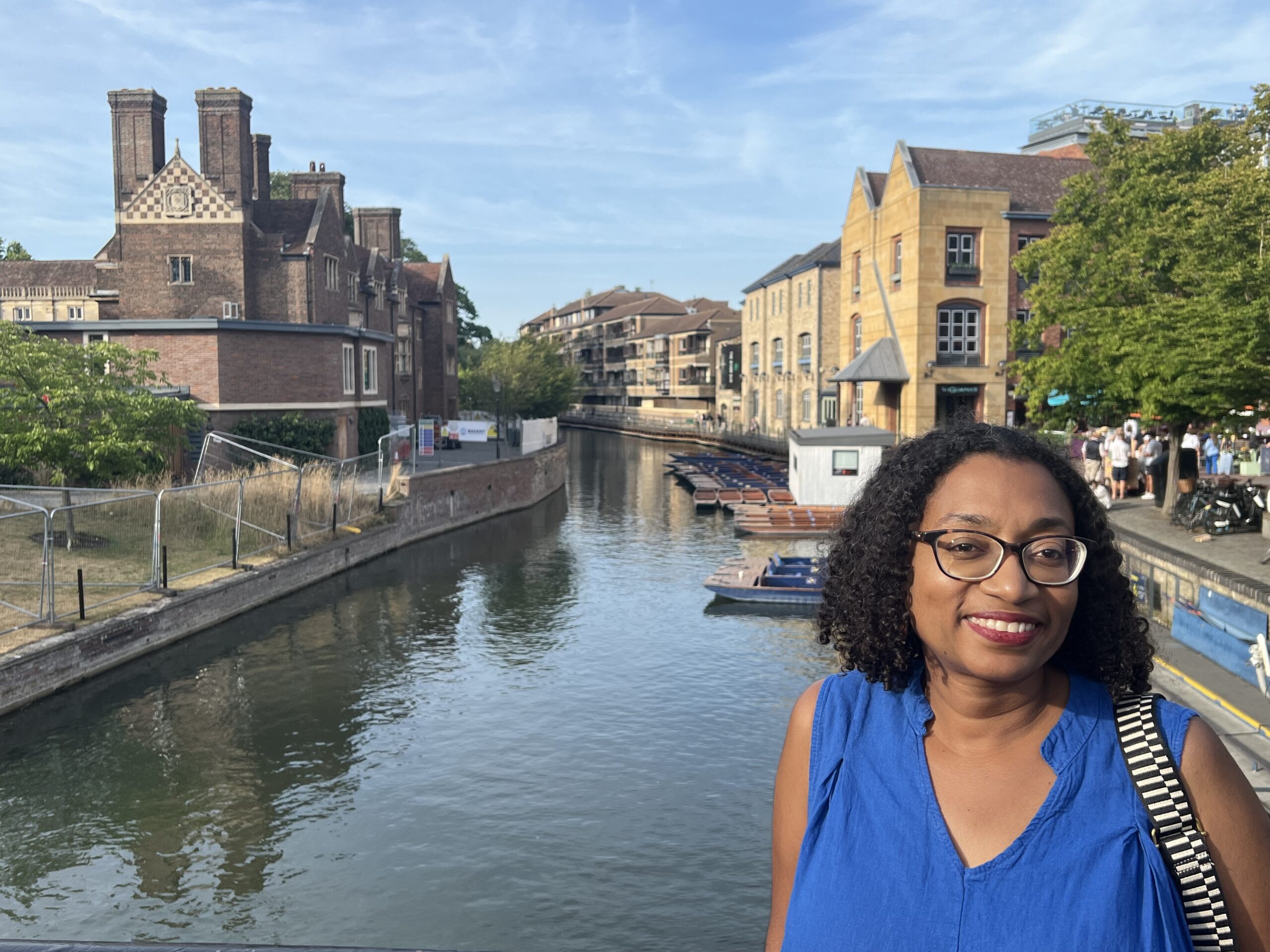
Charles soon discovered a passion for Economics which took him to the University of Cambridge where he did a master’s in Development Studies in 1999, supervised by Professor Ha-Joon Chang, and then a PhD funded by the Gates Cambridge Trust, then in its second year. While there was discussion at the time about whether developing countries should set up their own stock markets, Charles felt that the movement could not be stopped and so what was needed was advice on how to make the most out of the capitalist system.

He never planned to work for the IMF as it is notoriously difficult to get into. His aim was to work for an international organisation in order to pursue his interest in international development. The breakthrough for him came in the summer of 2003 after the first year of his PhD when he interned at the IMF in Washington. He was told to research post-conflict reconstruction in Africa. The IMF later published his internship paper in the book Post Conflict Economics in sub-Saharan Africa.
In his final year, Charles returned to the IMF as a consultant on financial markets. At the time, many African countries were trying to establish their own stock markets. Charles wanted to highlight the important role the African financial market was playing in the global economy, drawing on his PhD research. During his time as a consultant he applied to join the IMF’s programme for young economists and went through an assessment in Paris.

For the full article, see Gates Cambridge.

In our “Meet Our Alumni” series, we interviewed Ebenezer Gyamera, alumnus of Hughes Hall (2015, Plant Sciences), originally from Elmina in Ghana who is currently working as a plant virologist at the Cocoa Research Institute of Ghana.

Growing up in rural Ghana Ebenezer’s early years were characterised by a close-knit community and a connection to nature.

“Growing up in an African village in the 1990s meant one was pretty much cut off from the rest of the world. There were no mobile phones, no internet, and certainly no social media. The communities were relatively small, and everyone knew everyone else in the village.”

Ebenezer’s academic potential was recognised when a teacher encouraged his mother to find him a good school in a bigger town.

“Attending that school for just one academic year still remains one of my best experiences so far. The tuition was superb; we read a lot of fairytales in class, and wrote to pen pals. In just a couple of months, my spoken English improved significantly, and learning only became more exciting.”

Driven by his passion for natural sciences, Ebenezer went on to pursue a Master’s at the University of Ghana, exploring the field of plant virology, specifically focusing on the detection of cucurbit viruses. With a desire to further his research, Ebenezer connected to the Plant Virology Group at the Department of Plant Sciences which led in turn to his successful enrolment in the Plant Sciences PhD program in 2015. He was also one of the five scholars in the first cohort of the Cambridge-Africa PhD programme and was a proud member of Hughes Hall.

“The house was packed with the friendliest of first-year Hughesian graduate students from India, Belgium, China, Australia, France, and the USA. I felt at home very quickly. It was always a delight to return to the house after the department.”

“Outside the house, I also had a very positive experiences, both at my department and with people in the city. Hughes Hall was my first home in the UK and made settling in Cambridge for doctoral research easy.”

Ebenezer works now as a plant virologist at the Cocoa Research Institute of Ghana, focusing on studying the cacao swollen shoot virus disease that affects cacao trees. Cocoa which is the main ingredient in the production of chocolate, is the most important agricultural export commodity in Ghana.

Ernest Aguinam

PhD Veterinary Medicine student

Tafadzwa Muchanyang

MPhil in Heritage Studies, Beit-Cambridge Scholar

Tafadzwa Muchanyangi, postgrad student, and Beit-Cambridge Scholar from Zimbabwe.

He told us about his course, being inspired to do an MPhil and what’s unique about a mature college like Hughes.

“The MPhil in Heritage Studies has presented me with a unique opportunity to network with the leading academics in my field, broadening my horizon in terms of research opportunities. I have admired the diversity in our current group of students which has aided a more unique cultural exchange during the time I have been here. Thanks to the academic excellence and overwhelming support in my department, I am confident that I will pursue a PhD soon.”

“The College has a mature cohort, and everyone has been friendly and supportive throughout my time here. I struggled a bit in the first days being new and being the only black student at Gresham Court, but my colleagues have been very sociable and have made me feel at home throughout my time at Hughes Hall.”

“My time at Hughes Hall helped me regain the academic potential that had declined due to the COVID-19 pandemic. I am grateful to the Shut Up and Write sessions that helped me in the early parts of the Michaelmas Term to regather some routine study patterns. I also completed some of the courses on the Pathways Programme which were helpful specifically coming up with my research proposal for the thesis.”

“For anyone who is thinking of applying start early and always be ahead of the deadlines especially when seeking funding. There can be several interviews so be sure to be yourself and do not be tempted to generate your responses from the likes of ChatGPT as you will deprive your assessors of the uniqueness of the genius in you. Once you complete your undergraduate, there is no shame in applying for volunteering positions, I did it for one year and it opened up all the doors leading to my time here!”

Tafadzwa completed his tertiary education at Midlands State University in a City named Gweru acquiring a bachelor’s degree in Archaeology and a Masters’s degree in Cultural Heritage. He has nearly five years’ experience of working as an Archaeologist with previous jobs at the Zimbabwe Military Museum, Waterkings Environmental Consultancy, and Tohwechipi Foundation. This work experience helped when he applied for an MPhil in Heritage Studies here as it was a requirement of the application process.