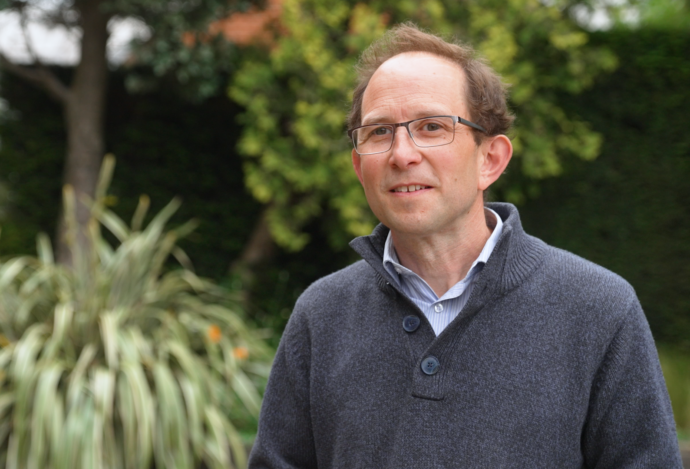
Ian Steed is a Hughes Hall By-Fellow and a consultant in the international humanitarian and development sector with a focus on the policy and practice of ‘localising’ international aid.
Here he explores what the future holds for a global aid sector at a time of rapid change, amid rising geopolitical tensions and disruption. As volatility redefines the global landscape, he asks if we will start to see new, localised and sustainable ways of working.
2025 saw a cut of roughly a quarter in global aid budgets, driven by a reduction of over 50% in American aid spending. As humanitarian emergencies in Sudan, Haiti, the Sahel go underfunded and under the global political radar, and international agencies and NGOs cut staff at headquarters and field levels, this may be the moment at which the sector starts to reform, and new ways of working emerge.
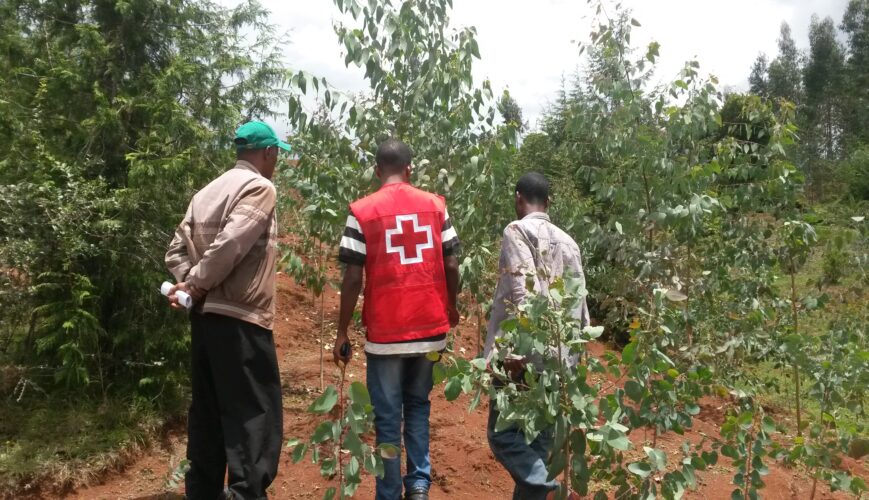
Ethiopian Red Cross Society volunteers inspect trees on land donated to their unit by local authorities. The trees are managed and sold to generate income to support local Red Cross activiites.
In 2015, the World Humanitarian Summit called for aid sector localisation: the process of rebalancing power away from decision-makers in western capitals and international agencies, and towards a more equitable aid system rooted in local ownership. Subsequent progress had been limited: movement on the target of 25% of aid funding being given directly to local actors has been minimal, increasing from an estimated 0.2% in 2015, to about 3.6% (2024), albeit with indications that this had declined since 2023.
Working with two major national humanitarian actors (one Somali, one Kenyan) to develop strategic plans over the last twelve months, the uncertainty of the current aid environment has been apparent. While widespread instability and poverty mean that Somalia is likely to remain a priority country for many donors, Kenya, recently reclassified as a lower middle income country, has seen aid drop abruptly.
For both organisations, the dynamics of aid funding have meant top-heavy structures, management systems shaped by Western management practice, and a top-down approach to communities, often driven by donor interests. The high costs of individual projects often mean that activities are focused in few, selected communities, and activities are rarely scaled beyond these communities or sustained beyond project timeframes. In turn, community perceptions are often of externally owned and resourced organisations that come and go, with limited community ownership and oversight.
Such heavy management structures are a far cry from the traditions of mutual aid that you find in every culture. From what I have seen, even the poorest communities globally have mechanisms for people to work together to achieve common aims. But the monetisation of aid has created a parallel system which competes with and undermines these coping mechanisms. In her excellent book Breakdown in Pakistan: How Aid Is Eroding Institutions for Collective Action, Masooda Bano examines the behavioural economics for how and why monetary incentives inherent in the aid system ultimately undermine locally led and owned organisations.
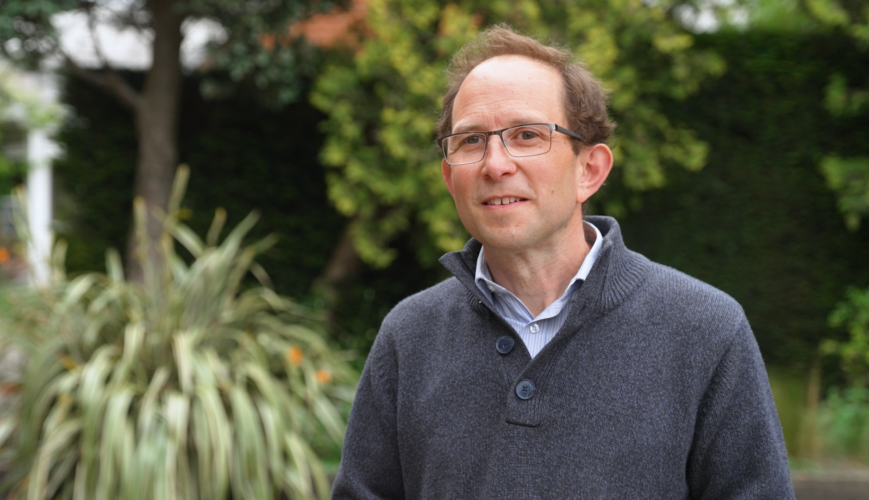
Ian’s current consultancy contributes to the long-term strengthening of the 191 National Societies making up the Red Cross Red Crescent Movement.
So for organisations facing declining budgets, limited local fundraising markets and high overheads, is it possible to grow their reach and the sustainability of their work through different types of engagement with communities? The shift from being providers to facilitators is not just an organisational one. It involves repositioning local organisations in communities – to be locally owned and led. And it involves reorienting organisational cultures from seeing vulnerable communities as passive beneficiaries, to seeing them as potentially active humanitarians.
My experience is that organisations that are locally owned and led unlock human and financial resources that external actors rarely do. There are many challenges that require resources beyond those of individual communities. But there are also many challenges that can be addressed through local solidarity. My vision of the future aid sector is one in which funding mainly enables local communities to go further and faster in the direction they have already chosen. And yes, there will be disasters that require large national and international responses. But these should be addressed through local people and their existing coping mechanisms where possible, rather than setting up parallel structures and ways of working.
Such change will not be immediate. Leaderships are wrestling to balance existing commitments, reducing funding, and the reputational risks and sometimes physical threats of violence towards their organisation of withdrawing critical services from communities. The worst possible outcome of the current funding crisis is the financial collapse of organisations with decades of local experience and access to communities. But I believe that this moment is also an opportunity for change, and that in twenty years time we will see an aid sector that is much more rooted in sustained, locally led and resourced organisations than is currently the case, reaches more people, and is more effective at supporting transformational change in people’s lives.
_______________________________________________
Ian’s current consultancy contributes to the long-term strengthening of the 191 National Societies making up the Red Cross Red Crescent Movement. He also set up the Cambridge Humanitarian Centre, now the Centre for Global Equality.
12.6.26