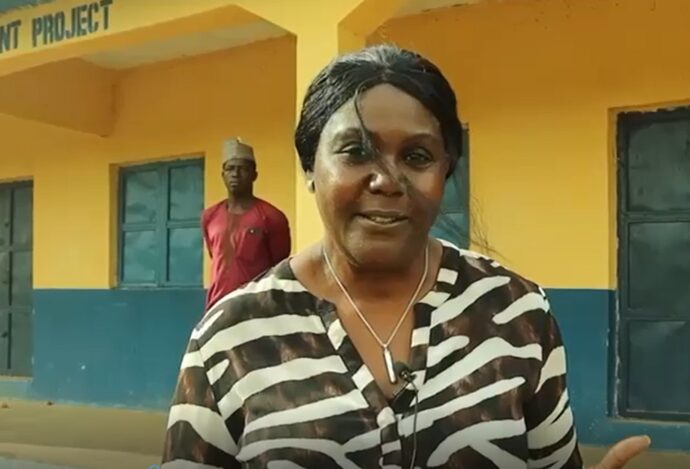
Hughes By-Fellow, Dr Roni Ajao, discusses the ‘TENS II’ project she is working on to transform education in Niger State, Nigeria.
The issue of out-of-school children is a significant and multifaceted challenge in Sub-Saharan Africa. Nigeria is no exception. Roni is working on a project to explore solutions to this in the region.
According to the UNESCO, the population of children in the region who are not enrolled in formal education increased by 20 million between 2009 and 2021. Nigeria alone accounts for almost half of this increase, seeing its out-of-school population nearly double from 10.5 million in 2010 to 19.7 million in 2021. Nigeria’s out-of-school children are now the highest in the world, with Niger State alone accounting for 640,000 out-of-school children. However, the actual number is likely to be significantly higher than estimates.
In Niger State, these trends in school attendance rates have been driven by several factors, including socio-economic disparities, political instability, and cultural barriers. The interplay of these issues has made it particularly difficult to address the challenge of out-of-school children in the State. This complexity makes it challenging to develop and implement effective, sustainable solutions. Limited resources, governance issues, and the need for coordinated efforts across different sectors and regions further complicate the problem.
The TENS II Project research explores solutions that are comprehensive, multifaceted and designed to target the economic, social, cultural, and political dimensions simultaneously. The interventions aim to reduce the financial burden of education on families while incentivising school attendance. Community-driven initiatives that raise awareness of the importance of education while working collaboratively with community leaders to make school curriculums contextually relevant and locally inclusive, are central. The proposed solutions also include recommendations regarding education budget allocation and legal frameworks that protect education and children’s rights.
Learning about schooling provision in rural areas
This video features Roni Ajao in Niger State, meeting with local people including children to understand the disparity in provision.

Student volunteers
Dr Ajao’s work on the project also involved the help of two Hughes students, Chika Ezeugwu and Ademola Aiyenuro, using their relevant expertise and experience to contribute to education research efforts in the region.
Ademola, PhD Pathology student, at Hughes Hall, said:
“As a volunteer for the TENS II Programme, I contributed to data collection and management across educational institutions. My role involved coordinating logistics for enumerators to ensure comprehensive and accurate data collection. This experience strongly aligned with my academic focus on data analysis and cross-disciplinary collaboration, reinforcing the importance of evidence-based decision-making.”
“The challenges we faced, such as infrastructural limitations and the need for clear communication, highlighted the value of careful planning and adaptability—skills integral to both my research and the programme’s objectives. TENS II’s aim of improving educational outcomes through data-driven solutions mirrors my broader passion for impactful, evidence-based interventions in real-world challenges.”
Goals of the TENS II Programme
- To identify the current problems and challenges within the education sector in Niger State.
- To develop and implement interventions and initiatives to address the problems and challenges within the sector.
- To transform the sector sustainably by improving the educational standards across all levels and the learning environment’s standard.
- To provide an education, pupil and student experience that will empower recipients by enhancing teachers’ skills and improving learning access and outcomes.
- To develop mechanisms to continually review and put forward recommendations on the implementation of the curriculum to reflect the needs of pupils and the labour market, such as entrepreneurial skills development and technical skills acquisitions.
- To update and review teaching methodologies to ensure best practice and applicability with the National Curriculum for enhanced performance in national examinations across the State.
- To identify and implement the required operational and process transformations within the Ministry of Education, Science and Technology to effect the desired changes to make the organisation more efficient and effective in undertaking its statutory responsibilities.
Primary data for the research was conducted using focus groups and semi structured interviews during the months of July, August and September across Niger State.
For further information on the TENS II project: https://tensng.com/about-tens/#About-Us .
17.10.24