Past and present Hughes members reflect on how their own work and research is driving social progress towards the achievement of disability-inclusive societies.
This compilation follows 2025 International Day of Persons with Disabilities and we are extremely grateful to the following individuals for sharing their work and dedication to achieving a more equitable global society: Professor Nidhi Singal, Sakina Jafri, Dr Stephanie Nowack, Dr Thilanka Wijesinghe and Dr Basirat Razaq-Shuaib.
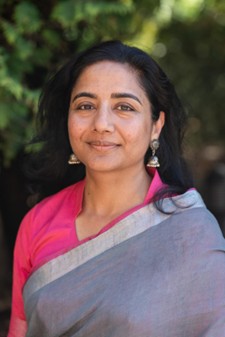
Professor Nidhi Singal, FAcSS
Nidhi is a Professor of Disability and Inclusive Education at the Faculty of Education, and the Vice President of Hughes Hall. She is also an elected Fellow of the Academy of Social Sciences. Nidhi convenes the Cambridge Network for Disability and Research, an international network committed to generating rigorous research in the field of disability and education.

Nidhi’s scholarship addresses issues of educational quality and equity of provision for those at the margins in different societies. She works closely with international donors and bilateral agencies and international non-governmental organisation (INGOs) in bridging the policy and practice gap. Among a range of other commitments, she has served on the Technical Advisory Council of the World Bank’s Inclusive Education Initiative, worked with the International Commission on Financing Global Education, on The Education Workforce Initiative, been a Technical Advisor for the Global Education Monitoring Report on Inclusive Education. She is also a Trustee of the UK Education and Development Forum (UKFIET).
Nidhi’s current projects emphasise the crucial role of educators with disabilities in reshaping classroom practices and the urgent need to place disability at the centre of climate policy, given that those most at risk are too often overlooked. Ultimately, the work of her and her group shows that exclusion is not inevitable, and inclusion is not charity but a core measure of human dignity, progress, and justice.
 |
“This year’s International Day of Persons with Disabilities calls for structural change to ensure full participation in society—a principle central to my research group’s commitment to social justice and the belief that inclusive, high-quality education is the most powerful driver of equitable change.
“Our research shows that children with disabilities face two persistent barriers: limited access to school due to stigma and inaccessibility, and poor-quality teaching even when they are enrolled—conditions that undermine future opportunities for leadership, employment, and innovation. These patterns endure because unreliable data, especially in the Global South, keeps many children invisible in policy, while negative attitudes, inadequate teacher training and support, and limited resources further entrench exclusion. Through research and collaboration with global and national institutions, we work to influence systems to respond more effectively.” |
Sakina Jafri
Sakina Jafri is a doctoral student at Hughes Hall and the Faculty of Education at Cambridge, and a member of the Cambridge Network for Disability and Education Research (CaNDER). With over a decade of teaching experience in primary schools across New York, California, and London, she brings a strong practitioner lens to her academic work. Her research explores the lived experiences and identity of teachers of South Asian heritage in London primary schools. Grounded in her own practice as an educator, Sakina’s work is driven by a commitment to social justice, equity, inclusive education, and the advancement of teacher education.
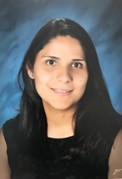 |
“Teachers with disabilities in London primary schools often feel that they are not seen as part of the “norm” because their identities intersect across race, disability, gender and religion. Their visibility and openness about their lived experiences help challenge assumptions and strengthen support for students and families.
“However, the education system frequently fails to provide the necessary resources and accommodations, showing that true inclusion requires sustained commitment, not just policy.” |
Dr Stephanie Nowack
Stephanie Nowack is a South African researcher holding a PhD from the Faculty of Education at the University of Cambridge (Hughes Hall student 2020 – 2024), within the Cambridge Network for Disability and Education Research (CaNDER), PEDAL Centre, Pac lab, and REAL Centre. As a LEGO Foundation and Cambridge Trust Scholar, her research focused on how play can find expressions across neurodivergent and geo-political dimensions. In particular, her doctoral research explored a South African pedagogy of play for autistic learners.
Previously a researcher in Harvard Graduate School of Education’s Project Zero Pedagogy of Play research group, she collaboratively explored playful learning in South African mainstream classrooms and co-created the ‘Indicators of a South African Pedagogy of Play’, which resulted in the White Paper ‘Toward A South African Pedagogy of Play’. Stephanie is now based at the University of Oxford’s Department of Education where she is Research Lead on the Oxford Hope Project. She explores culturally sensitive methods to understand how marginalised students conceptualize hope for education in contexts of political and environmental precarity. Stephanie told us more about her research:
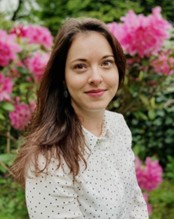 |
“My participatory research with educators in South African autism schools showed that a pedagogy of play for autistic learners centred around three interconnected practices: exploration (making learning concrete), enjoyment (encouraging happiness), and empowerment (following children’s interests). All this was underpinned with efforts to create safe spaces for the young learners, developing trusting bonds among teachers, students and parents, and adhering to structured routines, a key aspect given the needs of the learners.
“These schools reflect two key principles essential for understanding quality, disability-inclusive pedagogy in the Global South: 1) understanding and harnessing what already exists; the advocacy, care and self reflection that are already underway in these communities; 2) taking a strength-based approach. Not starting from lack, but from the expertise of those working in these schools every day.” |
Dr Thilanka Wijesinghe
Thilanka Wijesinghe is an alumna of Hughes Hall and holds a PhD from Cambridge. She is a member of the Cambridge Network for Disability and Education Research (CaNDER) and a Teaching Associate at the Faculty of Education, University of Cambridge. With 16 years of experience as a community-based speech and language therapist in Sri Lanka, she is a co-founder of FocusAbility – a resource center for communication and the community, and has also served in the Department of Disability Studies at the University of Kelaniya, Sri Lanka. She brings a practitioner’s perspective from the Global South to her research and teaching. Her work focuses on how Deaf primary school children in Sri Lanka learn literacy skills. Driven by a commitment to social justice and equity, she strives to advance quality education and employment for persons with disabilities.
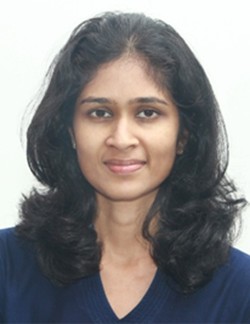 |
“On International Day of Persons with Disabilities, I reflect on how disability is a natural part of the human experience, shaping the lives of individuals, families, and communities. My research, which examined how Deaf primary school students in Sri Lankan Deaf schools develop literacy skills, used surveys and interviews with teachers to understand their perceptions and teaching practices.
“The findings reinforce that disability does not limit a student’s potential; rather, it underscores our collective responsibility to build inclusive, accessible learning environments. Recognizing diverse learners, supportive settings, and the importance of visual languages such as sign language is essential to ensuring equitable education for all.” |
Dr Basirat Razaq-Shuaib
Dr Basirat Razaq-Shuaib holds a PhD in Education from Cambridge and is an alumna of Hughes Hall. Her doctoral research explored the perspectives and lived experiences of children with neurodevelopmental disorders and their parents in accessing primary education in Nigeria. She is the founder of The Blooming Mum as well as The Winford Centre for Children and Women, an NGO using advocacy, capacity strengthening and research to drive disability inclusion in Nigeria. Dr Razaq-Shuaib has authored five children’s books, including an award-winning debut which received the British Council ELTons Special Commendation for Equality, Diversity and Inclusion. She is also the creator of RELEASE, an emotional well-being journal designed to help individuals express and process negative emotions, improve clarity, and cultivate joy. Her work is focused on strengthening strategic alignment, inclusion, belonging and well-being in individuals, organisations and communities.
 |
Basirat questions what true social progress means if millions of persons with disabilities remain excluded due to attitudinal barriers. In light of the limited development seen in disability inclusion, especially education and recent setbacks such as funding cuts and harmful social media trends that are eroding those hard-won gains, she stresses the urgency of doing things differently. Drawing on her research and work with children with neurodevelopmental disabilities and their families in Nigeria, she highlights how her NGO, The Winford Centre for Children and Women, is exploring social behavioural change approaches to drive disability inclusion.
Her central message is that true social progress must ensure no one is left behind and disability inclusion – a key part of this progress requires commitment, not convenience. |
View videos from all of these educators on our Disability History Month Reflections playlist.
11.12.25