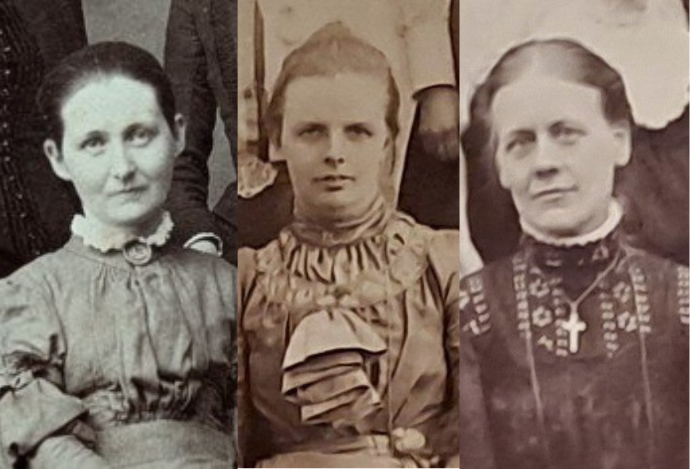
Ahead of the College’s 141st Anniversary, Alison Sawers (ASNaC postgraduate at Wolfson College) explores the early Principals of Hughes Hall for the WikiProject Women in Red. The project aims to redress the content gender gap on Wikipedia by creating articles about the lives of notable women.
In this, the first of a three-part series (Part II, Part III), Alison gives us a snapshot of the College’s first three Principals – Elizabeth Phillips Hughes, Margaret Punnett and Helena Langhorne Powell – whose terms cover 1885 to 1908.
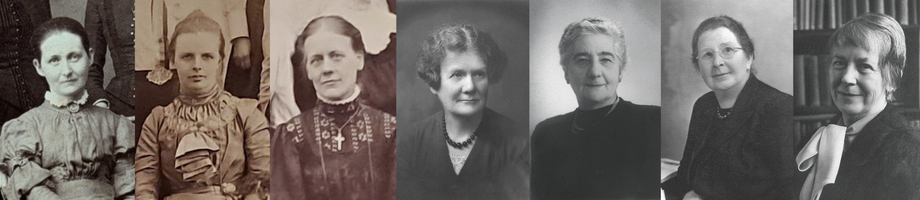
The Principals of Cambridge Training College. (Photographs from Hughes Hall Archives.)
Of the Cambridge colleges, only Girton and Newnham can so far claim longer stretches of continuous female leadership than Hughes Hall. Before it began accepting male students and changed the title of its head to President in 1973, Hughes had seven women Principals. These women saw the College through nearly nine decades of changes, from its days as the Cambridge Teacher Training College for Women, through both World Wars, and its long journey to official recognition by the University of Cambridge. To recognise the pioneering work of these women, this article will explore who they were, their contributions to the College, and a glimpse of their careers outside of it.
The Cambridge Training College (CTC) – the institution which would become Hughes Hall – was founded in 1885 by a committee of pioneers of women’s education, including Headmistress of North London Collegiate School, Frances Buss; mathematician and activist, Sophie Bryant; and first Principal of Newnham College, Anne Clough. At the end of the nineteenth century, women’s higher education was gaining momentum, with the foundation of Girton and Newham College in the late 1860s and 1870s, and CTC aimed to train women as secondary school teachers, to fill the positions created by the expansion of secondary education. The committee appointed their Welsh colleague, Elizabeth Phillips Hughes (1851–1925), a recent Newnham graduate, as its first Principal.
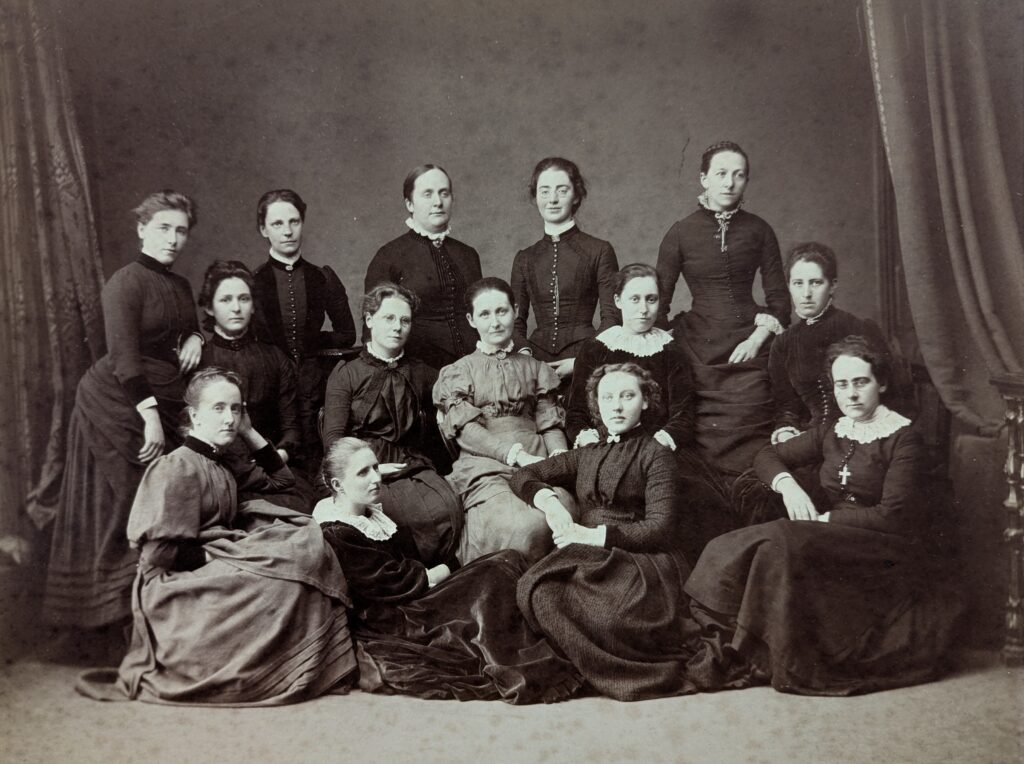
Cambridge Training College’s first cohort (1885-1886) consisted of just fourteen students. (Photograph from Hughes Hall Archives.)
Hughes was remarkable and her varied legacy has rightly been written about by others, especially as a champion for women’s education in Wales. When she took her examinations in moral science and history in 1884–5 in her mid-thirties, she had already taught at the prestigious Cheltenham Ladies’ College for four years. With CTC, she took on the headship of a college of fourteen students, no staff members except herself, a housekeeper and a maid, and very limited space and resources, but armed with ‘infinite faith’ in the project and the ‘alchemy’ of her personality to inspire others.[1] Delivering most of the lectures herself, she persuaded University members to supplement the teaching, appointed staff, secured buildings, and built up the library collection. After fourteen years’ relentless work, she was advised that the strain on her health meant she must rest at once. She resigned in 1899; the students presented their first principal with a volume of Testimonials as a token of their deep appreciation and regard.
After a ‘rest’, which included her climbing the Matterhorn in Switzerland, Hughes travelled the world and continued to campaign for her many interests, including women’s physical education and prison reform. She was to be a hard act to follow at Hughes Hall.
Hughes’ successor, Margaret Punnett (1867–1946), was the daughter of a Lincoln produce broker, himself a Cambridge graduate, and received a BA in German and Mathematics from the University of London in 1889. She won a Gilchrist Scholarship to study at CTC in 1892 and received distinctions in her teacher training qualifications from the Cambridge Teachers’ Training Syndicate and the London Teachers’ Diploma. Despite these qualifications, when she was appointed Principal of CTC she had only worked as a trainer of primary school teachers at Saffron Walden Training College and School.
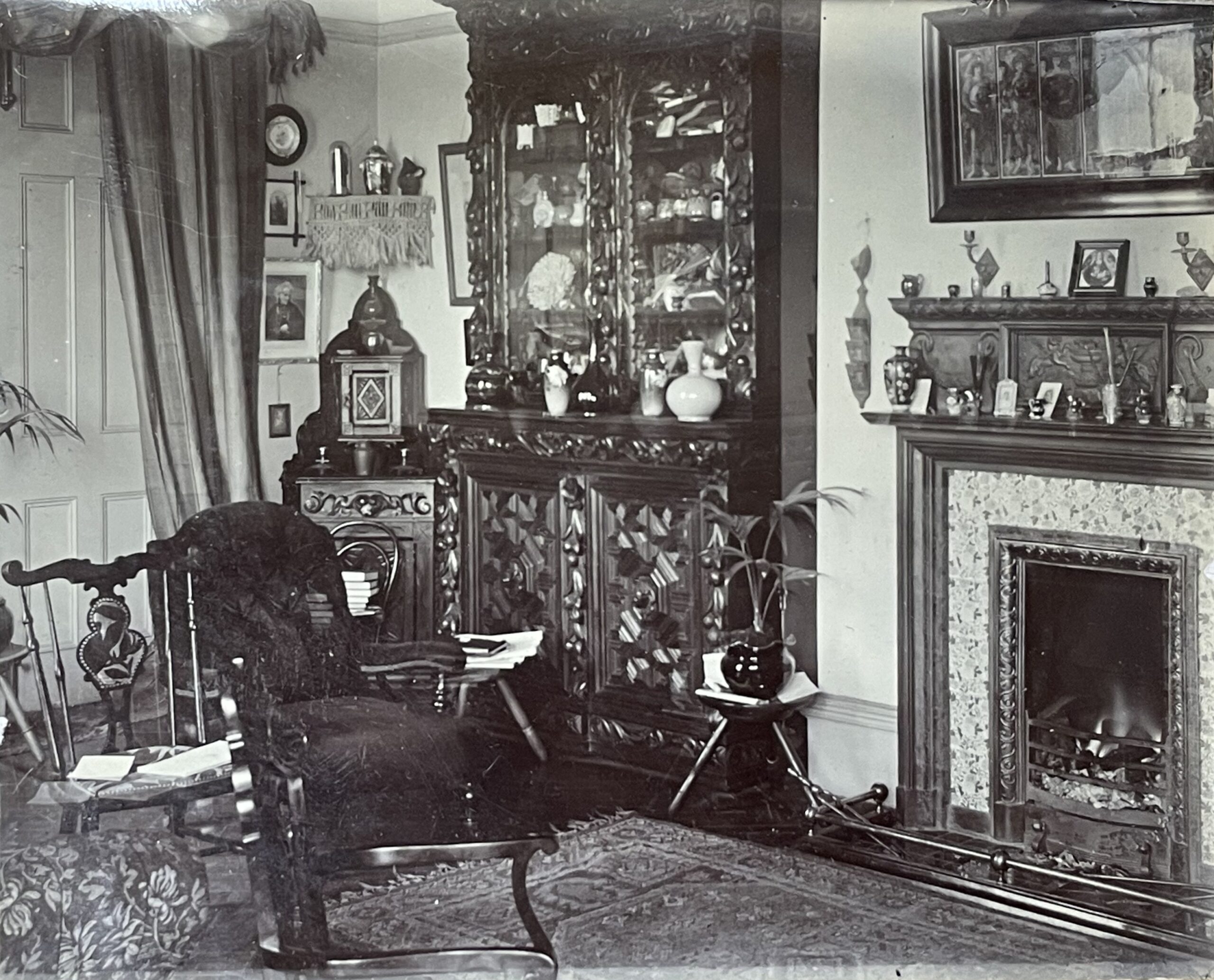
Miss Punnett’s room at the Cambridge Training College. (Photograph from Hughes Hall Archives.)
Punnett inherited a difficult situation. Factors including the depression after the Boer War and a lack of clarity in government advice about teacher training led to a drop in student numbers (from sixty when Hughes departed to twenty-six in 1902), which threatened the College’s finances. In March 1902 it was even suggested that the College would have to close if these could not be rectified. After two years (1900–2), Punnett was encouraged by the College council to apply for another post so that a Principal with more experience of secondary education could be sought. A former resident lecturer who taught at North London Collegiate School, Margaret S. Young, agreed to serve as interim Principal for Michaelmas Term 1902 in the meantime.
In spite of this, Punnett’s dedication to the College throughout a difficult time in its history is recognised in the Council’s farewell to her, which remarks on ‘the energy and devotion with which Miss Punnett has carried out her duties as Principal, and of the ungrudging and generous help which she has given to the service of the College since her resignation’.[2] She went on to teach at the newly established London Day Training College, which later became the Institute of Education attached to University College London. There, she thrived: she appears to have practically run the place, while also finding time to publish an arithmetic textbook in 1913. Her contribution there was finally recognised in 2024 when the Institute of Education named a drama studio after her.[3]
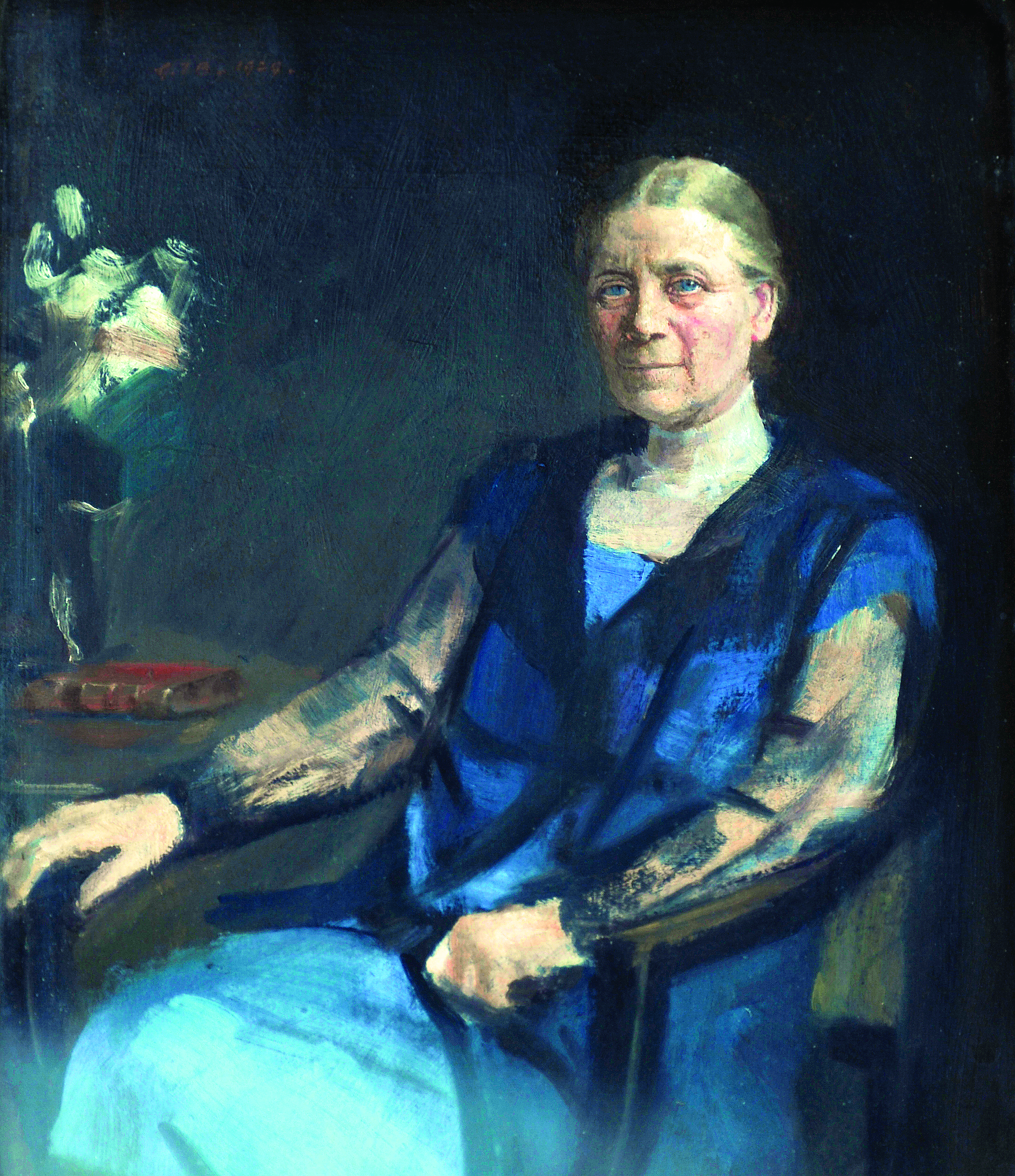
A painting of Helena Powell by unknown artist. (From Hughes Hall Archives.)
The woman found to replace Punnett at CTC did indeed have more secondary school experience. Helena Langhorne Powell (1862–1942), a teacher since 1885, had been headmistress of Leeds Girls’ High School from 1892–1902. Having received a first-class pass in History from Newnham College, Powell wrote books about the Tudors and Stuarts, as well as a patriotic pamphlet, ‘How Can I Help My Country?’, in 1915. Otherwise, her deep personal faith led to a focus on religious studies. She wrote papers on the teaching of religious studies in school and the interestingly titled ‘The Problem of the Adolescent Girl’, where she recommended that girls be given some sex education but not ‘more than is absolutely necessary’.[4]
Powell originally agreed to lead CTC for one year but remained with the College for six (1902-1908). In memory of her headship, a fund was raised by friends and former students on her death to endow the Powell Prize in Religious Education, which is still awarded today. She was then offered a post as Principal of St Mary’s Training College, Paddington. In a time when the government was considering withdrawing funding for denominational schools, she felt that she should take it rather than remain at the nondenominational CTC. Powell spent the last twenty-five years of her career as Principal there, and under her headship, many women trained to become missionaries.[5]
Hughes Hall forged its reputation under the stewardship of Hughes, Punnett, and Powell, laying the groundwork for its future and navigating the turn of the twentieth century. In Part II, Alison looks to our next two Principals, Mary Hay Wood and Henriette Dent, who guided the College through the upheavals of two world wars.
_____
Footnotes
[1] Quotations from Hughes and one of her early students recorded in Bottrall, Margaret, Hughes Hall, 1885–1985 (Cambridge: Rutherford, 1985), pp. 7–9.
[2] Hughes Hall Archives, Cambridge Training College for Women Teachers, Report of the Council presented at the Annual General Meeting of the College, Saturday, Nov. 8th, 1902.
[3] Nolan, Keilly, ‘Getting it done: Margaret Punnett, supporting generations of teachers’, UCL https://www.ucl.ac.uk/about/search-faces-ucl/getting-it-done-margaret-punnett-supporting-generations-teachers [accessed 9 April 2026].
[4] Powell, ‘The Problem of the Adolescent Girl’, in Mary Scharlieb (ed.), Sexual Problems of To-day (London: Williams and Norgate, 1924), pp. 97–117. Extracted in Hall, Lesley, Outspoken Women: An Anthology of Women’s Writing on Sex, 1870–1969 (Routledge, 2014), pp. 158–9.
[5] Haliday, Gaynor, Shaping a Nation: A History of Women as Educators and Education Influencers (Pen and Sword History, 2025), pp. 157–8.
_____
General references
Bottrall, Margaret, Hughes Hall, 1885–1985 (Cambridge: Rutherford, 1985)
‘Ely High School 1905–1972—Miss EM Verini, Headmistress 1929–36’, http://www.elyhighschoolforgirls.org.uk/VeriniEM.htm [accessed 9 April 2026]
Le May, G. H. L., ‘Hughes, Elizabeth Phillips (1851–1925), college head and promoter of education in Wales’, Oxford Dictionary of National Biography (Oxford: Oxford University Press, 2008), doi:10.1093/ref:odnb/37579 [accessed 9 April 2026]
Shepherd, Janet, ‘Wood, Mary Hay (1868–1934), educationist and college head’, Oxford Dictionary of National Biography (Oxford: Oxford University Press, 2004), doi:10.1093/ref:odnb/51783 [accessed 9 April 2026].