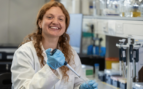
Boyang Mao is a Materials Scientist and Nanotechnologist.
A Research By-Fellow and Research Convenor at Hughes Hall, Boyang is also a Senior Research Associate at Cambridge Graphene Centre.
We spoke to him about his path through life and academia, his research passions and hopes for the future, as well as his experience of being part of Hughes Hall.
Tell us about yourself and your background
I was born in Taiyuan, the capital of Shanxi province, sometimes known as the Kingdom of Coal, in China. I earned a bachelor’s degree in polymer science and technology from Beijing University of Chemical Technology in China, as well as an MRes from Imperial College London. My PhD is in Chemistry from the University of Bath.
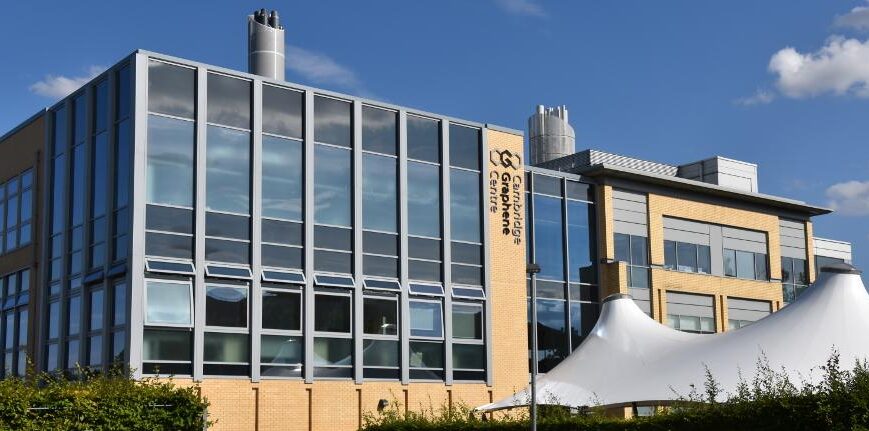
Before Cambridge, I was a postdoctoral scholar at the University of Manchester National Graphene Institute where I collaborated with Prof. Sir Konstantin Novoselov (2010 Nobel Prize in Physics). At Cambridge, I joined the Cambridge Graphene Centre, where I became Technology Coordinator and Senior Research Associate.
I try to constantly study and ‘upgrade my brain’ so that I can understand anything from chemical processes to quantum physics, and wireless communication to energy storage.
Throughout my career, I have worked in multiple fields and departments, including Materials, Chemistry, Physics, and Engineering. Working with people from different backgrounds is tough, but also thrilling and engaging.
What are you are working on at the moment
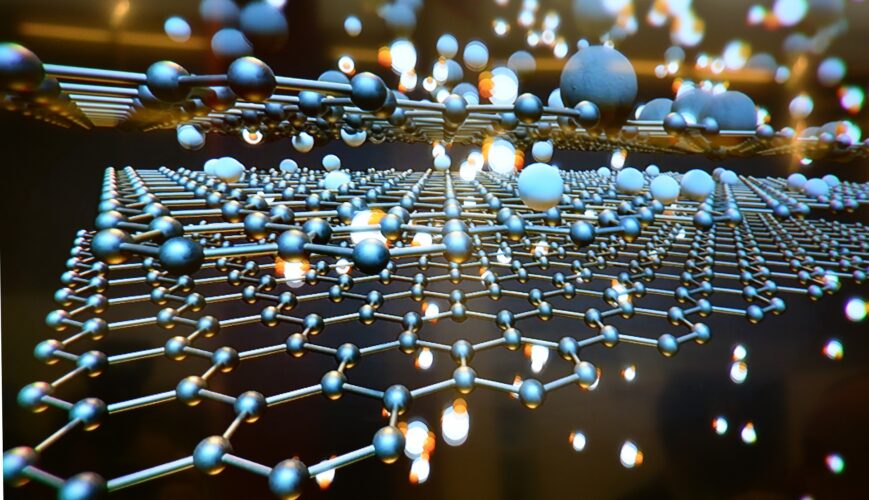
My research focusses on exploring graphene and other novel layered materials for practical applications. Recent years have witnessed many breakthroughs in research on graphene, the first two-dimensional (2d) atomic crystal, as well as a significant advance in the mass production of this material.
This one-atom-thick fabric of carbon uniquely combines extreme mechanical strength, exceptionally high electronic and thermal conductivities, impermeability to gases, as well as many other supreme properties, all of which make it highly attractive for numerous applications.
I’ve created innovative, flexible thermoelectric generators made from exfoliated inorganic materials (Bi and Sb chalcogenides) to power wearable technology and autonomous devices/sensors by gathering body heat, resulting in ‘energy autonomy’. I also gained a lot of experience working with industry professionals including collaborating with companies to create a green process for exfoliating graphene on an industrial scale, and have created innovative thermal interface materials to improve thermal management in highly integrated electronic products.
One of my research projects is on flexible electronics, which use graphene and related materials (GRMs) as the basic ‘working’ component in applications such as healthcare, sustainability, and smart packaging. I also focus on bio-electronic systems research, designing and validating graphene-based implantable and cutaneous devices that interact with the central nervous system at the interface of the brain and/or spinal cord.
How is your work making a difference
My research vision is to use advanced and novel materials to solve engineering issues and environmental difficulties.
One application is the use of graphene-based heat mats to create high-performance Ice Protection Systems for the aviation industry. I participated in the first few attempts to investigate graphene in space. I experimented with printing a range of GRMs in zero gravity settings, helping to develop revolutionary additive manufacturing processes in space in collaboration with the European Space Agency.
I explore graphene-based structures for high-performance 5G/6G antennas and electromagnetic shielding components. One of the key aims of this research is to replace crucial metals in order to decrease the global effect of electronic waste and CO2 emissions during the production process, while simultaneously increasing electronics performance. My research demonstrated that graphene-assembled film has a higher EMI shielding performance than copper foil, particularly in the THz range. I also created internationally partnerships to investigate 2D materials for catalysis, heavy metal detection/removal, sulphur dioxide management, and CO2 capture. This unique way of processing waste solids and gases has been put at a power plant to help address environmental problems.
What do you hope to be doing in the future?
In the future, I aim to implement my knowledge of nanotechnology and nanomaterials to develop actual products and applications. I would like to lead a team that addresses real-world problems by digging into fundamental physics, chemical, and material sciences.
I intend to use my research expertise in layered materials as an extraordinary alternative to existing technologies to facilitate the development and manufacturing of next-generation Net Zero technologies, putting the UK in a leadership position in delivering sustainable solutions.
Tell us your thoughts on being part of Hughes Hall and Cambridge

Being part of the Hughes Hall community is a true joy — it has been incredibly exciting to meet such a diverse group of students and researchers from a wide range of backgrounds, all making impactful contributions across various disciplines, cultures, and environments.
Hughes Hall stands out among Cambridge institutions, blending a rich history with a modern spirit that is evident from our inclusive interview process to our everyday college life, where the absence of a high table fosters a unique sense of togetherness. Initiatives like the Bridge scheme and the Centre for Climate Engagement align perfectly with my research passions, reinforcing Hughes’s commitment to meaningful engagement with pressing global issues.
The welcoming environment extends to families, too — I often bring my children to participate in college events, helping them feel that Hughes Hall is another place to call home.
As the first Cambridge college to appoint a Research Convenor, I hope Hughes Hall demonstrates a commitment to nurturing strong connections among researchers, providing opportunities to network, share research findings, and celebrate achievements.
Do you have any advice for those working in your subject field, and or thinking of joining our community?
For those working in my field or considering joining our academic community, my advice would be to embrace the challenge of translating lab discoveries into real-world products — a process that is often far from straightforward and requires significant dedication and persistence.
In my recent research, I have found that success in this area depends on setting your mind in the right gear, constantly questioning what makes your work unique, and identifying how your developments can surpass conventional technologies. This involves not only a deep understanding of your field but also a creative mindset to innovate and improve upon existing methods. The journey from discovery to application is demanding, but it is immensely rewarding for those willing to invest the time and effort, and Hughes Hall provides a supportive environment to help bridge this gap, offering valuable opportunities for collaboration, networking, and practical engagement with industry and other disciplines.
12.9.24