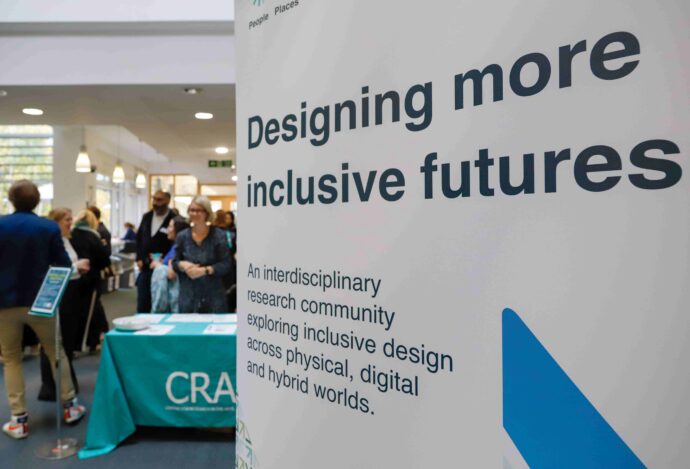
Launched earlier this month, Cambridge Inclusive Design Futures (CDIF) is a new interdisciplinary research lab bringing together researchers, designers, industry, public sector organisations and communities.
The research lab explores how inclusive design can respond to increasingly diverse human needs and rapidly changing technological, social and environmental conditions.
Based at CRASSH, CIDF is convened by its executive directors – Hughes Hall Governing Body Fellow, Dr Matteo Zallio, alongside Professor of Engineering Design, John Clarkson – and brings together expertise spanning inclusive design, architecture, engineering, technology, artificial intelligence, social sciences and design research, among a multidisciplinary team of researchers from several departments.
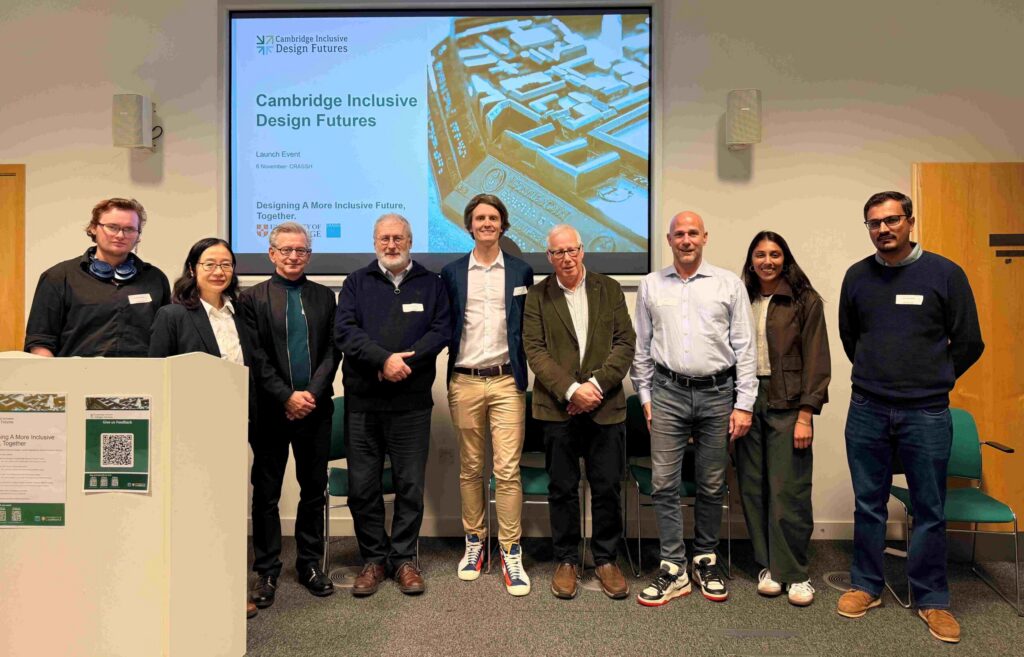
The initiative builds on Cambridge’s long-standing contribution to inclusive design while asking a forward-looking question: what should inclusive design become next? Image feature members of the CIDF team, with the Executive Directors centre.
For Dr Zallio, Assistant Professor in the Department of Architecture, this means moving beyond accessibility as a final-stage consideration and towards systems, environments and technologies that recognise the diversity of human experience from the outset:
“Inclusive design has made enormous progress in helping us recognise human diversity, but the context in which we design is changing very quickly. AI, sensing technologies, demographic change, neurodiversity and climate adaptation are creating new questions about how environments and technologies should respond to people. CIDF gives us a space to investigate those questions collectively.”
From Inclusive Design to Human-Responsive Design
The Cambridge Inclusive Design Futures research lab builds upon Dr Zallio’s research across inclusive and neuroinclusive design, machine learning and data-informed practices, which underpin his concept of Human-Responsive Design. His work examines how designers can better understand exclusion, how inclusive design principles can be embedded into professional practice, and how emerging technologies can respond more effectively and responsibly to human diversity.
A growing focus of this research is Human-Responsive Design: moving from environments designed for an assumed average user towards products, spaces and systems capable of recognising and responding to changing human needs.
This includes research ranging from inclusive workplaces and cities to AI-enabled design tools, sensory environments, neurodiversity and new methods for understanding how people experience physical and digital spaces.
An interdisciplinary platform
The Cambridge Inclusive Design Futures lab has been conceived as a platform for exchange between fields.
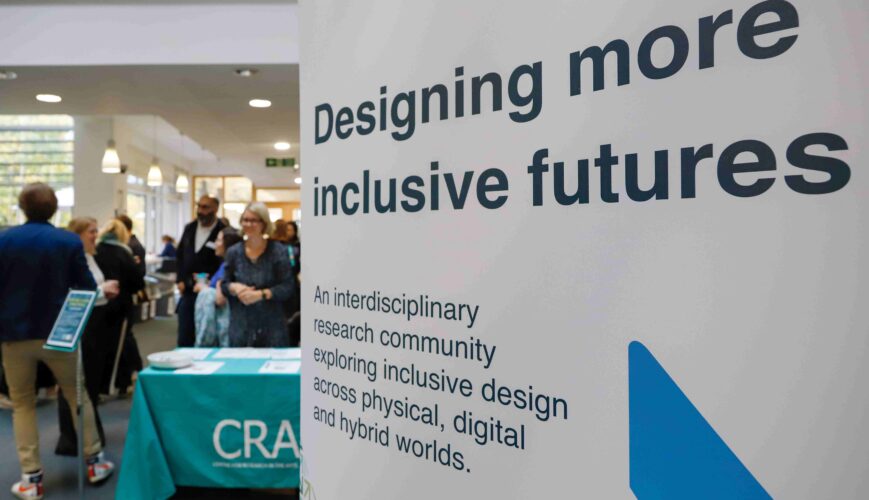
The initiative will also work closely with organisations outside academia.
Its programme brings together academics and practitioners working across design, engineering, architecture, AI, accessibility, health, social science and policy, while creating opportunities for early-career researchers and students to engage with leading international thinkers.
Partnerships with industry, public authorities, designers and community organisations will allow ideas developed through research to be tested against real-world challenges.
This interdisciplinary approach was visible at the launch in Cambridge in early November 2026, which brought together over than 200 researchers and internationally recognised figures in Inclusive Design to discuss both the history of the field and its possible futures.
The discussions highlighted a central challenge: inclusion can no longer be considered only in terms of physical accessibility. Contemporary design increasingly needs to consider cognitive and sensory diversity, ageing, cultural differences, digital accessibility, gender studies, AI-mediated experiences and the changing relationship between people and intelligent environments.
Looking ahead
Over the coming years, the Cambridge Inclusive Design Futures lab aims to help establish Cambridge as an international meeting point for research and practice around the future of inclusive design.
Its ambitions include developing new research collaborations, supporting interdisciplinary projects, creating new tools and methods for designers, strengthening relationships with industry and public-sector partners, and providing a platform for emerging researchers working on inclusion. A further priority will be translating research into forms that can influence professional practice, policy and education.
For Zallio, the longer-term ambition is not simply to make existing environments more accessible, but to influence how future environments and technologies are conceived:
“The opportunity is to move from designing around limitations to designing around human diversity. Ultimately, we want to understand how places, products and technologies can become more responsive to people rather than continually asking people to adapt to them.”
Through research, collaboration and public engagement, and with strong support from Hughes Hall, Cambridge Inclusive Design Futures aims to create a space in which those questions can be explored, and to help shape a more inclusive generation of design practice.
Further information
CIDF’s current projects and news.
23.11.26