Real progress towards net zero is happening now.
As part of the University’s presence at London Climate Action Week, Hughes Hall’s Centre for Climate Engagement (CCE) showcased the importance of legal, governance, and board-level leadership in accelerating climate action.
London Climate Action Week is the largest independent climate forum in Europe. Running from 21-29 June, this year it hosted more than 700 events and 45,000 attendees, including keynote speeches from UK Secretary of State for Energy and Climate Change, Ed Miliband, and an appearance from Prince William in support of his Earthshot Prize.
During the week, Dr Eldrid Herrington, Head of Academic Engagement at CCE, moderated a webinar on rapid evidence synthesis. She led a discussion exploring how this powerful research method can inform policies to address climate change, pollution, and biodiversity loss, by helping to bridge the gap between researchers and policymakers. The panel included Cambridge Zero Director Professor Emily Shuckburgh and Dr Lidia Borrell-Damián, Secretary General of Science Europe.
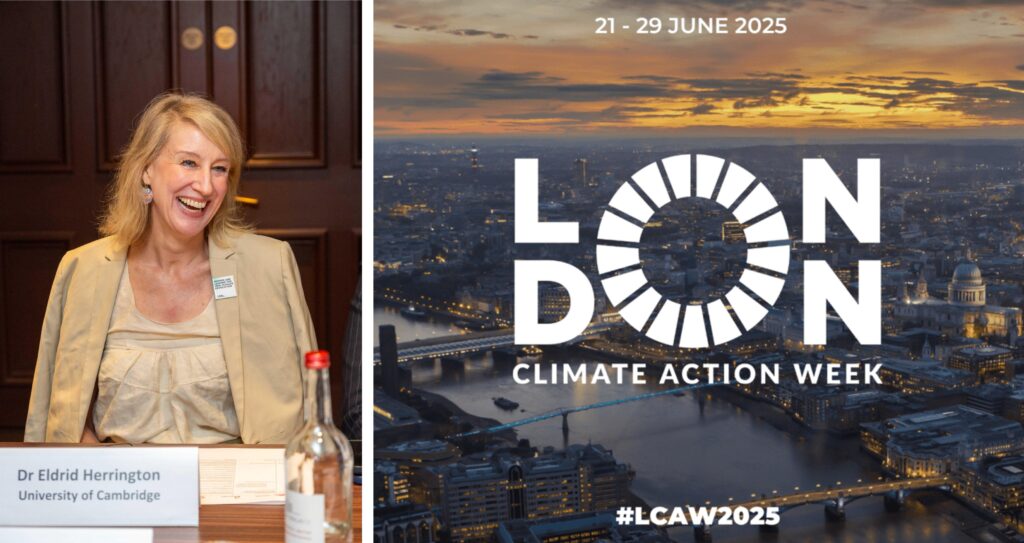
Dr Eldrid Herrington, Head of Academic Engagement at CCE, moderated the webinar on rapid evidence synthesis.
It’s important we recognise in public that progress is being made, that we say more often that this kind of progress is happening now and that cutting emissions to net zero is becoming more achievable every week.” said Professor Shuckburgh, Cambridge Zero.
Dr Herrington also took part in a roundtable about the role of international cooperation and the multilateral system in driving real-economy climate action. The session explored key barriers and opportunities within multilateral collaboration to accelerate global progress. Within this, Dr Herrington focused on the importance of putting science and robust analytical frameworks at the centre of climate action and decision-making.
CCE’s Law and Climate Atlas was showcased by Lara Douvartzidis, Senior Legal Executive at the Net Zero Lawyers Alliance. The Law and Climate Atlas maps intersections between the climate crisis and different fields of law, providing concise outlines of how different legal areas are influencing, and being influenced by, climate change – and helping to empower legal decision-makers to act on climate.
Dr Paul Jefferiss, Director of CCE welcomed the opportunity to highlight Cambridge’s leadership of the climate agenda as well as CCE’s critical role within that: “Alongside CCE, representatives from institutions across Cambridge strengthened the University’s voice throughout the week.
“These included Cambridge Zero, the Cambridge Institute for Sustainability Leadership, the Centre for Science and Policy, Chapter Zero, Cambridge Judge Business School, and Cambridge University Press and Assessment, as well as more academics and staff from across the University.”
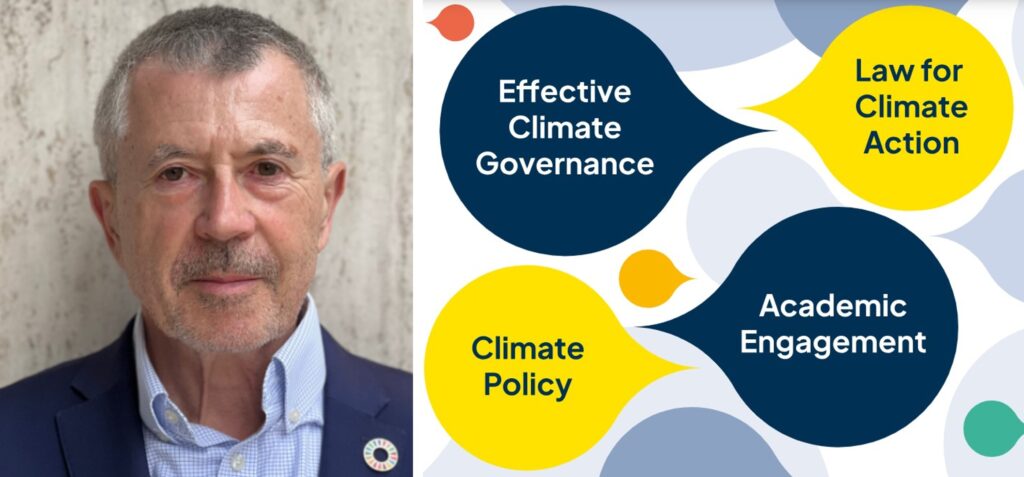
Dr Paul Jefferiss, Director of CCE, welcomed the opportunity to highlight Cambridge’s leadership of the climate agenda as well as CCE’s critical role within that.
Throughout the week, the CCE team attended panels, workshops and other events. Reflecting CCE’s mission, they further explored and demonstrated how expert insight can drive climate action in the real economy, from boardrooms to government, to cut emissions and build climate resilience.
London Climate Action Week offered critical opportunities for collaboration across the climate ecosystem, which is key to accelerating progress. Cambridge had a strong presence throughout the week, and CCE played a vital role—bringing people with diverse experience and perspectives together to respond to pressing climate challenges.
- For further information on Hughes Hall’s Centre for Climate Engagement (CCE).
- For more on the research translation initiatives at Hughes Hall.
- More on Cambridge at London Climate Action Week.
10.7.25