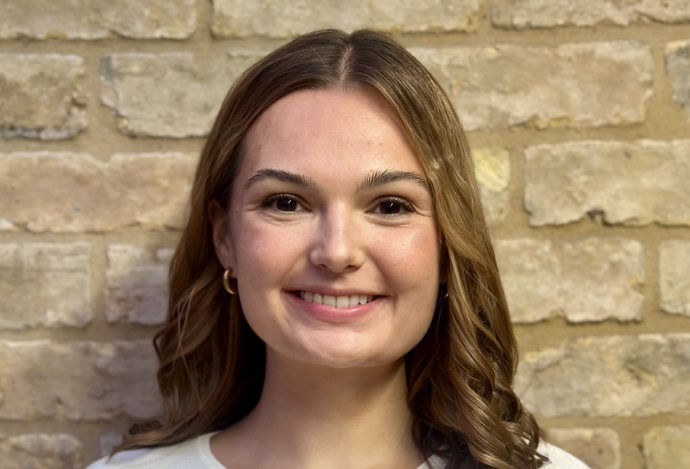
Hughes Hall PhD student and Cambridge Gates Scholar talks about her research exploring how children access mental health treatment.
Isabella Morse is aiming to to help inform policy and practice in the field to improve mental health care for all children and young people.
“We are facing a global mental health crisis, especially among children and adolescents. Yet, there remains a significant gap in understanding how children’s mental health difficulties are being treated, and what the process of accessing care truly looks and feels like.”
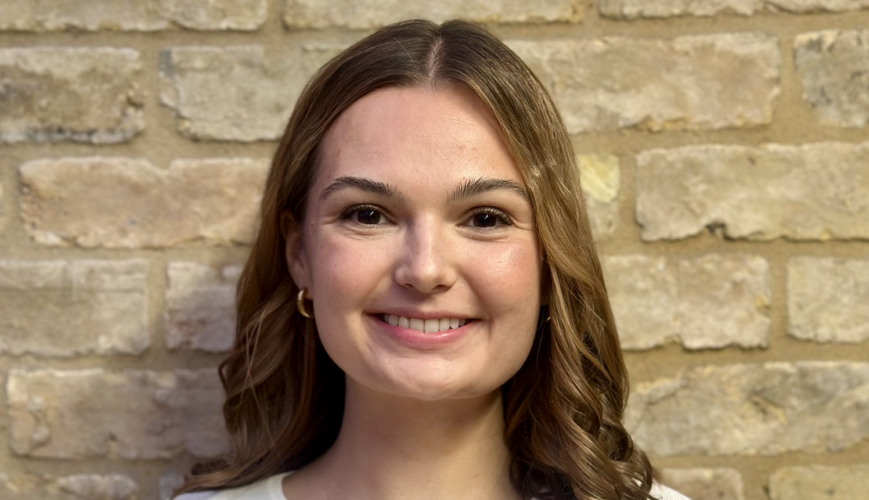
Isabella Morse is involved with the Gates Cambridge community and is also a member of the Hughes Hall Boat Club.
Isabella is passionate about improving the lives of children and understanding their stories, particularly those from underserved or high-risk communities.
Her PhD builds on previous work on the impact of Covid-19 on children’s mental health, a study of the pandemic’s impact on rural communities in England and research on diagnostic testing for children with mental health difficulties and autism.
Background
Isabella was born in Cary, North Carolina, also living in London for a number of years as a young child before returning to the US with her family when she was four.
She was drawn to education from an early age, and not just as a student. She began teaching at middle school, starting with teaching children who had English as a second language to read through the Read and Feed programme. From that time on, children’s education became the thread that ran throughout her studies. She considered becoming a teacher at one point and was a member of the Future Teachers of America Club with two other students at high school.
By the end of high school Isabella had become very interested in child psychology and looked around for a liberal arts school which would allow her to explore the diverse range of subjects she was drawn to. “I was always keen to reflect the various interests I had rather than focus narrowly on one subject,” she says.
Undergraduate studies
Isabella attended Colgate University, a small university in up-state New York and went on to become the university’s first Gates Cambridge Scholar. She was studying in Samoa through the School for International Training when Covid hit in 2020 and was unable to return home for the first month.
She was due to do a research project while she was abroad, comparing city-based and rural schools. In the end, due to Covid, she switched to a review of how schools in Samoa had historically been equipped to do online schooling to better understand how the pandemic might impact them.
In her final year, Isabella did a thesis on how Covid impacted younger children’s mental health and their school experiences, based on surveys and online interviews with parents, children and their parents in the US. Research-related activities during that time included assisting in a child psychology laboratory looking at children’s perception of socio-economic status and race and helping to lead a project with Somali refugees in Utica.
PhD
Isabella wanted to progress to a PhD in and sought more hands-on clinical experience in an autism research centre at the Children’s Hospital of Philadelphia, investigating techniques for diagnosing autism and anxiety and depression. “Parents were really desperate as the waiting lists for help were long and our project offered a way to be seen more quickly,” she says.
In 2022, Isabella began her PhD at the University of Cambridge in the child health and development group in the Department of Public Health and Primary Care. She works closely with clinicians, policymakers and charities as well as with parents, children and others. She says she struggled between wanting to do research that could have an impact on a large number of people in the longer term and working directly with children on a one-to-one basis. Her PhD has allowed her to do both. “The work bridges the gap. I do research, but I also work with patients and I can get things out more rapidly to practitioners and policymakers,” she says, adding that her work is based on both quantitative and qualitative studies.
The latter involves analysing interviews with young people to understand their experiences of waiting times and outcomes. She is also seeking to ascertain how effective treatments for anxiety and depression are, based both on a review of the literature and interviews with young people. “I want to understand how young people have experienced their outcomes and to foreground their voices,” she says. Isabella is also looking at the experiences of children in care in terms of mental health outcomes.
She hopes to apply for a postdoctoral position to do a project on the interactions between education and mental health, with particular reference to young people with Education, Health and Care Plans.
We look forward to finding out more about the outcome of Isabella’s research.
Thank you to Gates Cambridge for publishing this article in full. Visit their website to learn more about the programme.
2.2.26