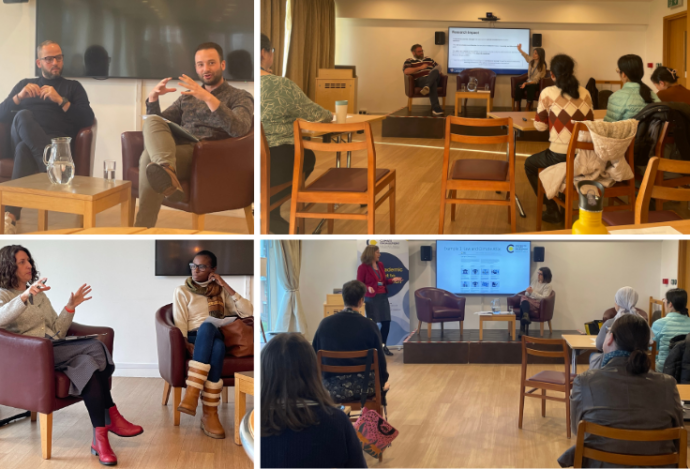
Over the Lent Term, Hughes Hall ran a masterclass series to provide a valuable opportunity for students, postdocs, researchers, and anyone interested in extending their impact, to learn directly from seasoned experts.
With insightful speakers from the College’s senior membership and beyond, the series offered a range of insights aimed at helping participants elevate their work for greater influence.
Over five engaging sessions, attendees gained practical advice on identifying and articulating the impact of their work, effectively communicating their ideas to diverse audiences, developing compelling arguments, persuading policymakers, and how to work effectively with partners.
These bespoke events were informal and conversational, and empowered participants with the tools and strategies needed to drive real-world impact, equipping them to make a lasting impression in both academic and broader professional arenas.
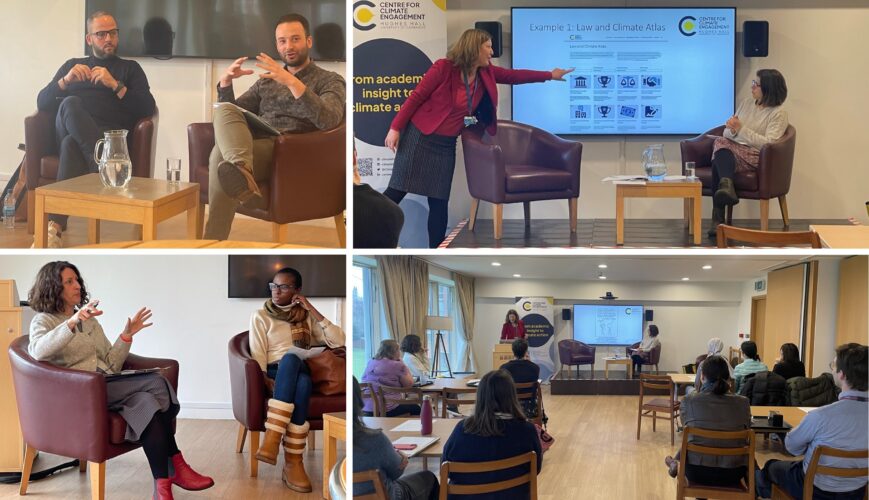
The series offered a range of insights aimed at helping participants elevate their work for greater influence.
We would like to thank all the speakers who participated, and all those who attended, for their time and enthusiasm in making these masterclasses so stimulating. Amongst the abundance of sage advice and great ideas, there were a number of key takeaways from each session:
-
How to Write an Impact Statement
Speakers: Dr Ben Early & Dr Amaya Camera-Campos
- Get to know the process that runs across engagement, knowledge exchange and impact
- Make your writing clear and accessible – the reader may little about your area of work and your points need to cut through
- Be specific about who will benefit / has benefitted from your work and when
- Support claims about the impact made with evidence
- Avoid being too vague about, or overstating, the difference your work will make / has made
-
How to Write for Non-Academic Audiences
Speakers: Dr Laura Blackburn & Kate Coghlan
- Know what you want your communication to achieve
- ‘One-size’ does not fit all – different people need/want different information, so try to identify the information needs and preferences of your target audiences
- Anticipate common concerns or questions the audience might have
- Avoid jargon and technical language and use simple definition and analogies, where possible
- Refine your approach based on feedback and metrics – don’t assume your communication has been effective
-
How to Make a Compelling Argument
Speakers: Dr Markus Gehring & Katrina Ffrench
- Have a strong motivation in the first place – be bold and believe in your argument
- Do your research and know the facts
- Research your audience and identify their motivations
- Balance the facts with emotion (head and heart) and tailor this to appeal to different audiences
- Acknowledge that sometimes people need to take time to think – be patient and allow your points to percolate
-
How to Persuade Policymakers
Speakers: Jane Mann & Dr Jan van der Scheer
- Take time and energy to build relationships and trust
- Listen to their perspective and understand their needs
- Be opportune and ready to ‘tailor-and-pitch’ to capitalise on opportunities
- Be ambitious and pragmatic
- Frame your points around impact
-
How to Leverage Partners
Speakers: James Bowers & Dr Johnny Habchi
- Understand what your needs are, what you can offer, and what you want to achieve, and identify partners who can help you achieve it
- Focus on effective and regular communication – take time to get to know your partners, be honest and open, and practice active listening
- Build mutual trust and respect
- Set clear expectations and governance frameworks from the outset
- Be flexible and willing to pivot if it helps to achieve the end goal
You can find more information and additional signposting about many of these areas in our IMPACT HQ.
1.4.25