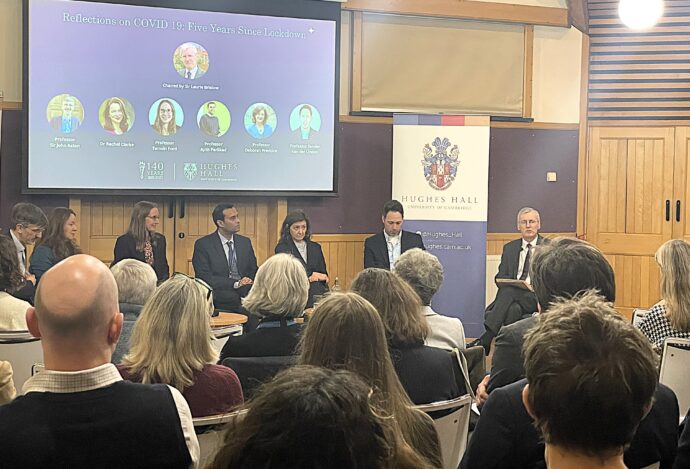
Five years on from the first UK lockdown of the COVID-19 pandemic, Hughes Hall convened a distinguished panel of experts to reflect on the global crisis. This blog expands upon a key theme of the discussions.
The COVID-19 pandemic exposed a number of critical vulnerabilities in modern society, including the fragility of institutional trust.
As the world struggled to navigate the rapidly changing landscape of a global health crisis, the rise of social media added an entirely new layer of complexity to the problem. Misinformation spread like wildfire, presenting an overwhelming challenge to both public health and the fabric of democracy, casting doubt on the institutions tasked with safeguarding us.
Throughout the pandemic, the battle between truth and falsehoods escalated. False narratives—often amplified by social media influencers, conspiracy theorists, and pseudoscientists—became a voluble force in public discourse. These messages weren’t just disruptive; they were potentially deadly. Misinformation about vaccines, lockdowns, and potential ‘cures’ led to confusion, fear and, arguably, harm, not just to individuals but to institutions. The erosion in the public trust of institutions complicated the pandemic response and its effects are still felt today.
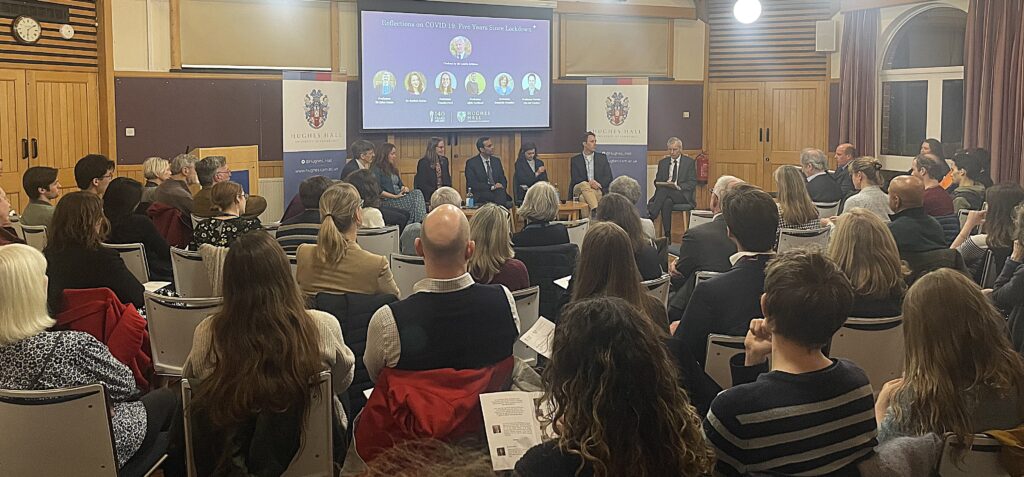
The COVID Reflections event earlier this month chaired by Sir Laurie Bristow featured expert panelists: Dr Rachel Clarke, Professor Deborah Prentice, Professor Sir John Aston, Professor Ajith Parlikad, Professor Tamsin Ford, Professor Sander van der Linden
One of the key challenges in communicating effectively during the pandemic was the rapidly evolving nature of scientific understanding. As new data emerged and our understanding of COVID-19 evolved, public health guidance had to adapt. This meant that no single message could ever truly capture the complexity of the situation. Information needed to be tailored for different populations, and guidance needed to change as new evidence came to light.
For the public, this shifting landscape meant decisions could seem contradictory or arbitrary, making it difficult to know who to trust. And in times of uncertainty, many people naturally turned to those they had most confidence in—family, friends, and those they deemed as ‘experts’—often bypassing the institutions that were providing crucial information designed to protect society.
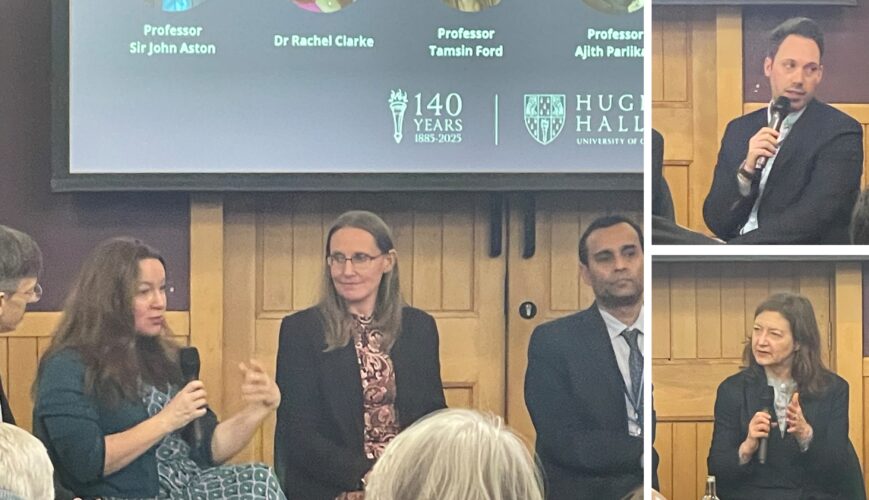
The panel reflected on key aspects of this global crisis, examining its lasting impacts and exploring how we can leverage the lessons learned to better prepare for the future.
During the panel discussion at Hughes Hall, Professor Sander van der Linden, a leading social psychologist, outlined the vital role of communication in combating this ‘infodemic’. Van der Linden, whose team worked on pre-bunking misinformation through innovative strategies like the game ‘Go Viral!’, emphasized that the most effective way to fight misinformation is to inoculate people before it spreads. This strategy—pre-emptively preparing individuals to recognise misleading content—is valuable in our defence against false narratives before they gain traction. But it will take more to rebuild the trust that has been lost.
Trust is not something that can be restored overnight; it must be earned over time through consistent, evidence-based, transparent communication, and a willingness to engage; presenting a human face to counter the depersonalisation of social media. It’s about fostering trust when times are calm, so that people will turn to these institutions for guidance when crises inevitably arise. In an age where scepticism of institutions and authority is pervasive, we must confront the question of how we restore and maintain trust in the systems meant to protect us. Trust cannot be rebuilt through short-term political slogans or hollow rhetoric; it must be cultivated over time through open engagement, demonstrating reliability and a commitment to the public good.
The question of whether the breakdown in trust can be fully repaired remains to be seen. But, if we are to face future global crises, whether pandemics or other emergencies, trusted voices and institutions at all levels—local, national, and global—will be essential. These insights stemming from the pandemic should guide our efforts moving forward and serve as a reminder that, in times of crisis, trust in the truth will be fundamental to the success of any collected efforts.
Further information
- Additional COVID Reflections Blogs and a summary of the event itself, are available in our news section.
- For more on events at Hughes Hall, see our Events pages.
- For more on how Hughes Hall aims to change the world for the better through positive impacts on our people, partners, and wider society, see our Bridge pages and IMPACT HQ.
18.3.25