On 23 June we mark International Women in Engineering Day (INWED), which shines a spotlight on the outstanding achievements of women engineers across the globe.
Closer to home, we share the work and research of Hughes By-Fellow and Director of Studies for Engineering , Dr Anna-Maria Kypraiou.
Dr Kypraiou is the Founder and CEO of Eyesea Green and inventor of Eyesense, a pioneering human-centric, AI-powered distributed building energy management system. She studied Chemical Engineering at the National Technical University of Athens and completed an MPhil in Energy Technologies and a PhD in Engineering at the University of Cambridge.
Over more than a decade she has translated high-performance engineering from aerospace into the maritime and built environment sectors. Her contributions span gas turbine engines, thermoacoustics, energy flow optimisation and physics-based AI models that cut building energy use while improving occupant comfort and wellbeing.
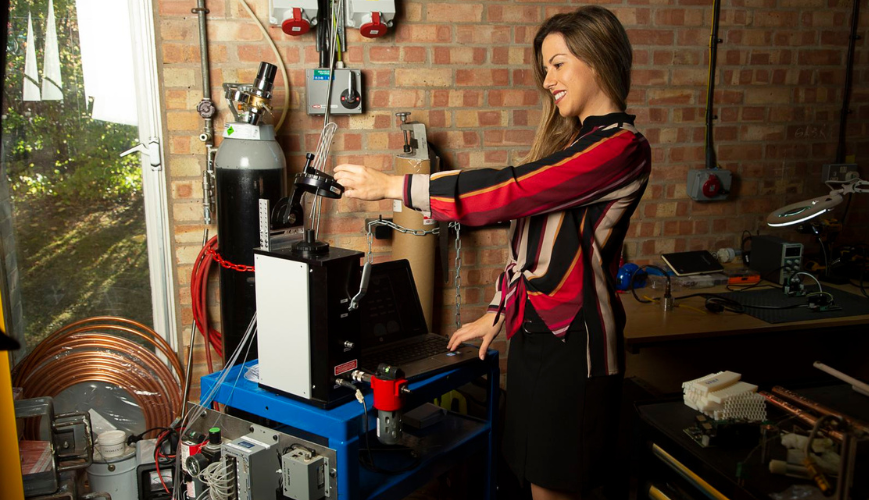
Dr Kypraiou was named Women in STEM Champion of the Year at the 2025 Women in Green Business Awards.
Under her leadership, Eyesea Green has scaled rapidly across Cambridge and Oxford Colleges, local authorities, housing associations, schools, churches, commercial buildings and the healthcare and education sectors, achieving 28-35% average energy savings, and specialising in decarbonising complex mixed College estates and “hard-to-retrofit” heritage buildings. She has pioneered causal-inference and physics-based AI methodologies, shifting damp and mould from reactive complaint response to quantified, evidence-led intervention.
Her company’s accolades include the 2025 William Sutton Prize for Sustainability, the 2025 Innovate UK Big Retrofit Challenge and the 2025 Business Weekly Cambridge Judge Graduate Business Award.
Making a difference in the world
My company was born from a bold vision: to revolutionise the way we manage energy in buildings by making them intelligent, human-centred and genuinely sustainable.
“My journey began in aerospace, optimising complex energy systems, knowledge I later transferred into shipping and then the built environment, where I saw a glaring gap. Most buildings waste energy, compromise wellbeing and rely on outdated, static systems that cannot respond to real-time needs. I asked: what if buildings could think, could feel, could adapt instantly to the people inside them, while reducing carbon and cost?”
That vision became Eyesense. It doesn’t just monitor temperature, it controls heating, lighting, ventilation and humidity based on real-time occupancy and comfort data, empowering organisations to retrofit smarter, target heat loss precisely and prioritise human health, while enabling live, occupant-centric energy optimisation.
“My purpose is to lead a new era where every building becomes part of the solution, where data drives action and decarbonisation means healthier, fairer and more resilient communities.”
The impact of women in the field
At its core, engineering is a universal language and the most profound innovations emerge from integrating its disciplines to construct efficient, resilient and deeply human-centred systems. As the field’s pioneering women have shown, representation is not merely a matter of equity but a strategic imperative, critical to addressing global skills shortages and dismantling deep-seated, outdated stereotypes.
“We cannot engineer a resilient future or design genuinely inclusive solutions while systemic and cultural barriers exclude half of humanity from the design process. Highlighting the impact of women in engineering challenges the misconception that technical acumen is gender specific, demonstrating to the next generation that they are essential to its future.”
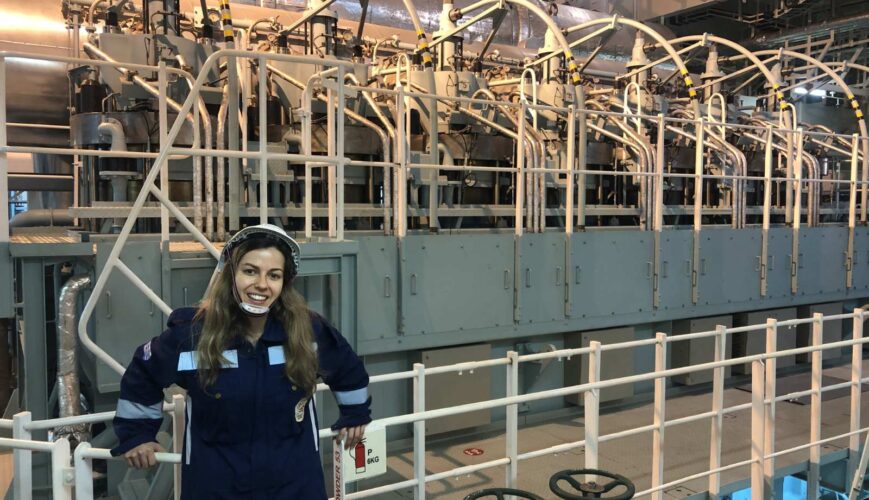
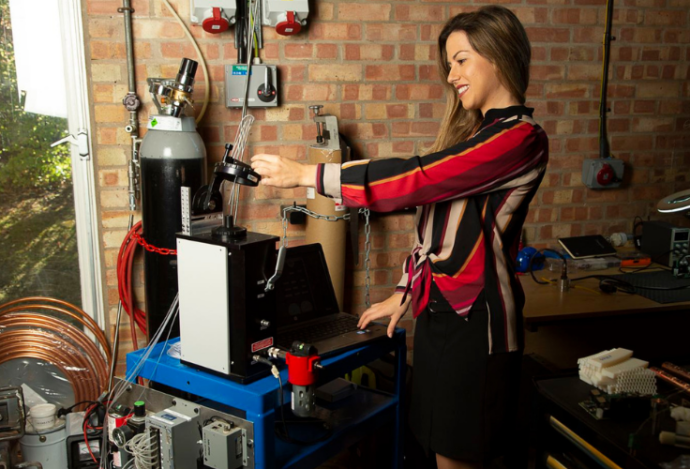
Dr Kypraiou is the inventor of Eyesense, a pioneering human-centric, AI-powered distributed building energy management system.
Is there a woman engineer who has been an inspiration for you?
Professor Dame Ann Dowling, with whom I had the privilege to collaborate during my PhD. A world authority on the thermoacoustics of gas turbine engines, my own doctoral field, she was the first woman appointed Professor of Engineering at Cambridge and President of the Royal Academy of Engineering. She champions diversity as a value proposition for engineering and shows that the discipline is creative, rigorous and open to anyone with the talent and determination to shape it.
Advice for women thinking about going into engineering
“Find your purpose. Purpose gives direction to talent, resilience to setbacks and meaning to success. For me it has been the driving force behind everything, from academic research to entrepreneurial risk-taking, and it is what fuels Eyesea Green. Choose the problems you genuinely care about and build the technical expertise required to solve them. There has never been a more important time to be an engineer, nor a better one to be a woman in the field.”
- Started by the Women’s Engineering Society, INWED is a global movement that champions diversity, innovation, and inclusion across the engineering sector.
- Under the 2026 theme, Engineering Intelligence, they are bringing together organisations, educators, industry leaders, and communities to showcase the expertise, creativity, and leadership women bring to engineering every day.
23.6.26