The Owl sat down with Research By-Fellow Dr Kwadwo Oti-Sarpong to learn more about the promise and possible pitfalls of using artificial intelligence (AI).
Kwadwo and his team are investigating how AI tools could be deployed in local government to benefit citizens – if ethical guardrails are incorporated from the start.

What does your project ‘Decision-making with AI in connected places and cities’ involve?
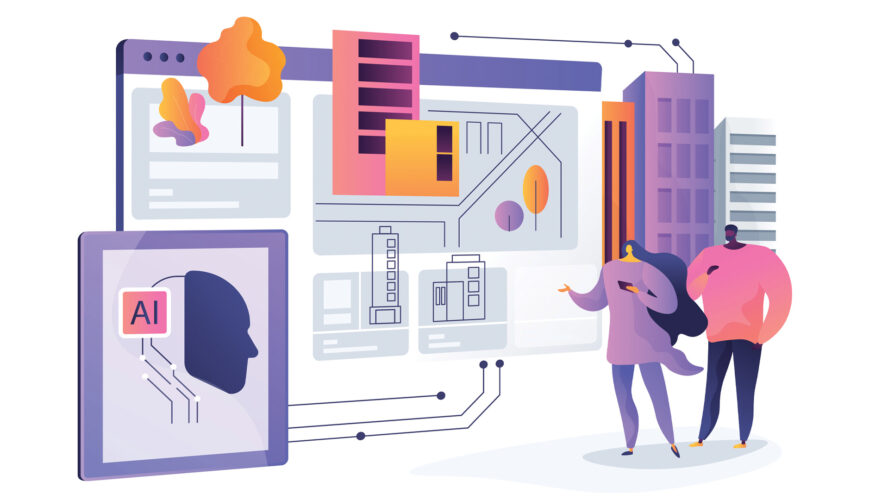
National and local governments around the world have started lots of initiatives around the idea of ‘smart cities’, including using artificial intelligence to get better insights from urban data to make evidence-based decisions. This could help meet various targets in the public sector, including faster turnaround times in public services, and better management of resources.
Often the drive has come from tech companies, and their narrative has been that pumping in more technology is the solution to many problems. Many have advanced to the pilot stage, and some have been cancelled, because it was realised too late that there were huge issues around data privacy or potential bias in the systems. Take for example Google’s Alphabet Sidewalks project in Toronto. Its design, among other things, was heavy on gathering personal data to give residents customised ways of living. You can immediately see the problems with that; residents and privacy advocates criticized the project’s data collection and privacy implications. The San Francisco Police Department tried to introduce facial recognition, and it led to all the problems you would expect with racial profiling. That too was quickly canned.
These are just two examples that caused public concern around ethical use of data in these large-scale urban digital innovation projects. It’s vital that while explorations to go any further continue, we make sure that ethics, human rights and shared values in society are taken into account when the tools are developed and deployed. Before any decision that affects people’s lives, or even the evidence analysis that underpins the decision, can be outsourced to an algorithm, we need to understand the entire decision-making process and identify the ethical risks so we can prevent them from playing out.
How does this work in practice?
We’re working on two studies with local authorities in England. The first is an attempt to ease the burden of ploughing through thousands of pages of planning representations to arrive at a decision. This local authority is working with a technology supplier and a team of interdisciplinary researchers to develop a tool to analyse these documents.
One of the potential risks that need to be taken into consideration is the kind of data the tool is going to be trained on. Say there are some types of submissions that have been given more weight in the past, the tool could adopt that human bias – or the tool could develop a much more difficult to figure out algorithmic bias. It is hard to ensure that the way that data is analysed, whether it’s by humans or AI, is completely fair and neutral, but we need to work towards that.
Local authorities are legally mandated to be able to explain outcomes linked to automated decision-making, and there is legislation to extend that to decisions involving any AI component in the process. To do this, the decision making process needs to be analysed first, so that we can identify where it would be useful – and appropriate – to use an AI-based tool, and ensure there is transparency about how and where the tool is being used. In the end the decision-making should still be in the hands of humans, but with assistance from this tool that takes the drudgery of some of the work from them.
My team is acting as ‘critical friends’ on this project, attending meetings, and taking part in ‘reflective pauses’, where everyone takes a step back to examine what worked and what didn’t work well. And then we will advise the local authority about the issues and ethical risks we’ve identified. Until there is an AI law, local authorities have to grapple with 43 (and counting) separate AI-focused regulations, policies and frameworks linked to their ethical development and use. We would flag up any areas they need to take into account, and we will ultimately turn this into a suite of best practice advice for the ethical implementation and use of AI tools.
In the second case study, a technical team of academics are working on a project with three local authorities in the north of England to build a chat bot interface to help them ask questions of their data in real language. For example, how many cars were on a given road on Tuesday at 2 p.m.? How many families are living in a specific neighbourhood? My conversation with the technical team can be summarised as such: ‘We are aware that there might be some potential ethical issues around the use of this tool. Can you help us think us think it through?’
So we are following a similar approach as in the other case, but here we have direct input into the tool’s development. What’s key is getting past all the exciting tech guff and making sure that the decision maker who is going to rely on the information understands how the tool works and that it might have some potential blind spots when it gives out the responses.
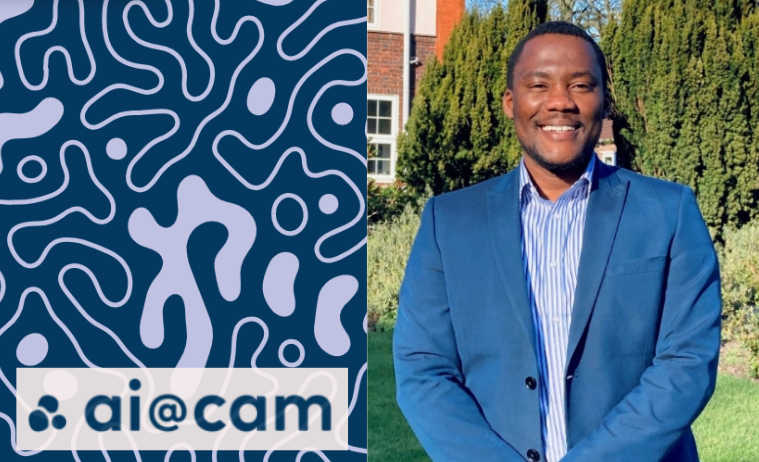
Dr Kwadwo Oti-Sarpong’s team is funded by ai@cam.
What motivates you more – the promise of a Utopian ‘smart’ city, or fixing the things that could go wrong?
What drives me is showing what can be done and how it can be done well. Although I have seen great examples of the use of artificial intelligence, there are intentional or unintentional consequences, and it’s important to be aware of them so that we can put in place measures to solve problems before they occur.
My team members are in different fields: urban planning; engineering; ethics and philosophy; computational social sciences, computer science – and I come from a technology and project management background. But we all come at this from the perspective that the development and use of any form of AI-based tool is not just technology-driven. It’s situated in the mix of things that make up a city or a place. Policy, regulations, guidelines, organisational structures, procurement constraints and so on all come together to shape, constrain or enable the ability to achieve an ethically rooted AI tool.
I strongly believe that using AI tools fairly to improve the lives of citizens is achievable if we take our time. Our project may not be the shiny new thing; we’re coming up with hurdles and issues that may mean some projects need to be halted or redesigned. But it feels like we’re getting down in the mud to find the pearls – to demonstrate that it’s a messy, painstaking process, but it can be worthwhile in the end.
Kwadwo’s team is funded through ai@cam, which supports interdisciplinary AI innovation across the University of Cambridge through research, education and innovation programmes that leverage the world-leading research already taking place and connect it to real-world needs.
- This article is one of many in the latest edition of The Owl, Hughes Hall’s College magazine. To read the publication, visit The Owl.
20.2.25