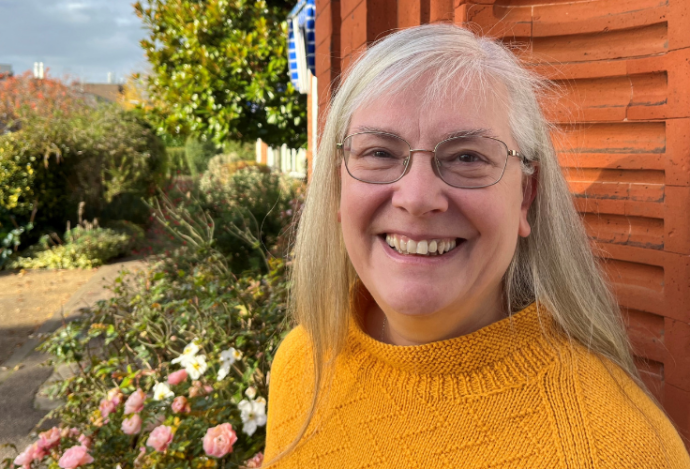
As Dr Carole Sargent prepares to switch gear to become a Life Fellow and Tutor, she looks back on a fascinating dual career as a research scientist and Admissions Tutor to generations of Hughes Hall students.
Carole has been part of Hughes Hall for 25 years. After joining the College as a Newton Trust Teaching Fellow based in the Department of Pathology, she took up the role of Admissions Tutor specifically for the graduate medical course. Later she held roles in postgraduate and undergraduate admissions, and as Acting Senior Tutor. ‘I’ve been doing admissions interviews for 20 years and it’s fascinating,’ says Carole.
‘What we look for is curiosity and the ability to pick up and run with some of the things that the candidates are asked about in the interview. A lot of people think they’re going to be tested on what they know, whereas we’re testing them on how they think. The mature students we take at Hughes often come in with hands-on experience, having faced real-life scenarios that are relevant and therefore have really fascinating takes on how they might deal with certain situations.’
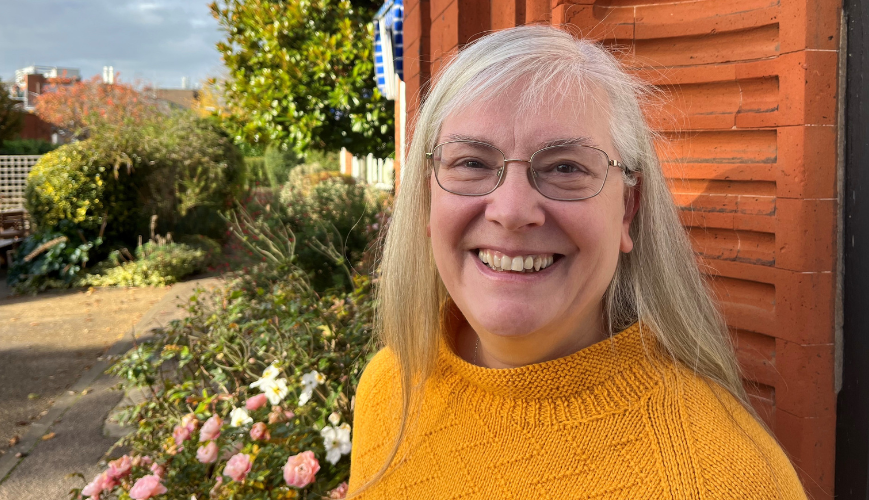
Dr Carole Sargent
Working with students has been Carole’s favourite part of her dual career in admissions, and in the lab, whether mentoring or teaching. ‘They’re quite complementary roles because ultimately the students we admit are the students we teach,’ says Carole. ‘It was always nice to see the students we’d interviewed arrive and settle into their course and then follow that person’s journey through graduation and into a career.’
Carole’s own research started with a background in genomic library construction for her PhD, which enabled her to join a project in the Cambridge pathology lab looking at abnormalities expressed on the X or Y chromosome. Then, after her two children were born, she was co-opted by a joint research venture between the department and a pig breeding company called PIC. They examined whether the modern technology that was coming on stream for human genome analysis could be deployed in breeding animals with particular characteristics.
The big project Carole has been wrapping up before retirement brought her back to the genomics and genetics of pigs, working with colleagues at the University of Ghana (Dr Richard Osei-Amponsah, Dr Dennis Adjei) and Hughes Hall doctoral student (now Dr) Sethlina Aryee. They looked at how pig farmers around the world could adapt breeding traits from each other – African breeds could be bred bigger or more fertile like European ones, and Western breeds could take characteristics like resilience to drought and disease from West African breeds. A project with great social potential, as pigs are a vital part of the informal economy in many West African countries, especially as an important source of income for women.
Carole’s field of gene sequencing is one of the areas of science that has seen the greatest progress in our lifetimes. ‘In my career I witnessed immense change in the field. When I started as a PhD student, it was right at the beginning of the human genome project. I was trying to piece together what a small region of one chromosome looked like without any of the sequencing technology advances that came later. We would detect specific signatures within the genome, and create a map showing what we thought could be novel genes. A few years after that the human genome sequencing project started in earnest and everyone thought it would take 30 years – it actually took ten, because of the increased level of automation. What took me three years would be a few seconds work with one of these new machines and would give far more information than I generated in my PhD.’
‘Hughes was completely different’
Coming to Hughes was not a given; for the first ten years in Cambridge, Carole avoided becoming affiliated with any college. ‘My experience at Oxford as a graduate student completely put me off. I was one of very few women in my college. As junior tutor for female students, I was allowed into the Senior Common Room, but the atmosphere in was so unwelcoming that none of the women wanted to be in there, it was such an old boys club. When I did finally come to Hughes it was completely different. Even though the gender balance was not as good as it is now, it didn’t really matter because the college community was much more open, friendly and inclusive. It’s not hierarchical like some traditional colleges; there’s no high table, so you can sit anywhere and chat to whoever you want. It’s been such a positive experience and that’s why I’ve been here such a long time!’
Carole retired from the lab two years ago, to focus on admissions. After retiring from that busy College role, she is looking forward to staying closely involved with Hughes students as a Tutor and Life Fellow. ‘I’m sure that there will always be things that will draw me back to College, and I will always be there for the students. In my retirement card there were messages from students from 20 years ago, and that was lovely to see.’
- This article is one of many in the latest edition of The Owl, Hughes Hall’s College magazine. To read the publication, visit The Owl.
2.5.25