December 2026, January, March & May 2027
Four concerts. One extraordinary year of chamber music.
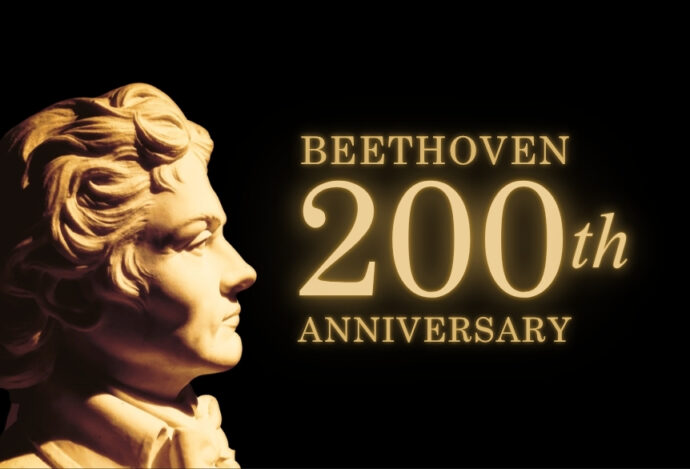
To mark 200 years since Beethoven’s death, Hughes Hall presents a season of four concerts exploring his chamber music across the academic year 2026/27— from violin and cello sonatas to string quartets and piano trios. The series is presented as satellite concerts of FIA, Hughes Hall’s annual Festival of International Artists.
Concerts 1, 2 and 4 will be preceded by a short talk, starting at 6.15 pm, which you are warmly welcome to attend. No sign up needed – just join us if you can ahead of the concerts.
Performers
- Miclen LaiPang ~ violin
- Nigel Yandell ~ piano
- Alexander Baillie ~ cello
- Laura van der Heijden ~ cello
- Cambridge String Quartet ~ Stephane Crayton (Violin I); Rachel Stroud (Violin II); Sam Kennedy (Viola); Kate Bennett Wadsworth (cello).
Concert Series
- Violin Sonatas – 1st December 2026, click here to book
- Cello Sonatas – 27th January 2027, click here to book
- String Quartets – 17th March 2027, click here to book
- Piano Trios – 20th May 2027, click here to book
Support Hughes Hall Music
We believe that great music should be available to all, regardless of ability to pay. That is why tickets for our FIA Satellite Series (Beethoven 200) — four concerts across the academic year 2026/27 — remain free to book.
Of course, concerts of this quality don’t come without cost. That is why you can choose a free ticket, or an Angel Ticket, which includes a suggested £20 donation that goes some way towards the cost of presenting them. We hope you’ll agree that it’s a small amount for an evening of exceptional music in the intimate setting of the Pavilion Room. Through making this contribution, you are helping us keep these concerts free for those who otherwise could not afford to attend.
CONCERT 1: Violin and Piano, Tuesday 1st December, 7.00 pm to 8.45 pm. Reserve your place via Eventbrite, click here.
Miclen LaiPang ~ violin
Nigel Yandell ~ piano
Programme
Wolfgang Amadeus Mozart
Violin Sonata in B-flat major, K. 454
Ludwig van Beethoven
Violin Sonata No. 3 in E-flat major, Op. 12 No. 3
Interval
Ludwig van Beethoven
Violin Sonata No. 9 in A major, Op. 47, “Kreutzer”
This programme follows Beethoven’s journey with the violin sonata by beginning not with Beethoven, but with the musical world he inherited. Mozart’s Sonata K. 454 presents violin and piano in an increasingly equal and expressive partnership, creating a model that the young Beethoven would soon inherit and challenge. In Beethoven’s Op. 12 No. 3, we hear a composer still connected to the Classical tradition, but already stretching its boundaries through virtuosity, scale and an unmistakable force of personality. By the time we reach the Kreutzer Sonata, that world has been transformed. What began as an intimate conversation between two instruments has become something almost orchestral in its ambition and intensity. Heard together, these three works allow us to experience not simply three great sonatas, but the extraordinary transformation of a genre from Mozart to Beethoven.
CONCERT 2: Cello and Piano, Wednesday 27th January, 7:00 pm to 8.30 pm. Reserve your place via Eventbrite, click here.
Alexander Baillie ~ cello
Nigel Yandell ~ piano
Programme
Ludwig van Beethoven
Cello Sonata No. 2 in G minor, Op. 5 No. 2
Ludwig van Beethoven
Cello Sonata No. 4 in C major, Op. 102 No. 1
Interval
Ludwig van Beethoven
Cello Sonata No. 5 in D major, Op. 102 No. 2
This recital sets Beethoven’s earliest cello writing against his last, revealing the distance he covered along the way. The first work, Op. 5 No. 2, comes from 1796, written for the cellist-king Friedrich Wilhelm II of Prussia — a young composer’s confident entry into a genre with almost no precedent, since piano and cello had rarely before been treated as equal partners. By 1815, in the two Op. 102 sonatas, that world has changed completely. Increasingly deaf and withdrawn, Beethoven wrote music that turned inward rather than outward: Op. 102 No. 1, the shortest and most compressed of all five sonatas, moves almost improvisationally between slow reflection and sudden bursts of energy, while its companion, Op. 102 No. 2, closes with a hymn-like slow movement and a searching fugal finale that already anticipates the late string quartets. Heard side by side, these three sonatas reveal not a gradual evolution but the sheer distance covered by one composer, in one genre, across a single lifetime.
CONCERT 3: Ludwig: Sketching a Life in String Quartets, Wednesday 17th March, 7.00 pm to 8.30 pm. Reserve your place via Eventbrite, click here.
Stephane Crayton ~ Violin I
Rachel Stroud ~ Violin II
Kate Bennett Wadsworth ~ cello
Sam Kennedy ~ Viola
Programme
Op. 18, No. 4 in C minor, first movement (Allegro ma non tanto)
Op. 18, No. 6 in B flat major, last movement (‘La Malinconia’, Adagio; Allegretto quasi Allegro; Adagio; Allegretto (Tempo 1); Adagio; Allegretto; Poco Adagio; Prestissimo)
Op. 59, No. 1 in F major, first movement (Allegro)
Interval
Op. 74 in E flat major, first movement (Poco Adagio; Allegro)
Op. 132 in A minor, third movement (‘Heiliger Dankgesang eines Genesenen an die Gottheit, in der lydischen Tonart’, Molto Adagio; Andante; Molto Adagio; Andante; Molto Adagio)
Op. 135 in F major, third movement (Lento assai, cantante e tranquillo)
Join the Cambridge String Quartet for a journey through the life and music of Ludwig van Beethoven, as told through his string quartets. Tracing developments in his three so-called ‘style periods’ with a selection of movements from across his string quartet oeuvre, and sharing intriguing material from his sketches that reveal fresh perspectives on some of his best-loved works.
CONCERT 4: Piano Trios, Thursday 20th May, 7.00 pm to 8.45 pm (with pre concert talk at 6.15 pm by Professor Nicholas Marston. Reserve your place via Eventbrite, click here.
Miclen LaiPang ~ violin
Laura van der Heijden ~ cello
Nigel Yandell ~ piano
Programme
Johannes X. Schachtner
Piano Trio No. 5, In tiefer Ehrfurcht (2026)
Ludwig van Beethoven
Piano Trio No. 3 in C minor, Op. 1 No. 3
Interval
Ludwig van Beethoven
Piano Trio No. 7 in B-flat major, Op. 97, “Archduke”
What does Beethoven sound like when we hear him from the present day? This programme begins in our own time, with Johannes X. Schachtner’s In tiefer Ehrfurcht, a work born from the composer’s immersion in Beethoven’s piano trios and, in particular, the Archduke Trio. From there, we travel backwards to the young Beethoven and his C minor Trio, Op. 1 No. 3, one of the works with which he first announced himself to musical Vienna. Finally, we move forward again to the expansive Archduke, where the piano trio has grown into music of remarkable scale, warmth and freedom. By beginning with a contemporary reflection and ending with the music that helped inspire it, the programme invites us to hear Beethoven not simply as a figure of the past, but as a composer whose ideas continue to provoke, challenge and inspire musicians more than two centuries later.